The Dark Artery, gateway to an underworld of unspeakable evil, has taken one of the Outliers, and it will take the Uncanny X-Men to get them back, if they can survive the corruption process needed to enter. Plus, the secret of the Endling at last? Uncanny X-Men #16 is written by Gail Simone, drawn by David Marquez and Luciano Vecchio, colored by Matt Wilson and lettered by Clayton Cowles.
Adam Reck: Since we started covering Uncanny with issue #9, we’ve been pretty hard on it (often for very good reasons). And so I think it’s important that for this installment, we give credit where it’s due. With “Dark Artery,” this book finally figured out what the heck it wanted to be! Immediate reactions, Austin?
Austin Gorton: There are some rough edges (I’m still not entirely clear on the relationship between the different realms and their respective guardians, and the resolution to Henrietta’s flashback plotline feels a bit tacked on), but when the core of the issue is as strong as this, it’s a lot easier to excuse the more raggedy bits.
Adam: We have a lot of (under)ground to cover, so let’s dive in at … a town council meeting?
Austin: “Underground,” I see what you did there.
Sanctuary

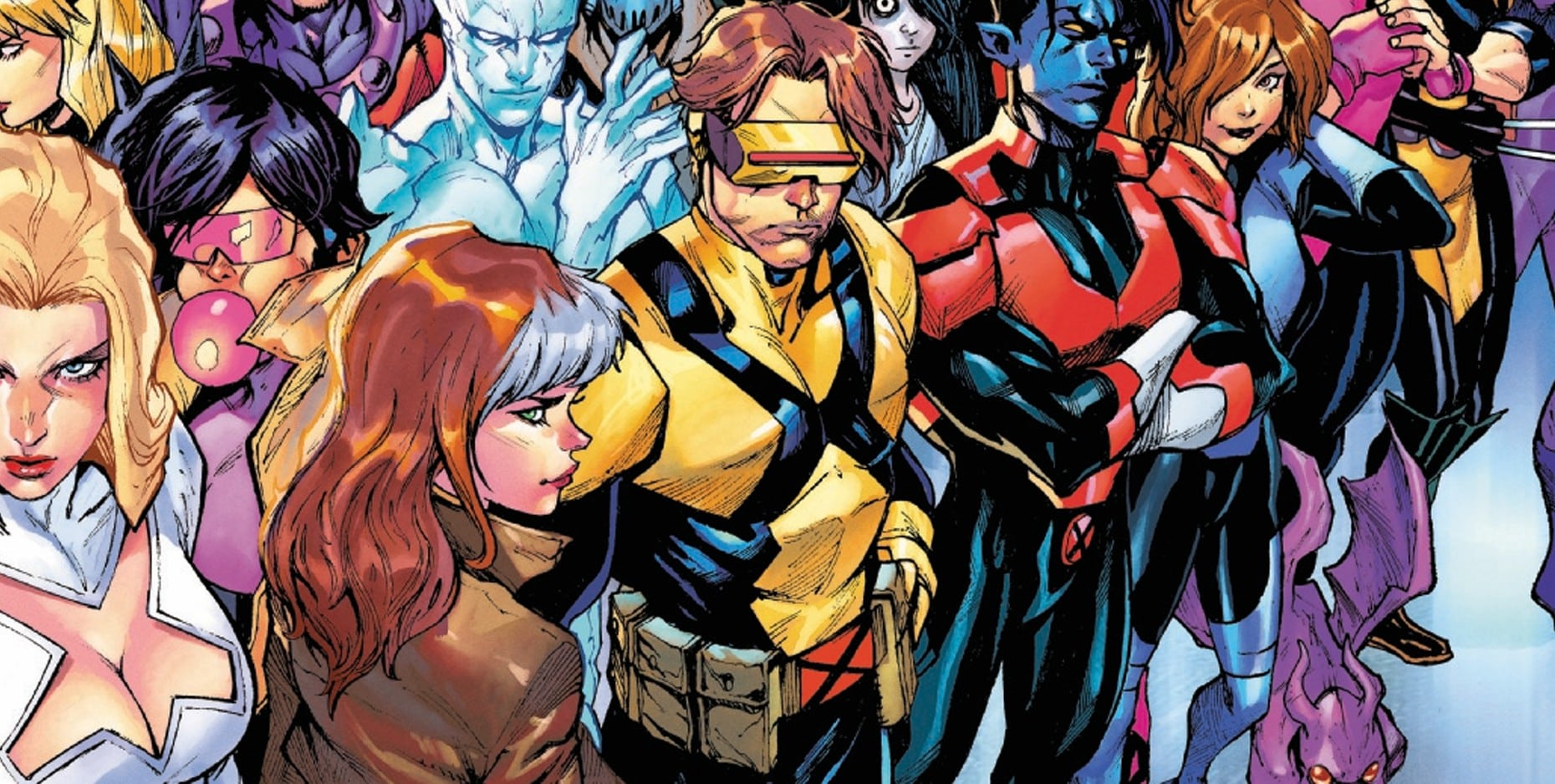
Adam: We last left our heroes in the depths of Penumbra, so it’s a little jarring to not only start this issue at a New Orleans public hearing, but also with the artwork of Luciano Vecchio. Local mom MacKenzie DeNeer shares the story of Nightcrawler saving her daughter, leading to the announcement that “Nawlins” is going to essentially be a sanctuary city for mutants. God, how I wish this had happened in like the fourth issue.
Austin: No kidding. This is a fascinating idea, not only for the real world parallels but for the way it fits into the larger presentation of mutants in the “From the Ashes” era.
So far, the post-Krakoa status quo has been filled with setbacks — a mutant gulag tacitly endorsed by the government operating out of the old X-Mansion, robo Sentinel dogs on the prowl, the X-Men scattered to three different corners of America and unable to sustain any additional X-teams. Yet this idea of making New Orleans a welcoming and safe place for mutants offers a more positive counterpart to all the negative post-Krakoa fallout, the idea that maybe mutants can still have some good things in spite of the fall of Krakoa.
Now imagine we got this early in the era, as a direct counterweight to the Graymalkin stuff, instead of 16 issues and over a year later.
Adam: Honestly, the concept of a sanctuary city is clearly hitting given *looks around,* and I’m hoping it’s not just a random story beat that never returns. NYX played with this idea of a safe space for mutants too, but having a municipality endorse the idea adds weight to it given *looks around*. Not to editorialize too much, but if/when we do return to the Graymalkin prison in this book (at this point it would be bizarre not to), the context between its introduction last year and now will have changed radically, and the idea of another story location in sharp relief should help.
Austin: Stories need conflict and contrast; if the former is always in the form of “fighting bad guys” and dealing with one bad thing after another, that becomes as monotonous and undramatic as a story where only good things happen. Which is to say, having the X-Men/mutants notch a win every once in a while isn’t just appreciated, it’s necessary, and it helps make the inevitable losses sting all the more in contrast.
Also, the biggest tell that this is fiction is the fact that the mayor’s press conference/announcement isn’t attended by a bunch of angry protesters and masked goons, who caught wind of the announcement and are against it, which is sadly what would happen in the real world. Though I’m sure we’ll see the anti-mutant reaction to this before too long.
Adam: Not that I want the current mess of America precisely reflected in the pages of this superhero book, but the potential is here to provide a withering critique. But these last four issues suggest Gail’s strength isn’t in those kinds of larger political statements, instead it’s with spooky demons and imperiled kids, so let’s dive back into Penumbra.
Fighting a Damn God

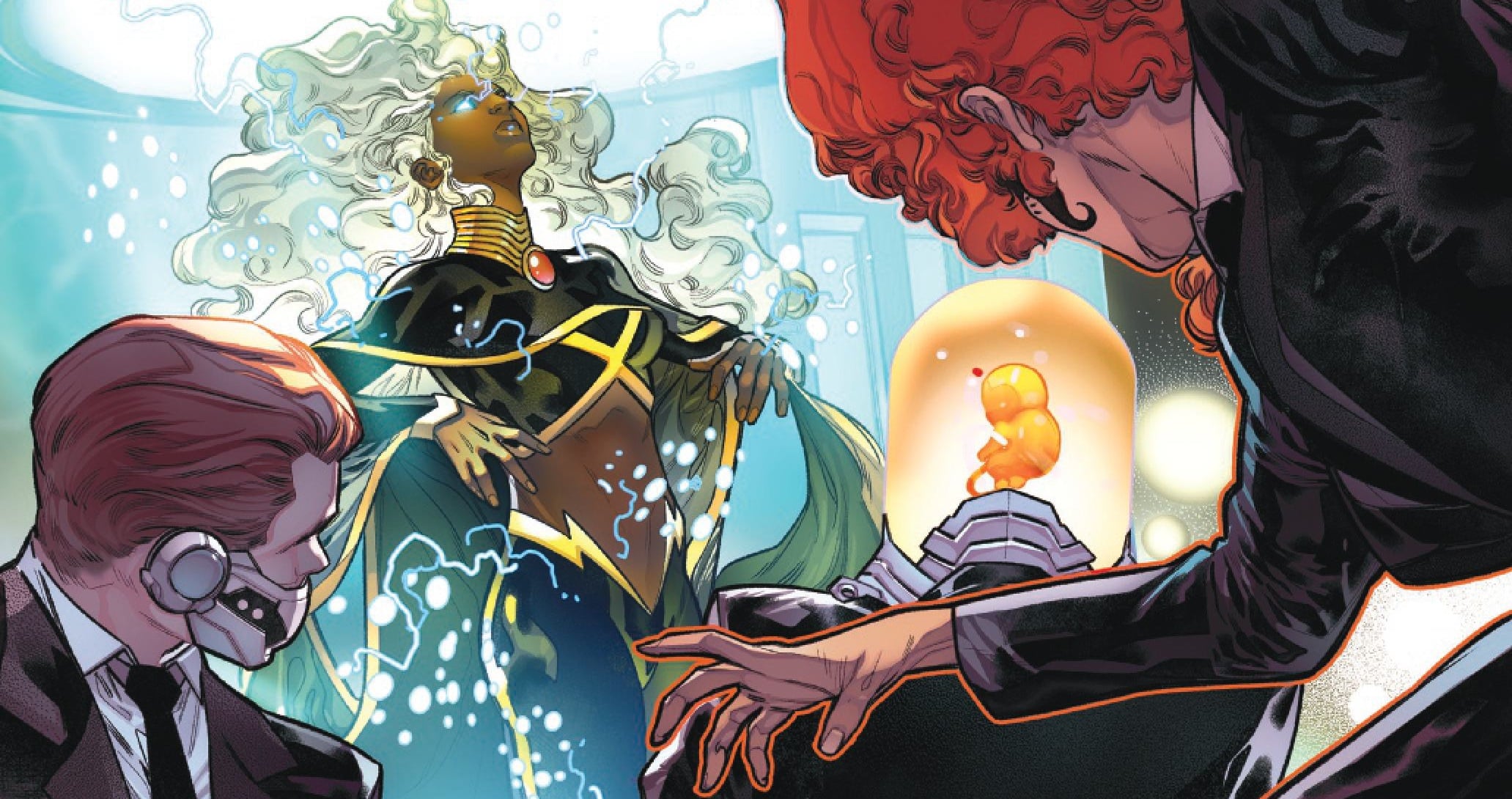
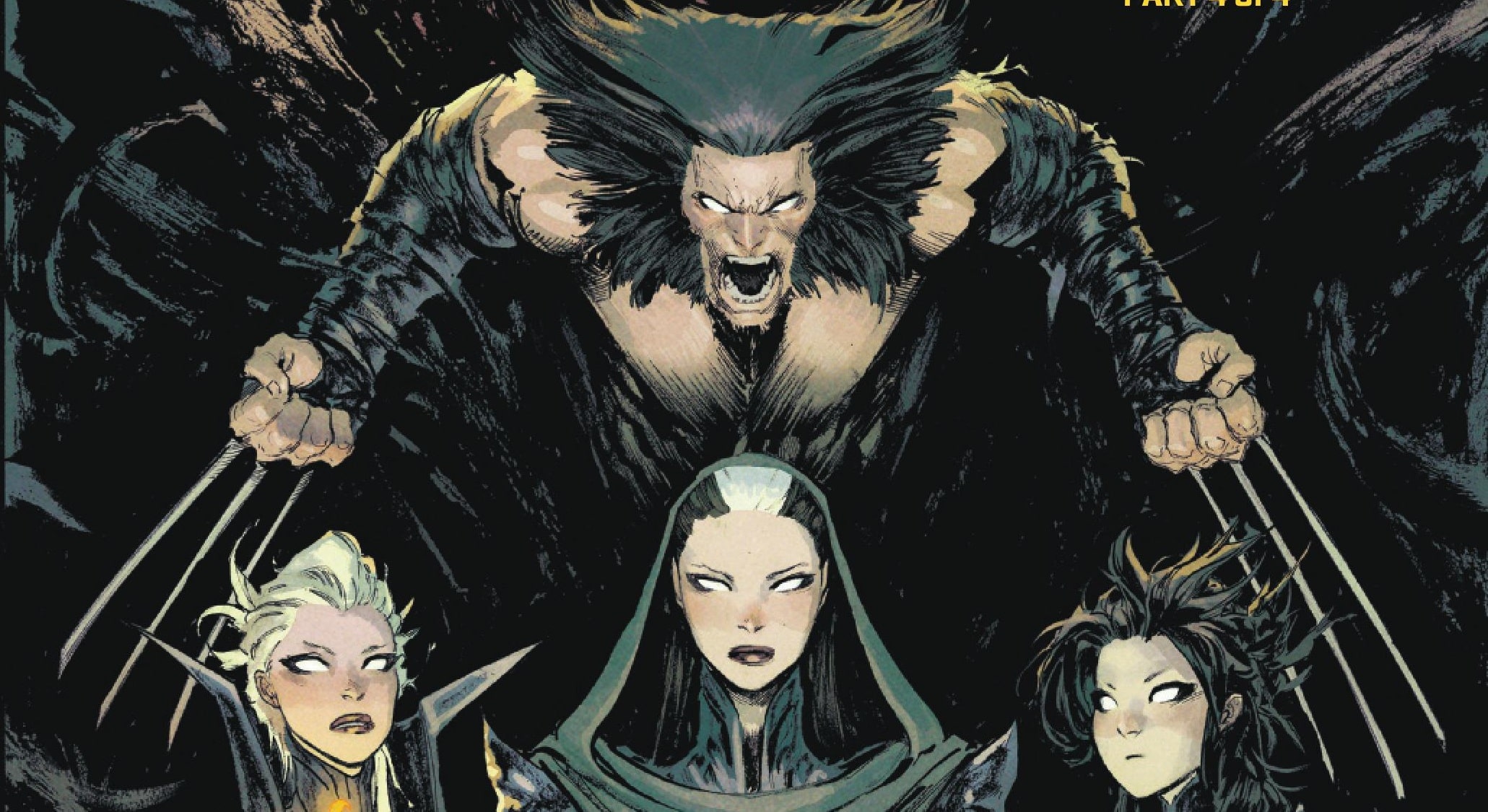
Adam: Deep underground, our gothified heroes are battling the damned souls who betrayed their mutant kin. David Marquez’s artwork shines throughout this issue, especially when he gets to lavish the page with wide swaths of black ink. And Matt Wilson’s colors cut through the darkness as Deathdream takes to the air with an explosive cape of lightning. The solicit for this issue promised a reveal of the long-hinted “Endling,” which I figured we were getting here. What did you think of Hotoru’s level up?
Austin: The coloring in particular is impressive — the way Hotoru’s (literal) glow-up pops compared to the darkness in the rest of the issue almost made me look away, like a light was being shined in my eyes. And the fact that so much of the issue is DARK, yet the figures and action are still legible, is no mean feat.
In terms of the Endling, I’m not sure if we’re supposed to take Hotoru’s glow-up as the hint, or Calico’s about-face toward mutants. Or something else. Frankly, if not for the solicits, I wouldn’t think ANYTHING here was about the Endling (that word never gets mentioned in the comic itself). Which could just mean the solicitation is wrong, or poorly written, making a mountain out of a molehill of a hint/moment, so to speak.
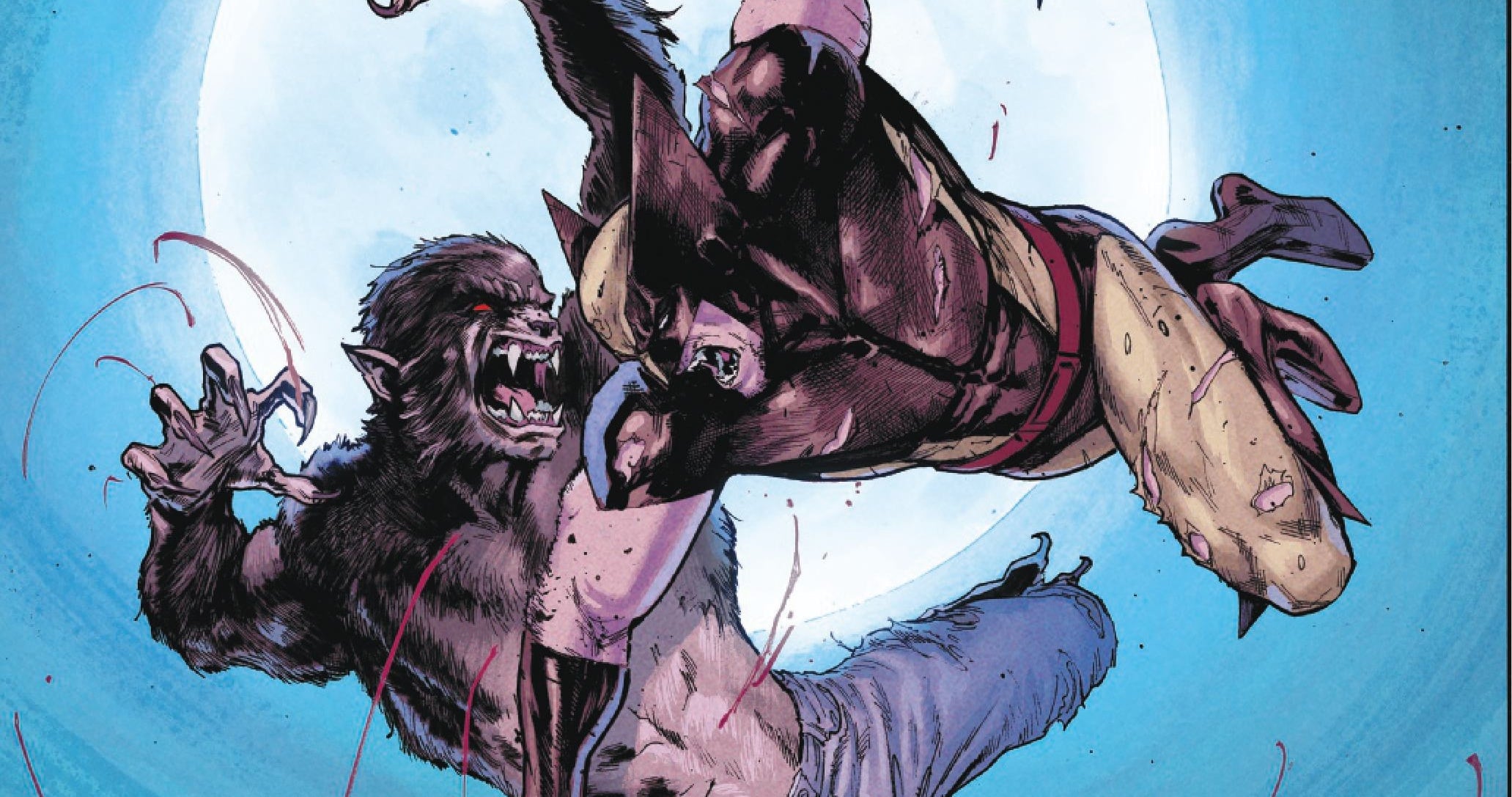
Adam: I don’t want to make too much out of it, because as the story on-page goes, who the Endling is doesn’t really matter. What is interesting is Deathdream’s bold damnation of the denizens of Penumbra. And just when you think he might be possessed by Shuvahrak, it’s actually Ransom who becomes the mouthpiece, revealing a crescent moon tattoo (does that mean he’s the Endling?! I’ll stop). But Wolverine’s had enough of the trash talk and delivers a sick line with claws out, “I guess we’re fighting a damn god then. Let’s go.”
Austin: Just top notch Wolverine-ing from Simone there.
Adam: A great fight sequence follows as the X-Men, the Outliers and Henrietta take it to Shuvahrak, but it’s ultimately a one-two punch of Calico & Ember scaring the big skull creature and Man-Thing delivering on his catch phrase in a giant ball of explosive flames.
Austin: As always, I stan for a “those who know fear … BURN at the Man-Thing’s touch!” moment, and this might be the biggest one ever, as Man-Thing gets a full-page splash to deploy as Rogue throws him at Shuvahrak.
There’s also a cute moment where it turns out Wolverine knows Henrietta, because of course he does. I really enjoyed how Simone handled this, not making a big deal out of it and just dropping it in as a fun little detail among all the ongoing drama.
Adam: (Not to mention Henrietta saying she calls Man-Thing “Ted” even though she doesn’t know why. LOL.) The conclusion of Henrietta’s flashback does get a little shortchanged, but it is satisfying to know that after another betrayal by the Sentinel Agent Miller in the past and the defeat of Shuvahrak in the present, the final resting place of many a mutant is protected, and none of the kids have to stay behind to lord over the damned.
Austin: In hindsight, it’s clear that the climax of Henrietta’s flashback came last issue, as most of this is denouement (“Oh, then what? We lived happily ever after, of course!”). That said, the twist that Henrietta has no desire to leave the afterlife — that was Shuvahrak speaking through her — and is perfectly content hanging out with her family, including, presumably based on the art, her mother, whose ashes she was bringing to inter in the Dark Artery in the first place, is a good one.
The Meaning of “X”

Adam: Oh thank goodness, the Ravage dog turns out to be an adorable new pet and not more of the same savage killers from the Mall arc. More importantly, we learn from Henrietta and Hotoru that “X” means “Safe” and “Home.”
Austin: This is a great example of how you wedge something into a backstory in a way that makes it feel bigger without inviting a ton of raised eyebrows about how it upends established continuity. Making X a symbol in this old, forgotten system of secret communication is a clever way of adding extra meaning to the X-Men’s name/iconography without suggesting this is something Xavier or whoever always knew/intended (or should have known) all along. Sure, it’s ultimately a coincidence, but a simple enough one that it doesn’t stretch credulity.
Adam: I cannot stress enough how much better I think this book would have been if elements of this arc had come right at the beginning of this run instead of waiting over a year’s worth of issues. Gail is finally telling the “Southern Gothic” story she teased in interviews. Marquez is firing on all cylinders. Gone is the tone-deaf federal prison of Graymalkin, traded instead for complex horror mythology and history that actually adds to the fabric of what the X-Men are. The book feels like it has a real pitch and real purpose now.
Austin: I guess this is what they mean when they say, “wait for the WHOLE story” or “it’ll all become clear in time” or whatever, but also, it shouldn’t take 16 issues and over a year of publication time to clear your throat and establish your premise, even if you get interrupted by some editorially mandated crossovers in that time.
Adam: I am fascinated to see where this book goes next. Given all the added mythology, we’re now in very different territory than we were just a few months ago. Knowing that next issue appears to be some M3GAN movie synergy has me excited and hopeful that the horror elements continue.
X-traneous Thoughts
- It’s worth noting that the “New Orleans Sanctuary City” plot point is not dissimilar from the Utopia Era “San Francisco as a haven for mutants” setup, further implying Simone and/or Tom Brevoort are being heavily influenced by that late ’00s/early ’10s status quo.
- Wolverine knowing Henrietta does beg the question (as the existence of all long-lived mutants does) of HOW the secret “mutate language” passed out of knowledge. I suppose Wolverine has never been much of a joiner, and being a loner, it’s possible he never had occasion to be introduced to/taught it.
- OR DID IT? Huge opportunity for there to be entire communities of mutants carrying on traditions that we’ve never met, like in this arc!
- Henrietta lived a full, long life with a family and a child! While we’re seeing the end of this part of her story, there’s lots of room for her and her history to return in subsequent chapters.
- It would also be surprising if this is the last we hear of Jacob Miller, the proto-Sentinel hunting Henrietta in the past.
- More mentions of Shogo from Jubilee! Can a trip to Otherworld be too far off?
- Calico shouts the name of “Saint George of Capadoccia” before entering combat on Ember. Saint George’s actual historical identity is debated by scholars, but as a character, he is considered a Christian martyr and depicted in many works of art riding on horseback killing a dragon.
- Mystery continues to mount around Ember, who is apparently some kind of zombie horse who scares Shuvahrak enough to trigger Man-Thing’s pyromancy. Is EMBER the Endling?!?! (we’ll stop now, for real).
Buy Uncanny X-Men #16 here. (Disclaimer: As an Amazon Associate, ComicsXF may earn from qualifying purchases.)

Adam Reck is the cartoonist behind Bish & Jubez as well as the co-host of Battle Of The Atom. Follow him @adamreck.bsky.social.

Austin Gorton also reviews older issues of X-Men at the Real Gentlemen of Leisure website, co-hosts the A Very Special episode podcast, and likes Star Wars. He lives outside Minneapolis, where sometimes, it is not cold. Follow him @austingorton.bsky.social.