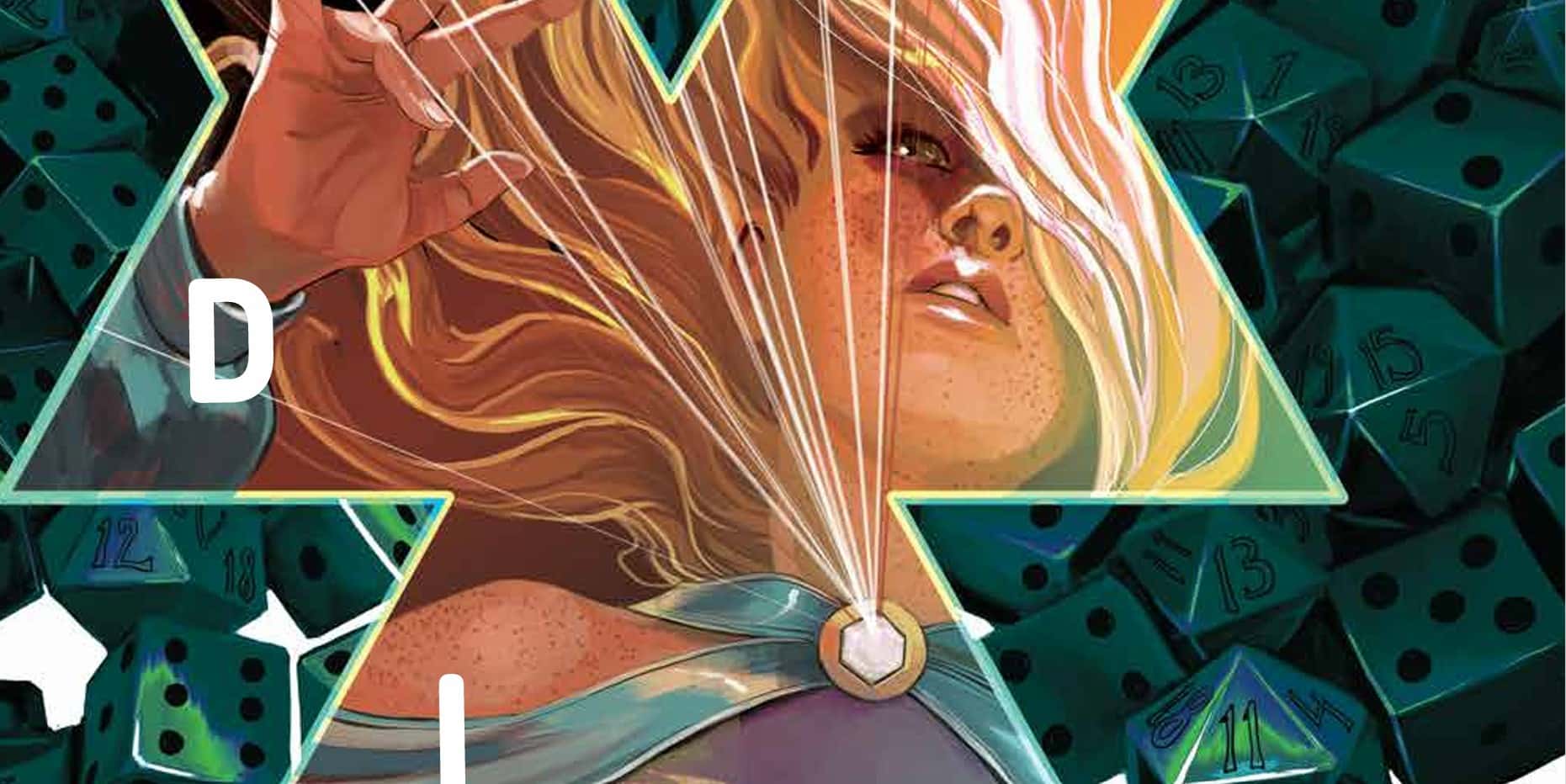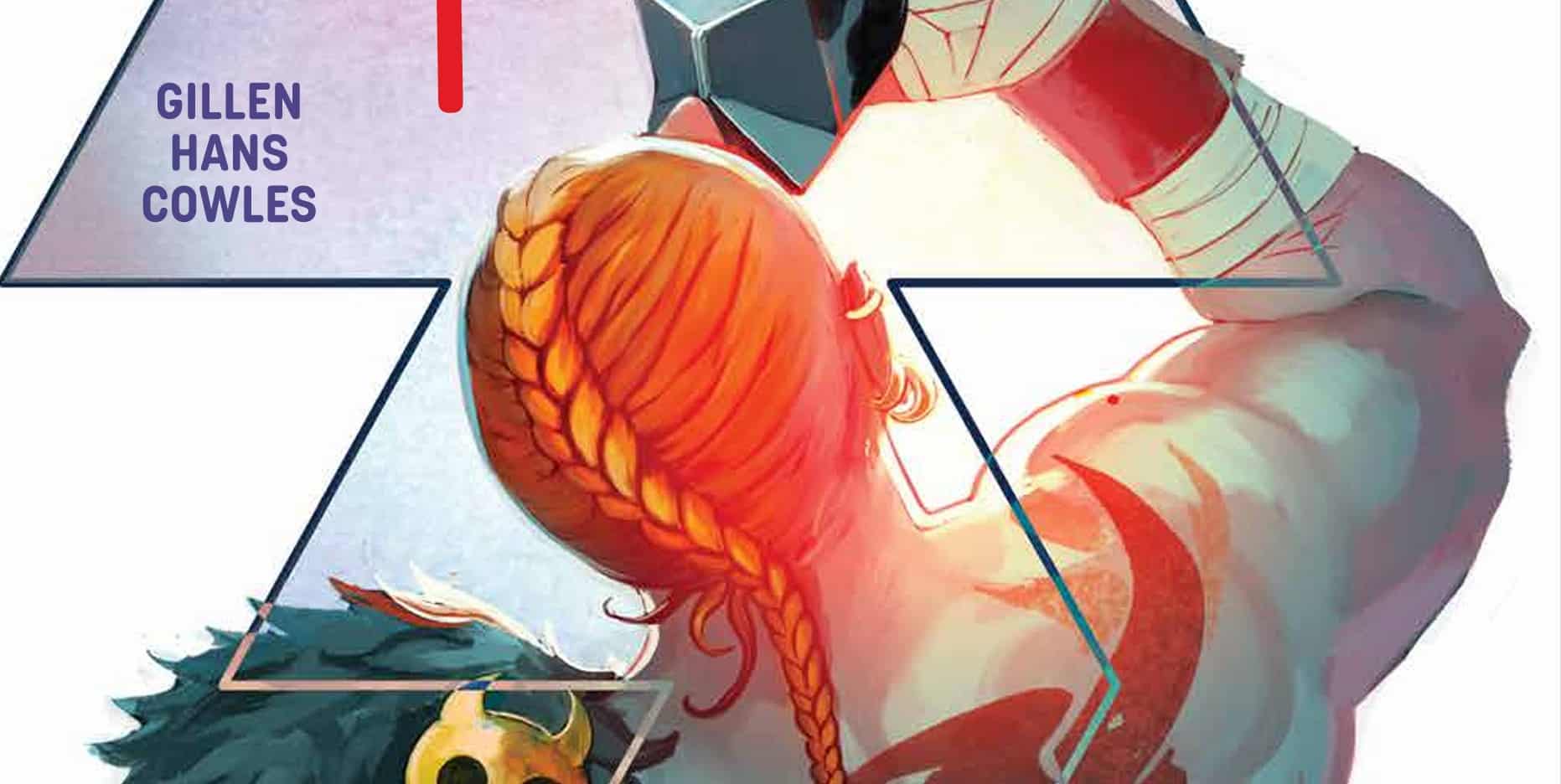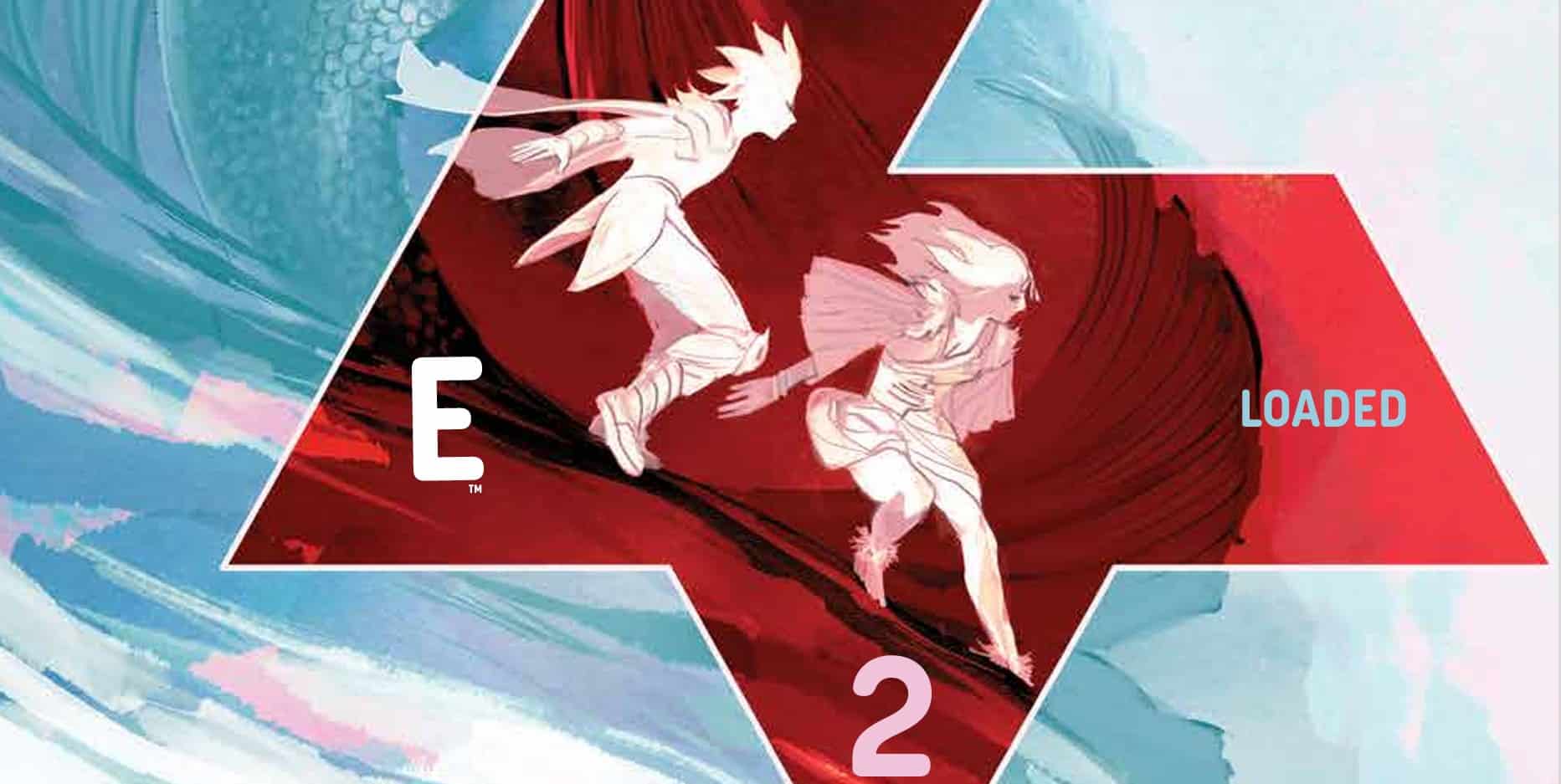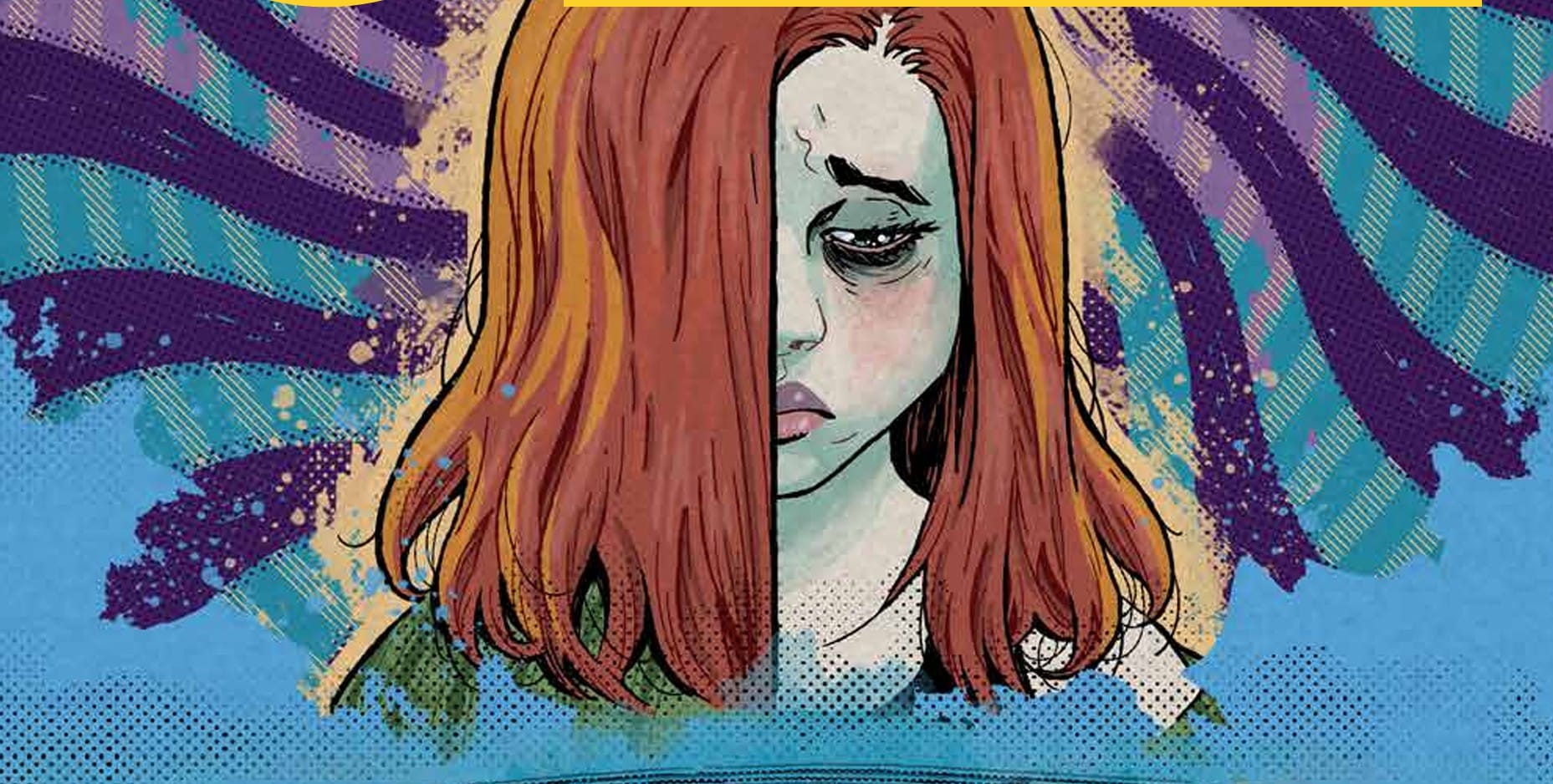
After millions of years trapped in the same 60 seconds, Anna has to readjust to life on the straight and narrow. But even out of the time loop, all roads seem to end where they began. Will Anna be able to escape endless recursion? Assorted Crisis Events #5 is written by Deniz Camp, drawn by Eric Zawadzki, colored by Jordie Bellaire, lettered by Hassan Otsmane-Elhaou and designed by Tom Muller for Image Comics.
Deniz Camp and Eric Zawadzki have made the comic of 2025. I say that not because it’s the best comic released this year (although it may well be), but because it so perfectly encapsulates what life is like at the end of 10 consecutive “unprecedented” years.
Assorted Crisis Events is a brutally accurate mirror of a decade under accelerated late-stage capitalism. It captures, with uncanny precision, the relentless cycle of crises that have defined our era — not as isolated incidents, but as symptoms of a system in freefall. From the saturation of content and the commodification of catastrophe to the numbing repetition of disaster, it lays bare the way media, capital and power feed off instability. More than just a chronicle of events, it distills the psychological toll of living through this era: the erosion of empathy, the normalization of emergency and the quiet, constant panic embedded in everyday life.
What makes Assorted Crisis Events great as an actual story, though, is its focus on people. The five issues in this miniseries, while being high-concept, politically charged parables, are emotionally resonant because they’re so deeply relatable. They characterize an era in which paranoia engenders prioritization of self-preservation and isolationism over community, despite being more aware than ever of humanity’s inhumanity through daily clips on social media. We are living in an era where the human mind is so overwhelmed by the reality of the world that it disconnects from it entirely. We are living in the era of hyper normalization.
Hyper normalization, a term coined by Russian historian Alexei Yurchak to describe the state of mind of citizens of the Soviet Union, describes the kind of reality brought to life in the pages of Assorted Crisis Events. It describes the frustrating duality that many people experience: the ability of the human mind to perceive the brokenness of the world we live in, but not be able to respond to it. The effect? Not anger but apathy; not action but inertia. In her Guardian article “Systems are crumbling but daily life continues — the dissonance is real” from May, Adrienne Matei describes the experience of hyper normalization as being composed of two key phenomena:
“The first is people seeing that governing systems and institutions are broken. And the second is that, for reasons including a lack of effective leadership and an inability to imagine how to disrupt the status quo, people carry on with their lives as normal despite systemic dysfunction – give or take a heavy load of fear, dread, denial and dissociation.”
In Assorted Crisis Events, Camp and Zawadzki explore the micro rather than macro impacts of hyper normalization. Their stories factor in the human reality that people’s energy, whether that be physical, mental or emotional, is a finite resource. Our senses are so overwhelmed by the pressures of everyday life, that imagining an alternative status quo, let alone challenging the existing one, feels impossible. The anthology structure of Assorted Crisis Events is perfectly suited to our contemporary reality because it tackles a handful of these issues one at a time — to tackle them all at once would cause the narrative to break down.
Each issue focuses on a different source of this feeling of compression and applies it beautifully to the story’s protagonist. Through the first four issues, Camp tackles high-concept themes like the effect of the media on our perception of reality, the seemingly inescapable cycle of generational poverty, anti-immigration rhetoric turning neighbor against neighbor, and the slipstream of a life not truly lived in pursuit of a centuries-old American dream. These everyday pressures seem to strain every moment of everyday life, as is most pertinent in issue #4, in which white-collar worker Mike literally experiences his life flashing before his eyes. He is a tragic figure in his own life — a passive observer destined to watch his life slip through his fingers. Zawadzki and colorist Jordie Bellaire have even created a distinct visual language to convey this dissociative state; of faded red or blue silhouetted figures blended into the background, both a participant in and passive witness to their own life.

One of the symptoms of this state of dissociation is the fear that life is happening too quickly, that time is passing too fast around us, and the anxiety that there is nothing we can do about it. In this state, crisis after crisis is happening before our eyes, seemingly overlapping and unending, and yet we are so overwhelmed by the pressures of surviving everyday life that we are unable to face the inequities, injustices and horrors happening around us. As Matei puts it, “Confronting systemic collapse can be so disorienting, overwhelming and even humiliating, that many tune it out or find themselves in a state of freeze.”
In the case of Assorted Crisis Events’ last issue, this phenomenon expresses itself as a time loop rather than a freeze. Issue #5 is a story about a woman named Anna, who is forced to relive a moment of domestic violence throughout her life on repeat through 60 second snippets (like social media clips). Camp uses the metaphor of time breaking down to extrapolate the brain’s response to a moment of trauma — for someone to withdraw and shut down — and apply it to what feels like a lifetime.
Zawadzki’s circular page layouts convey this masterfully, with external observers like psychologists, psychiatrists and doctors lining the outside of the page, with Anna sat in the middle. The layout resembles a panopticon, with Anna the prisoner being subjected to a nonstop barrage of judgment akin to the discourse perpetuated by social media. The cumulative effect of the human brain undergoing this emotional pain repeatedly is a metaphor for hyper normalization. Anna describes feeling “scraped out,” left empty and exhausted by what she describes as the “universe’s mental breakdown.” As is typical under hyper normalization, Anna is able to perceive the brokenness of the system around her, in this case time, but is unable to escape the hamster wheel of her own existence. Others around her attempt to diagnose but never actually help her. She is the classic victim of a system predicated on individualism, which keeps everyone in their own (circular) lane. This leaves the individual, as it does Anna in this issue, feeling powerless to combat the root causes of societal issues that lead to trauma.
Matei’s Guardian article suggests, via a quote from digital anthropologist Rahaf Harfoush, that “meaningful change requires collective awakening and decisive action.” “Awakening” is a particularly evocative word choice for Assorted Crisis Events, and in particular the dreamlike state each issue’s protagonist finds themselves in. Looking at it from a different angle, they are exhausted by daily life and never quite have the time to rest, recover and reclaim their agency. “Collective” is equally apt. In four out of five issues, the protagonist is very much alone in their crisis.
Issue #5 gets pretty bleak as it reaches its time-loop crescendo, but there is a message of hope here, and it’s one that’s present in a lot of Camp’s work: the essential nature of human connection and community. What breaks Anna out of the time loop is telling herself something she wishes someone else had said to her — “We believe you. We love you. Things are going to get better.” She attends the support group Temporal Trauma Anonymous and vows to offer the same support for others. In many ways, the “no man is an island” concept is an ancient existential challenge. But it’s also never been more important. In an era of greater technological innovation, we’ve never been more alone. On this subject, Matei’s piece contends that community is critical to the collective awakening required to ameliorate the impact of hyper normalization.
“It’s easy to feel like: ‘Oh, I’m in community because I’m on TikTok.’” But genuine community is about “getting outside and talking to your neighbor and knowing that there’s someone out there that can help you if something really bad goes down.”
It’s a small step, but an easy one to take. As Camp’s closing narrative on the series outlines: “The Earth keeps spinning. … Every time around is another chance for things to be better. I’m asking you … right? It has to be.”
In 2025, it sure feels that way.
Buy Assorted Crisis Events #5 here. (Disclaimer: As an Amazon Associate, ComicsXF may earn from qualifying purchases.)

Jake Murray spends far too much time wondering if the New Mutants are OK. When he's not doing that, he can be found talking and writing about comics with anyone who will listen. Follow him @stealthisplanet.bsky.social.