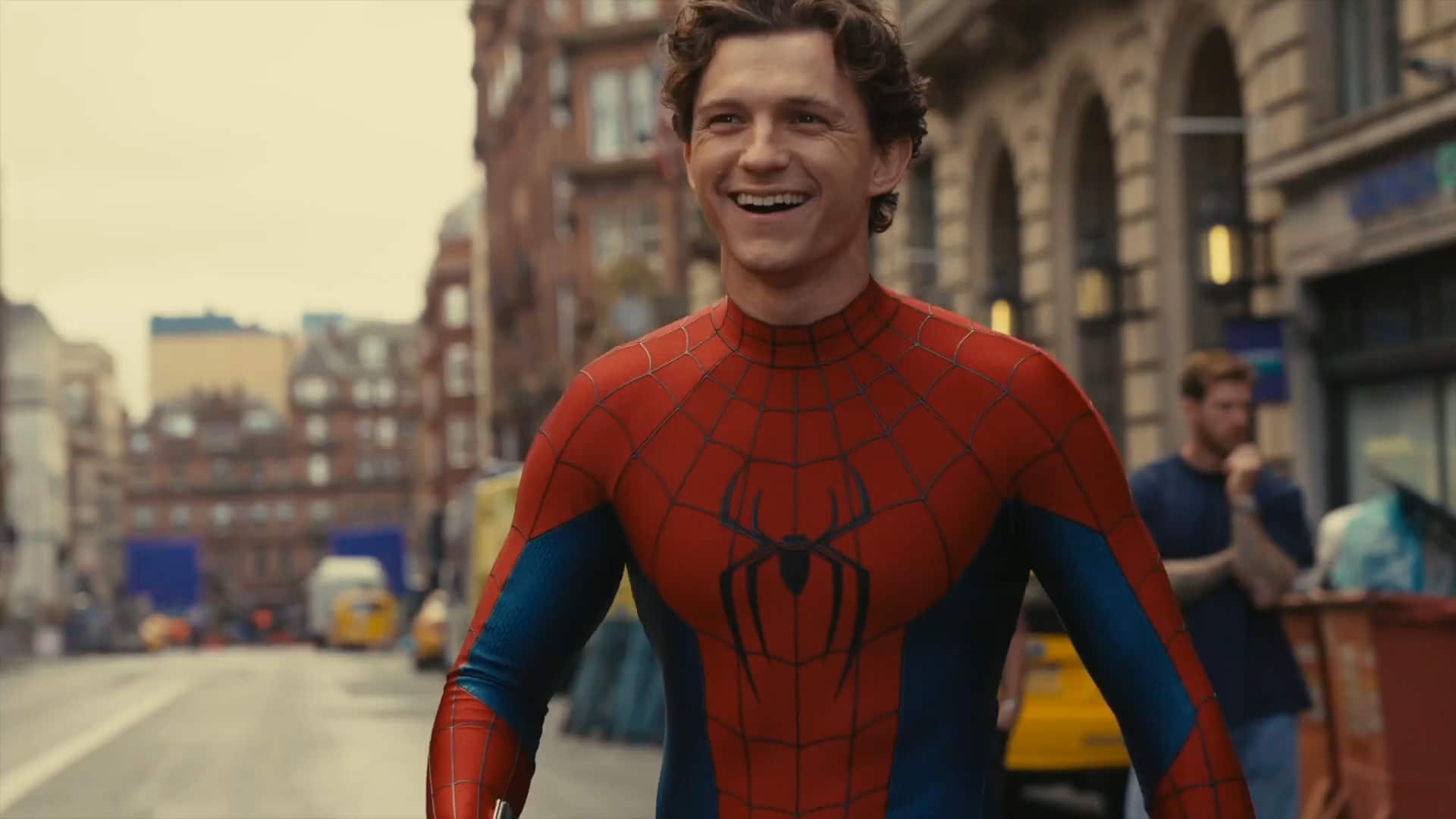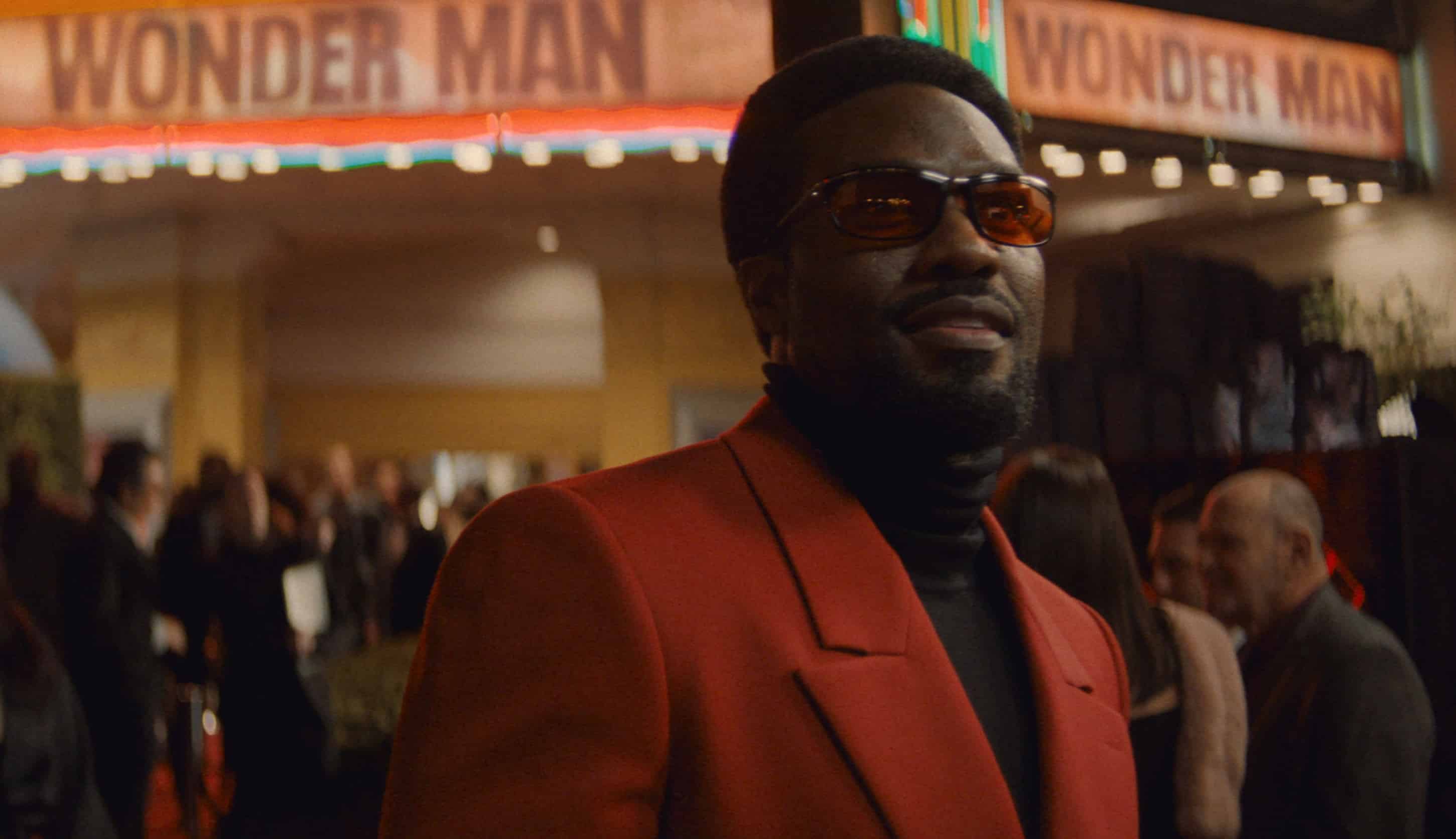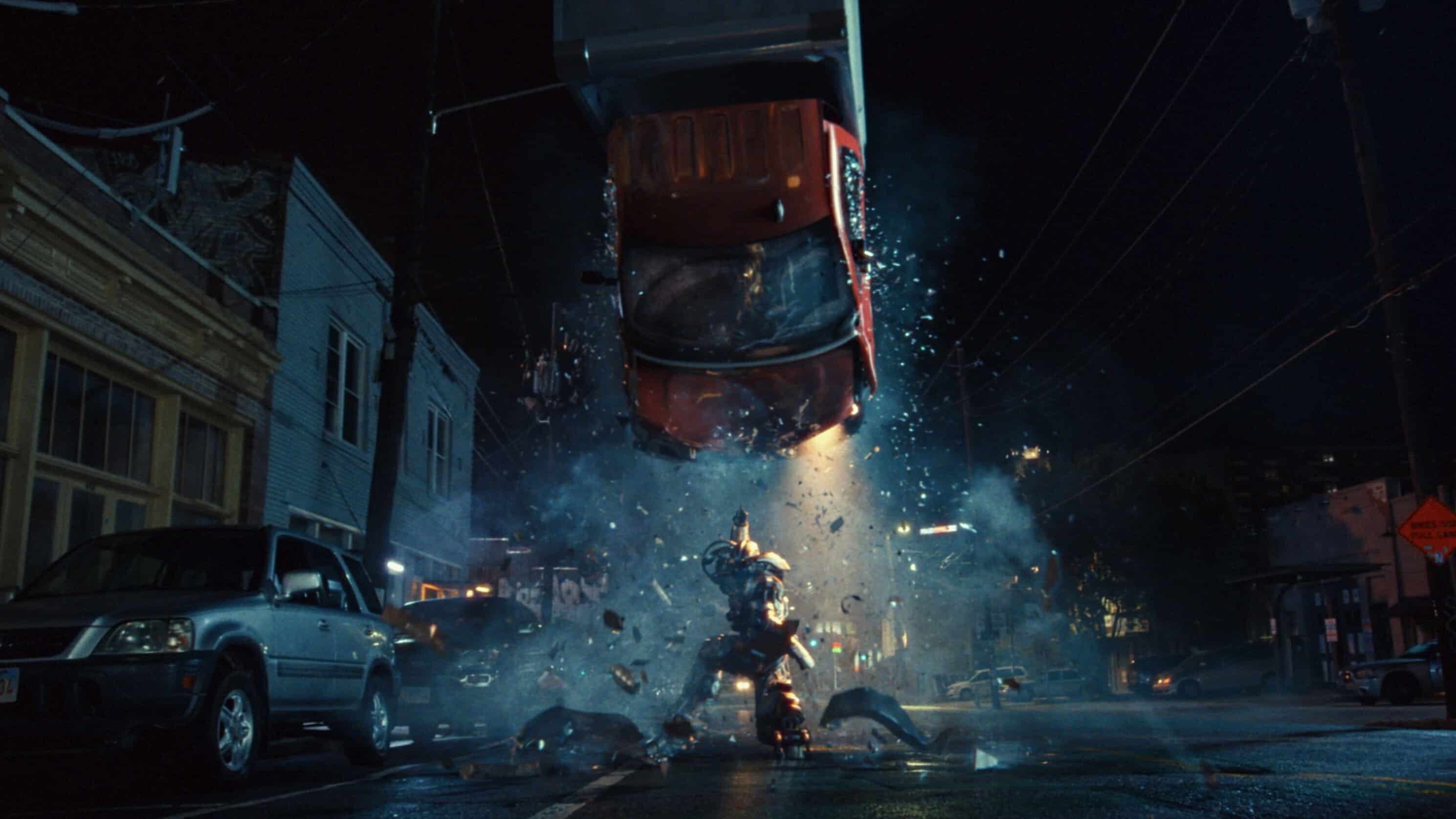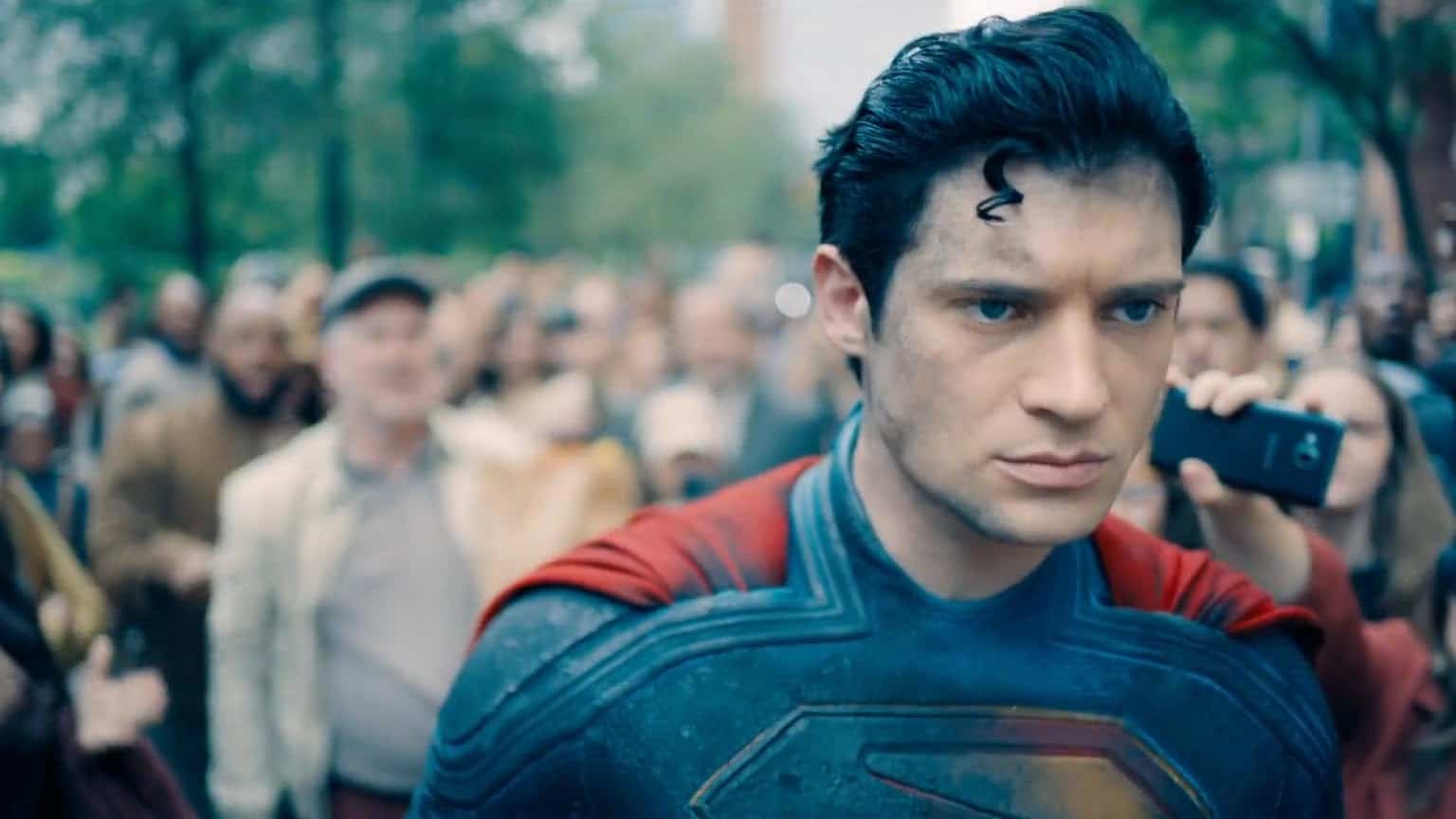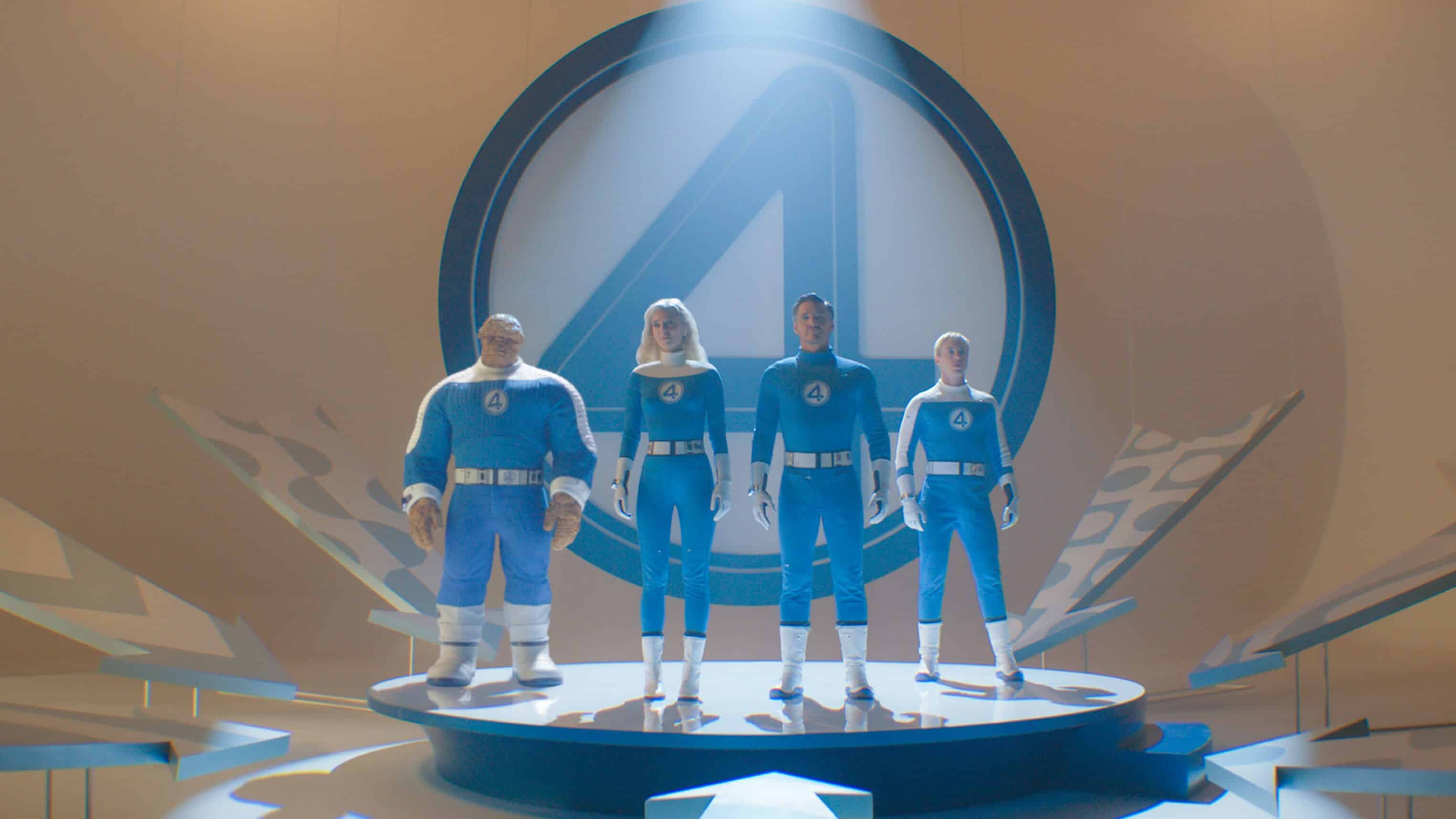
After the dismal Captain America: Brave New World and the surprisingly endearing Thunderbolts*, Marvel Studios has released one of its trickiest flicks yet based on the historically difficult-to-adapt Fantastic Four. Fantastic Four: First Steps stars Pedro Pascal, Vanessa Kirby, Ebon Moss-Bachrach and Joseph Quinn; and is written by Joshua Friedman, Eric Pearson, Jeff Kaplan and Ian Springer; and is directed by Matt Shakman. Now that a bunch of the ComicsXF team has had a chance to see it, let’s roundtable!
WARNING: WE WILL BE TALKING SPOILERS. THIS IS YOUR FIRST AND ONLY WARNING.
Adam Reck: For years (decades?), it felt as if the Fantastic Four was an uncrackable franchise. There was the purposefully jettisoned Roger Corman B-movie, the aughts Fox flicks and the most recent Miles Teller disaster. I think for most of us, we assumed the closest we were going to get to a good Fantastic Four flick was The Incredibles. We talked in our Superman roundtable about what a difficult task it was for James Gunn to reset that character. I’d say this was an even more difficult task: Creating a faithful version of these characters in a way that could eventually merge with the larger MCU seemed impossible (much in the way that I still believe they will never make a good X-Men movie), especially given the poor quality of most of Marvel Studios’ post-Avengers: Endgame output. But some nitpicks aside, I think Shakman largely succeeded in creating a family-focused story that merged Silver Age quirk with modern action movie sensibility.
Anna Peppard: I’m usually a spoiler queen. Before I watch any movie in theaters, I’ve read at least a handful of spoiler-laden reviews and the Rotten Tomatoes consensus and consumed a bunch of social media posts on the topic. But partly because Adam really didn’t want spoilers and I’m terrible at keeping secrets, I went into this one relatively fresh. And I’m glad I did because for the first time in a long time, a superhero movie surprised me in a good way. I was genuinely tense watching this very familiar story play out on the big screen, and I certainly wasn’t expecting that.
Tony Thornley: That’s how I felt. Obviously, the film was going to adapt the coming of Galactus at least in part, but I was pleasantly surprised by how much this brought something new to that very familiar story. And hey, I went to see it for my birthday, so there’s that.
Dan Grote: Happy birthday, Tony! So first, I just want to say how nice it is that there are superhero movies out this year that actually feel worth discussing. This is our third here at CXF, after Thunderbolts Asterisk and Superman (We don’t talk about Captain America: Brave New World. It hurts too much.) FF was a lot of fun, well-cast and had a style all its own, and it made me want to see more Marvel movies NOT set on Earth-19999.
Rasmus Skov Lykke: As Adam mentions, we haven’t had a good Fantastic Four film yet. Hell, we haven’t even had a decent one! There seems to be something about this family of explorers and adventurers that trips up filmmakers. We all hoped that getting them back in the Marvel family would be the ticket to success. And while it is notably better than anything that came before it, I still have my issues with it. I had high expectations, based on the word of mouth on social media. And for the most part, it really didn’t live up to it.
Adam: Ouch — interested to hear why!
Armaan Babu: There are three elements that I want from a good Fantastic Four story. I want that sense of family, yes, but I also want a sense of weird and wonder. For them to be exploring the impossible, the best of what sci-fi oriented minds can throw at us. Above all that, though, if I’m going into a comic book movie, I just want to be able to have some fun. That last part is why the 2000s movies worked so well for me, and I’m happy to say that this movie delivered on the sci-fi wonder, the family and the fun elements I was hoping for. How well they did on each of those elements, however, is a matter of deeper discussion, so let’s get into it!
Anna: I want to go on the record that while Armaan is extremely entitled to his opinion, my feelings about the Fox Fantastic Four movies are encapsulated by the only concrete thing I remember from the second one: hoping that even if it was terrible, at least going to see it in the theater would let me sit in some air conditioning for a couple of hours. With a runtime of an hour and 32 minutes, it couldn’t even live up to that expectation. And I’m still angry about it. More recently, I tried to hate-watch the 2015 film with friends, one of us got interrupted by a phone call, then we forgot to restart the movie and never finished it. So for me personally, there was nowhere to go but up. And while this latest Fantastic Four flick one doesn’t quite go up to eleven, it still vastly exceeded my admittedly low expectations. Onward to the gushing and griping!
Journey to Earth-828

Anna: After the pre-movie marketing campaign released several fake magazine covers that didn’t match the proposed time period, I was prepared to be very pedantic about everything that didn’t look right in the retro-futurist setting. But other than a prominently displayed fake Warhol that looked much closer to the style of portraits he made in the late ’70s and ’80s, my disbelief was mostly suspended. (Though as Anthony Oliveira points out, I should be more annoyed by the irresponsibly anachronistic use of high-fives.) Though I do wish we’d gotten a proper tour of the Baxter Building.
Tony: Did we get a firm date, though? It was very retro-future, but I don’t think a date was established. Some of the tech was very ’60s, while some (like Sue’s pregnancy test) was ahead of even today.
Rasmus: During that opening montage, I completely expected it to shift to a floorplan of the Baxter building, it felt so much like the tone of those issues of Fantastic Four.
Speaking of that opening montage, it leads me to one of my two biggest gripes with the movie: the pacing. The montage was obviously fast paced, moving rapidly from scene to scene, just giving us glimpses of the world and previous stories. I appreciate not having to rehash an origin story again — though a lot is lost in not seeing Benjamin Grimm come to terms with his transformation — but from there on out, the pacing was just off. It felt less like actual scenes and more like summaries of scenes. Sure, they told the story and moved things forward. But there was no room to breathe, no time to settle. No room for forming an emotional connection to either the characters or the story. The movie had a good plot, all the scenes served a purpose and added to the story. But there was very little attention paid to the emotions of any scene.
Tony: This is not dissimilar to my biggest complaint about the movie: It didn’t have the strongest plot. It was loosely “The Coming of Galactus,” plus some of Franklin’s early years, BUT the movie took place over roughly a year to 18 months. That meant a lot of weird pacing and plot progression was off-screen.
Adam: What I appreciate is that there was no overly drawn out exposition about what this world was in comparison to ours. It just was. That allows the viewer to ask interesting questions about what year it really is (Is it the ’60s? Is it Earth-828’s 2025? I prefer the latter.) or what their American history looked like (sure seems like the Civil Rights Movement came early and stuck), or how the world seems to largely be at peace without it being the centerpiece of the story. We’re given Jetsons-esque, retro-futuristic tech (my favorite was the reverse golden record) in a consistent way that is additive to our heroes’ escapades instead of distracting.
Dan: Kind of like the way Wes Anderson’s The Life Aquatic introduces its own sea life without stopping to explain it. It’s just Wes bein’ Wes.
Tony: That was one of the stronger bits for me. There was some VERY fun world-building that didn’t feel the need to over-explain. The tech is better, the world is more at peace, the Four aren’t just seen as heroes and protectors, but as the standard to aspire to.
Armaan: It is a world built for, and around, the Fantastic Four. They’re heroes that belong to a happier time — to a world that believes in them, a world that embraces the marvels (pun fully intended) of science and looks to the adventurer scientists to keep the world turning. On a purely aesthetic level, I loved it, and I think it’s a great choice for the film. On another level, however, it unnerved me. The world, the people in it. It was a little too perfect. Unlike you, Anna, I couldn’t suspend my disbelief entirely. It felt like too much of this world depended on the people’s faith in their superheroes. That this was a world carefully crafted and maintained to represent a more innocent time. There were several points in the movie where I expected there to be a twist showing Reed had the world under some sort of mind control.
Rasmus: I completely agree. Sure, it was nice to see heroes actually being treated like heroes. While it is somewhat unusual with Marvel heroes, with many of them being hounded by the public, it is definitely the case with the Fantastic Four. But this was to a spooky degree. They treated the FF like religious figures, so sacred did they appear. Either it was setting up some insane twist like you mentioned, or it was setting them up for a fall from grace.
Armaan: The people in this world felt almost cartoonish in their admiration. Everything is so shiny that there’s an emptiness to it. It’s like a swanky apartment you can tell someone’s just moved into — the little touches of imperfection, of the everyday, are missing. We may be starting years into the FF’s career, but this isn’t a world that feels lived in.
Tony: In other words, there’s no garbage or rats on the streets of New York. Hell, even the homeless were literally buried, in Subterranea. It almost leaned too far into the utopia that the Four could help create.
Anna: I can see that. I’m not sure why it didn’t unnerve me in the same way. I guess I was just in the mood to embrace this simplification of reality and the optimism underpinning it, which reminded me of my beloved Lee/Kirby comics and created some spooky shivers when it was occasionally (as in the Lee/Kirby comics) ruptured by moments of unsettling darkness (Sue’s eagerness to murder the Surfer, Reed considering sacrificing their son, the impending end of all life on Earth, etc.). But that’s definitely a very subjective thing.
Speaking of comics references: The superheroic visuals genuinely impressed me. I’m not so much talking about the fight scenes and special effects, which were sometimes merely adequate. I’m talking more about the willingness to take visual inspiration directly from the comics. The aesthetics weren’t really wacky and bombastic enough to feel Kirby-ish to me, but Galactus walking through the city strongly reminded me of Mœbius’ artwork in Silver Surfer: Parable. And the design of Galactus’ ship recalled John Byrne’s “The Last Galactus Story.” This might sound like faint praise; I’m saying the movie looked good because it kinda reminded me of some particularly pretty comics. But after three Fantastic Four movies that felt frightened to put Galactus or Doctor Doom on screen, it was exciting to see this movie embrace at least a little of the comic book-y wonderment that’s so central to the charm of this space-age team.
Dan: Not just Galactus and Doom but the Mole Man! And we got references to a number of the FF’s classic rogues, those hokiest of Silver Age throwbacks. It was a reminder of a (not actually) simpler time when all you needed to do to sell a comic was slap a bunch of communist Super-Apes on it.
Tony: But poor John Malkovich, getting pushed out of yet another superhero movie. I loved those callbacks, though. Hearing the names like Mad Thinker, Puppet Master and Red Ghost genuinely deepened the world. It was something Superman did well, too. It made the world feel lived in and not just a surface-level take — a problem that more than one MCU movie has faced. I mean, just look at Spider-Man — there’s never a sense that Peter Parker has faced anything but petty crime between Spidey and Avengers movies.
Adam: In our 25 years of watching modern superhero fare, there’s been a general reluctance to really embrace the source material. Black leather instead of colorful costumes, hewing closer to the “more realistic” Ultimate Universe, etc. Just take one look at how Batroc the Leaper was put on screen, and you get what I’m talking about. To see a movie truly embrace the sometimes silly, but more importantly colorful, world of these characters from moment #1 was refreshing and fun. (It’s why a lot of folks really liked Thor: Ragnarok.) Galactus was famously depicted as a menacing cloud in Fantastic Four: Rise of the Silver Surfer. To see him appear as early in this film as he does, goofy purple hat and all, was great. To see him stomping around in broad daylight feels like we’ve finally gotten over the shame filmmakers have had in making these movies.
Tony: And knowing his suit was largely practical made Ralph Ineson’s performance as Galactus even better, as well as the overall visual of this space god!
Armaan: It wasn’t just the relief of seeing the goofiness of Galactus’ head gear that I enjoyed. This movie was willing to embrace the absurdity of its inspirations, yes, but I admire how they balanced it with the aesthetic they had in mind. It’s a shiny world, but it’s a little dark, too — not dark in the sense of grimness and moral ambiguity, but the darkness of a rainy day. Everything’s a little low lantern; it’s comforting, it’s quieting, it’s soft. You look at Galactus like you would a distant fire — a danger, to be sure, but there’s a beauty to it that you can be entranced by. I can appreciate the difficulty of taking something from comics that strikes a very different tone from your movie, and still being faithful to them when you put it on the screen, and this movie managed it admirably.
Our Heroes, Our Nitpicks

Adam: Let’s talk about our core characters and what worked and didn’t. I have to say that despite my skepticism in casting Pedro Pascal as Reed, he did a great job. Shakman pulled right up to the edge of making him unlikeable (which he should be) and reversed, but I appreciated that they were willing to get close. They really nailed the core of this character who should be able to solve anything and is shaken when he can’t.
Rasmus: My wife mentioned that she appreciated how Reed clearly suffers from anxiety, and I could see it. Mix that with him being a bit (a lot) of an asshole and a genius, and you have the perfect Reed Richards, who is still a hero and therefore somewhat likable.
Tony: I believe that Pascal has said that he played him as being on the autism spectrum, and you can see that.
Beyond that, you can feel the weight of his intelligence on him. When he admits he’s considered giving up Franklin, you can see that it’s not because he wanted to, it was because his brain wouldn’t let him NOT consider it.
Anna: This was absolutely the most likable that Reed Richards has ever been, but because it’s impossible to feel bad about liking Pedro Pascal, I’ll allow it.
Adam: I do think The Thing got shortchanged a bit here, but I appreciate he got to be a good space pilot. I would’ve liked more with him and Roz, but I also didn’t want to sit through a two-and-a-half-hour FF movie. My main issue with Ben was the wild decision to give him a beard for half the movie. A) That’s not how The Thing works, and B) It looked very stupid. I was shocked he kept the look through the final act.
Tony: Moss-Bachrach gave one of my favorite performances of the film, but yeah, it really underserved him. I truly hope he gets more time in the upcoming Avengers movies and sequels. Moss-Bachrach’s recent interview answer about how he would use his powers to throw fascists into space is the energy we need with Ben Grimm. But agreed about the very silly beard.
Armaan: It was silly, but I can buy that maybe that’s how The Thing’s beard works on Earth-828. The work they did to bring Ben to life in this movie was wonderful, however. He is the heart of the FF, he is their rock in every sense of the word. Making a physical version of a man who is a big clump of orange rocks in a way that isn’t distractingly silly is, I think, one of the biggest challenges any FF movie could have, even more than bringing in a comics-accurate Galactus, and it worked great here.
There’s a reassuring kindness to his expressions. You can imagine him being the one the FF turn to when they need reassurance that everything will be OK. That, and his wardrobe choices set him apart from the rest of the cast. Ben looked good!
Adam: He did!
Tony: He was a snappy dresser! It was a great choice!
Dan: Unlike Weezer, I don’t want to destroy his sweater!
Armaan: I would have loved to have seen more of a story for him in this movie, but I’ll admit, I’m not sure I can see where they’d put it in.
Tony: Yeah, I agree, but it did make for underbaking the romance subplot with Rachel. Natasha Lyonne was so good in the role (and I am not a fan of hers), and it was a bummer to see their limited screentime together.
Dan: I also would have liked more Rachel Rozman (what a subtle way to work in Jack Kirby’s wife, BTW), but that’s probably just my Poker Face fandom speaking.
That said, just like this movie was smart enough to zip past the FF’s origin story, I worry that if it focused more on The Thing we would have gotten some of that “This Man, This Monster” energy where he’s moping about his looks. If we’re settled in and past that, then we have a more comfortable Thing, the tradeoff for which is we get less Thing time because he’s not bringing the drama.
Anna: Your discussions of The Thing underscore my (minor) complaint about him, which is the same as my (minor) complaint about Reed: He’s too dang likeable. I prefer The Thing to be a little more angry, a little more dangerous and misanthropic. This was The Thing on his very best behavior. Which is fine, but it’s a relatively shallow reading of the character that doesn’t, in my opinion, properly represent his revolutionary depth. That said, it’s an understandable take for a movie that was centrally concerned with simply getting us to like the Fantastic Four.
Rasmus: I think it’s also connected with my previous gripe about the pacing. There simply wasn’t time for any deeper emotions from the characters. They were all fairly simply cut. Reed was an anxious genius, Sue was an incredibly gifted woman, able to handle whatever was thrown at her, Johnny wasn’t taken entirely seriously, but he had more talents than the rest of the cast assumed, and Ben … was a nice guy, really.
Adam: I was very surprised by how much Johnny was in this movie. He wasn’t just standing around providing comic relief. He was core to the story and was even allowed to be smart!
Tony: I loved that! And it was requiring him to be smart in a way that didn’t require him to be a genius, but did get to show that he’s an intelligent guy. He’s just not a super-genius. Though personally, I would have loved to see a little bit of his mechanical aptitude to go with it.
Armaan: Johnny had one of the best arcs in the movie, I thought. Having him be the hothead comic relief is not a bad choice, but the movie gave him a pretty key role. I especially enjoyed it for this first movie, because it really sold what the FF are beyond people who punch things while Reed invents a solution in the background.
They’re a team who recognize each other’s strengths, and who step up when one of their own is overwhelmed. They cover each other’s blind spots, they try new things knowing their teammates have them covered, they are all excited about what secrets the universe has to offer them, and they use what they learn to find a better way.
Rasmus: That was one of the things the movie nailed best: the feeling of a supportive family, all of them taking care of and raising each other up. The key to the Fantastic Four is family, and the movie absolutely nailed this. So much that it actually hurt it, but we’ll get to that.
Armaan: To that end — to their roles on the team — I really enjoyed how Reed and Sue were positioned as well. Reed is the team’s genius, no doubt about it. He’s always thinking ahead, covering every possible contingency, half his mind trapped in a clearly anxious place trying to account for every possible variable in a universe that contains more impossibilities than even his stretchy mind can wrap around. He has the fortune of being married to someone who knows what a mixed blessing that is, and who won’t stand for that darker part of him overwhelming everything else.
Sue, on this team, is the very opposite of invisibility. As we see in the intro, and in later scenes, she’s the person who is responsible for the FF not just being superheroes, but the public’s superheroes. She’s the ambassador at the UN, convincing every nation in the world to accept peace (as much as the nigh-uncontested global agreement unnerved me, it’s still a great role for Sue). She’s the one who can, with a straight face, tell complete strangers whose world is literally about to end that she thinks of them as family, and apparently the only one of the surface-worlders the Mole Man can trust. She makes the team more than just a group of explorers and crime fighters — she’s made the FF a pivotal part of the world itself.
Reed might be the one with all the solutions, and even the driving force behind the team’s adventures, but it’s Sue that makes them a global force for good, a shield that goes around the world.
Adam: I was saving Sue for last because I know Anna has a lot of thoughts about her, but I just want to say that Vanessa Kirby was outstanding. She’s able to have real range — how great was it when she told Johnny to kill the Silver Surfer? — and this Sue is allowed to actually save the day.
Rasmus: I might just be on a heroic high after Superman, but I really don’t like heroes who kill. There are “heroes” where it makes sense. I don’t think Sue Storm is one of them. A mother giving birth is, without a doubt, the most stressful position a person can be in, the most protective they can be. But as a hero, I would’ve preferred if she’d called for Johnny to stop the Silver Surfer instead. Heroes are supposed to be better than us, to be aspirational. Especially the way we see the entire world of Fantastic Four: First Steps shaped by the group, how inspirational they clearly are, how huge a role they fill in their world. It just sat wrong with me and pulled me out of the moment. Killing isn’t something to aspire to, quite simply.
Adam: You’re absolutely right about it not being something to aspire to, but that moment is designed to be shocking and carry the weight — and rage — of a mother mid-contraction bugging out that this incomprehensible thing is going to kill her family and her entire world. We constantly allow male characters to be flawed and fly off the handle. I appreciated letting Sue have that moment.
Anna: Yeah, I’m similarly down on heroes who kill, but the Sue moment worked for me because it was shocking and, as Adam said, underscored the stakes. Sue realizes in this moment that if they don’t try to kill the Surfer, she will kill her family and steal her child. This is where the hope and optimism of the opening scenes crashes into a rapidly changing new reality where morals and motivations are no longer as clear as they were just a few moments before. And the heroic challenge becomes maintaining optimism and kindness in the face of this impending darkness.
I always say that Sue Storm is the Marvel character I’d most like to write, because I have a long history of loving this character and hating how she’s written. Before watching this movie and throughout watching it, I was nervous about how they’d handle Sue’s motherhood journey. This plot is a potential minefield of problematic tropes intensified by a very long history of Sue being written very poorly by too many men who did things like justify her presence on the team by saying sure she sucks, but boys need a mommy. That said, I was, for the most part, pleasantly surprised by how the movie negotiated Sue’s journey. Was it responsible for her to go into space so late in her pregnancy? Maybe not, but it makes sense, because they might need her superpowers to save the world, and because this version of the Fantastic Four is fundamentally optimistic and sometimes hubristic but certainly not limited by normal human rules or laws of physics. If Johnny can be on fire inside a spacesuit, Sue can go into space eight months pregnant.
They certainly dabble in the sacrificing mother trope in the climax, in ways that didn’t completely thrill me. As Stephanie Sengwe puts it in an editorial for People: “Is there a way to depict a mother’s love as something other than completely self-sacrificial? Could it not be creative and clever, able to outsmart the most powerful foes?” Still, I was willing to allow it because it was staged well and because it gave us a glimpse of Franklin’s excitingly creepy powers.
But I was bothered by the replication of the sacrificing mother trope in the backstory for the Shalla-Bal version of the Silver Surfer. When Johnny was explicating Shalla-Bal’s backstory, I was strongly anticipating her correcting his presumption that she saved the planet to save her daughter, expecting that she’d say, instead, that she saved the planet to protect her lover (presumably Norrin Radd). Which isn’t necessarily better, trope-wise. But it would, at least, be a variation and allow the film’s two superpowered women to have subtly different motivations. It would also make more sense in terms of Shalla-Bal being the Surfer, a figure who is, I would argue, centrally associated with notions of romantic love, and arguably influenced by Johnny’s romantic intentions in this film (just as Norrin is influenced by a romantic connection to Alicia Masters in the original story). I’m just tired of the way protecting children justifies female strength and heroism. Sure, a mother’s love is powerful, but it shouldn’t be the only reason a woman is powerful, and she shouldn’t have to sacrifice her life or identity to prove her love. It’s an extremely overdone trope, and doing it twice in one movie was too much for me.
Dan: Beyond the main cast, I had no idea who else was in this movie, so when I saw Paul Walter Hauser turn up as the Mole Man, my heart skipped a beat. What a brief but delightful performance! Hauser excels at playing lovable oafs of varying ethical alignments, so the human-averse ruler of Subterranea was right in his wheelhouse. Looking forward to seeing him in The Naked Gun this weekend.
Adam: I’ve heard folks rightly complaining about why we couldn’t see a Moloid or two, but given how much they packed into this one, I’m willing to let it go.
Solving the Unsolvable and Where We Go From Here

Adam: I feel like Trolley Problems have been a pop culture joke at least since The Good Place, so to watch a blockbuster film explicitly make the entire story about the fate of one baby or the entire planet was unexpected. I’m sure comic fans familiar with Franklin and his reality-warping powers had a better time understanding why Galactus wanted him so badly, but I don’t think you need that info to get the gist. And by setting up a scenario where they have to use Franklin as bait, you get the inevitable large-scale action set piece you want instead of an intangible threat or battling a Unicron-style meat grinder.
Rasmus: And we finally reach my other major issues with the film. Sure, the Trolley Problem is an interesting philosophical question. And making it the characters’ own child obviously makes it an even harder choice. A real Sophie’s choice, one could say.
But again, these are heroes. Weighing the lives of every single life on Earth now and forever more against their son shouldn’t be this hard. Of course heroes try to save every life. And of course parents will never sacrifice their children. Pedro Pascal has been in another adaptation that focused pretty hard on this.
But a key difference between The Last of Us and Fantastic Four is that the former is aware that the character is making the wrong choice. It’s distinctly what makes him an anti-hero, his selfish choice. And here our heroes — the best of humanity is the feeling the opening gives us — are simply flat-out refusing to even consider the thought of saving the entire Earth. Yes, it gave us the fall from grace that was clear from the start. But it also made me dislike them. It was incredibly selfish and narrow-minded. I would’ve loved to see them wrestle more with the dilemma, to make it more believable. Or simply not introduce the idea altogether. It felt like an unforced error, in my eyes.
(And Reed, or Sue the PR specialist, having prepared even a simple statement, maybe a little white lie, to the public after a month in space just felt stupid. Of course the rest of the human race isn’t as invested in their son as the future of the entire planet.)
Adam: Rasmus, I gotta say, you’ve got me flummoxed here. You were arguing against aspiring to kill earlier, and now you’re like, “Give him the baby.” If they are true heroes, as you want them to be, then isn’t it their duty to figure out how to save the world without killing their child? I would argue yes. Plus, if they did give Galactus Franklin, you’ve got no third act!
Rasmus: Of course, that’s their duty! They’d be pretty bad heroes if they just went with the easy (awful) solution. But I’d like to see them wrestle with it. It took entirely too long before someone was like, “Maybe … we should actually do it? Maybe that’s the only way to handle this?” An acknowledgement that things might become dire enough that they’d have to do it. Instead it clearly wasn’t even an option.
And I want to be clear here. Of course it wasn’t an option! I don’t want our heroes to give up their child. Hell, I wouldn’t want them to sacrifice Doctor Doom for the planet to survive. They’re heroes, they work hard to save everyone. But I needed that to be clearer — a tossed off “We can’t do that. We have to save everyone!” heroic moment, instead of just flat-out refusing to sacrifice their son.
As I said, I mostly found it an unforced error. I feel having Galactus ask for Franklin in itself was a bad take.
This angle in the film didn’t serve anything positive. It didn’t make them seem more heroic, it didn’t really raise the stakes (saving the entire planet is plenty high stakes. And if you want to make it personal, focus on the people the FF know on the planet, that’ll be killed. Expand their role a bit). It did put the focus on them being a family and the importance of that. Which, again, is the core theme of the FF. But this made it seem like their family was more important to them than all life on Earth.
To me, it made them seem selfish instead of heroic.
Armaan: That decision did actually feel very superheroic to me. They refuse the binary choice of “your child or the planet.” That choice is a simple decision. What the Fantastic Four did, instead, is refuse to believe that they couldn’t save everyone. They looked at a cosmic planet eater and stared him down, refusing to compromise. Is it a naive choice? Possibly, but naive idealism is just what superheroes do, especially ones in a movie that’s striking that hopeful tone.
If a villain forces a superhero to pick between saving one person or the other, that hero will defy all odds to save both, rejecting the dark binary the villain would force them into.
I will say, the third act is where the movie really came together for me. The movie felt slow — almost dreamlike — up to that point, in a way that was making me restless. Galactus coming to town, getting to see the FF finally leap into action, was everything I’d been waiting for. It’s a classic FF showdown — there’s a big MacGuffin in place, and a plan on how to use it. The plan goes wrong. A frantic scrambling of everyone using their powers to their fullest extent, and by the skin of their teeth, the day is saved.
The scale of Galactus was a wondrous thing to behold, and something you only get to appreciate in a film this way. To see Reed climbing up the big guy, how small he was in Galactus’ fingers, or how skyscrapers were like inconvenient pieces of furniture to him—it looked very cool.
Rasmus: The fight scene was pretty great, everyone using their powers in awesome, creative ways, showing their characters. Aside from Anna’s issue from above, regarding Sue.
Adam: I didn’t mention this before, but I was really happy to see Reed stretch (in one case pretty painfully) in the final climax. He didn’t do it much in the rest of the movie, and his powerset is the goofiest of the group. So to again see that Shakman wasn’t afraid of showing it made me happy.
Armaan: I also enjoyed how much of the plan — and the biggest reason it fell apart — was about keeping baby Franklin safe. It would have been a much quicker fight if they hadn’t used a decoy, and planned to whisk Franklin away at the last moment, and that they didn’t speaks a lot to their priorities. I enjoy when a fight would have gone drastically differently if you swap out the team for another; too many superhero fights feel like you could put pretty much anyone against a threat and have things turn out more or less the same.
I think Johnny’s moment of sacrifice, interrupted by the Silver Surfer swooping in at the last second, was my favorite part. The people in my theater, who up to that point had been fairly silent, actively cheered at that point. Anyone who knows this story knew it was coming, but that it happened so last second still made for a surprise (she’d been nowhere to be seen for a while; I’d forgotten about her in the spectacle), and it felt earned.
Anna: Like I said at the top: This movie made me nervous! Even though I knew Galactus was going to be sent packing, and no one would remain dead for long, I was actually digging my fingers into my arm wondering how they’d get it done. Does the story lose something through the fact that, unlike in the original story, the Fantastic Four (with the notable aid of the Silver Surfer) are ultimately powerful enough to defeat Galactus? Maybe. But for the most part, I was fine with the modifications to the original story because they captured the vibe so well, most notably the vibe of very powerful people being in over their heads facing a much more powerful being that the literal smartest man in the world couldn’t even imagine. Which was unsettling in the original story and is just as unsettling here.
Adam: As for where we go from here, I appreciated that instead of explicitly spelling out how the FF ended up in the main MCU in the post-credit scene of Thunderbolts*, it settled for a gentle tease of Doctor Doom (already hinted at twice in the film proper). I assume we’ll see this connective tissue come together in the next Avengers flick. Anyone else think Doom is 100% taking Franklin with him?
Dan: I mean, Doom does as Doom pleases. And Franklin is one narrative load-bearing baby.
But anyway, yes, we got a title card saying the Fantastic Four will return in Avengers: Doomsday, and yes, we also saw the FF’s rocket in the postcredit scene in Thunderbolts Asterisk, but I loved that the movie itself wasn’t concerned with where it “fits in” to the wider MCU. Given how much Marvel has fumbled the puzzlebox aspect of its movies post-Avengers: Endgame, it was refreshing to see a Marvel movie that wasn’t preoccupied with telegraphing other Marvel movies (If you weren’t paying attention to movie news, would you know Doom is a portent for a future Avengers movie? Would you?) I suppose there are a lot of qualifiers here, but consarnit, I stand by it!
Adam: It’s an accomplishment that between Thunderbolts* and First Steps I am feeling good about Marvel movies again. I mean, it was only a few months ago that the TV movie-quality Cap 4 graced movie screens, and that was pretty poor. Do I feel good enough about it to get excited about a movie coming to theaters in December 2026 that based on reporting doesn’t have a third act? That’s still undecided for me. But I’m always happy to watch good movies instead of bad, and First Steps was good!
Further Fantastic Feelings

- Having just watched the documentary “Doomed!” about the shelving of the ’90s Roger Corman Fantastic Four, it’s nice Marvel gave cameos to the core cast in First Steps.
- Anybody else catch the offices of Timely Comics and a very quick glimpse of some “Ogg Lives Again!” Kirby art on the wall?
- You mean the scene with the two men who looked a lot like legally not-Stan Lee and Jack Kirby? No, I kid. It was a nice little touch!
- I’m hopeful the inevitable deleted scenes featuring John Malkovich as Red Ghost will have him chewing scenery.
- Glad that Michael Giacchino got a crack at scoring First Steps after composing for both Incredibles movies.
- This is the second time a Marvel production has ended with an ode to a ’60s animated series after Into the Spider-Verse.
- And hopefully not the last!
- Can you even imagine John Krasinski being in this?
- I (Dan) still want to travel to the Earth in the multiverse where Glenn Howerton was cast as Reed. Maybe he’s the Maker.

Adam Reck is the cartoonist behind Bish & Jubez as well as the co-host of Battle Of The Atom. Follow him @adamreck.bsky.social.

Anna Peppard
Anna is a Ph.D.-haver who writes and talks a lot about representations of gender and sexuality in pop culture, for academic books and journals and places like Shelfdust, The Middle Spaces and The Walrus. She’s the editor of the award-winning anthology Supersex: Sexuality, Fantasy, and the Superhero and co-hosted the podcasts Three Panel Contrast and Oh Gosh, Oh Golly, Oh Wow! Follow her @annapeppard.bsky.social.

Armaan is obsessed with the way stories are told. From video games to theater, TTRPGs to comics, he has written for, and about, them all. He will not stop, actually; believe us, we've tried.

Rasmus Skov Lykke
Rasmus Skov Lykke will write for food (or, in a pinch, money). When not writing, he spends his time with his wife, their daughter and their cats, usually thinking about writing. Follow him @rasmusskovlykke.bsky.social.

Tony Thornley is a geek dad, blogger, Spider-Man and Superman aficionado, X-Men guru, autism daddy, amateur novelist and all around awesome guy. He’s also very humble. Follow him @brawl2099.bsky.social.

Dan Grote is the editor and publisher of ComicsXF, having won the site by ritual combat. By day, he’s a newspaper editor, and by night, he’s … also an editor. He co-hosts The ComicsXF Interview Podcast with Matt Lazorwitz. He lives in New Jersey with his wife, two kids and two miniature dachshunds, and his third, fictional son, Peter Paul Winston Wisdom. Follow him @danielpgrote.bsky.social.