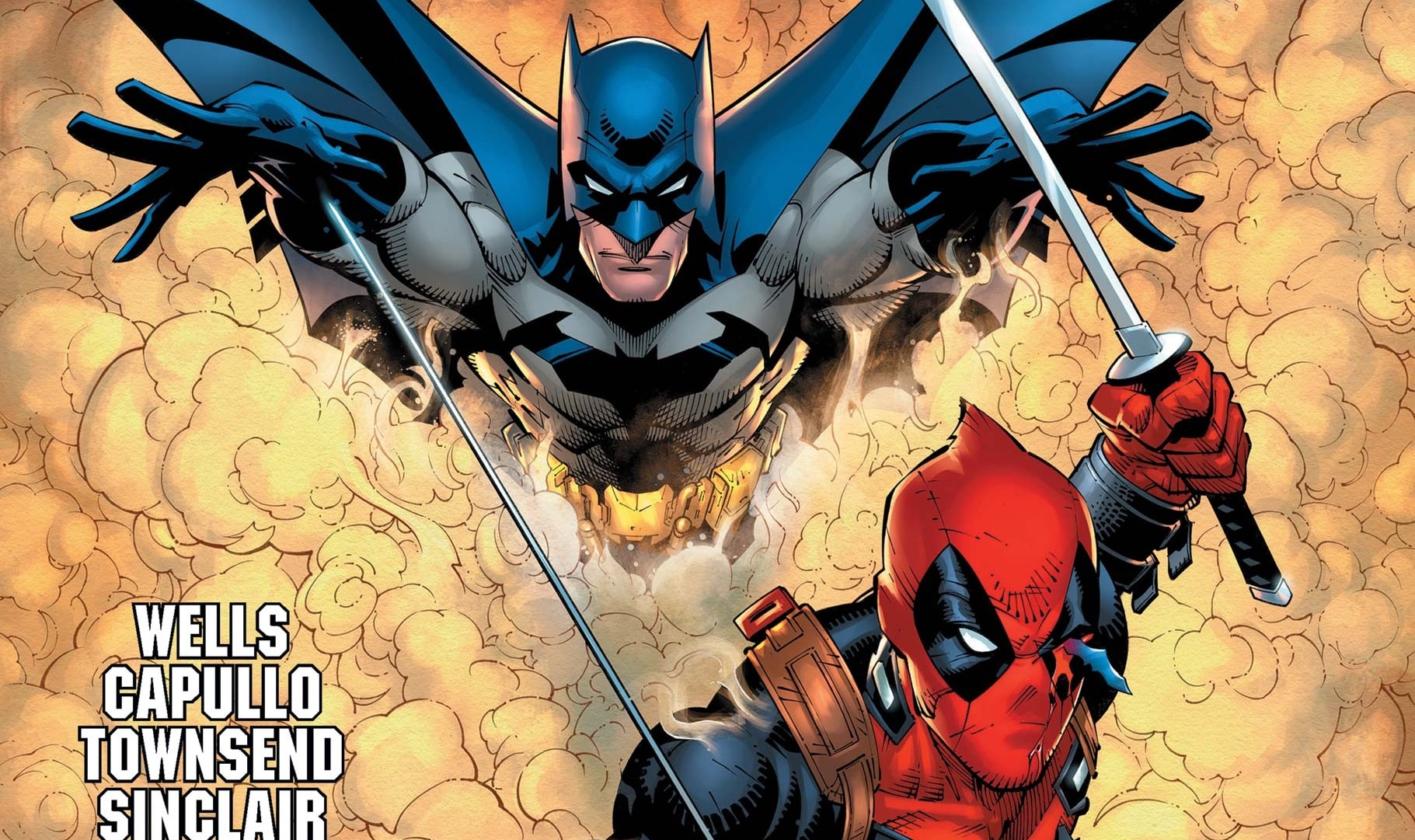
Wade Wilson has been hired for a job in Gotham City, but will the world’s greatest detective help him or destroy him? Deadpool/Batman #1 features a main story written by Zeb Wells, drawn by Greg Capullo, inked by Tim Townsend, colored by Alex Sinclair and lettered by Clayton Cowles. AND …
- A Captain America/Wonder Woman story by Chip Zdarsky, Terry and Rachel Dodson, and Joe Caramagna.
- A Jeff the Land Shark/Krypto story by Kelly Thompson, Gurihiru and Caramagna.
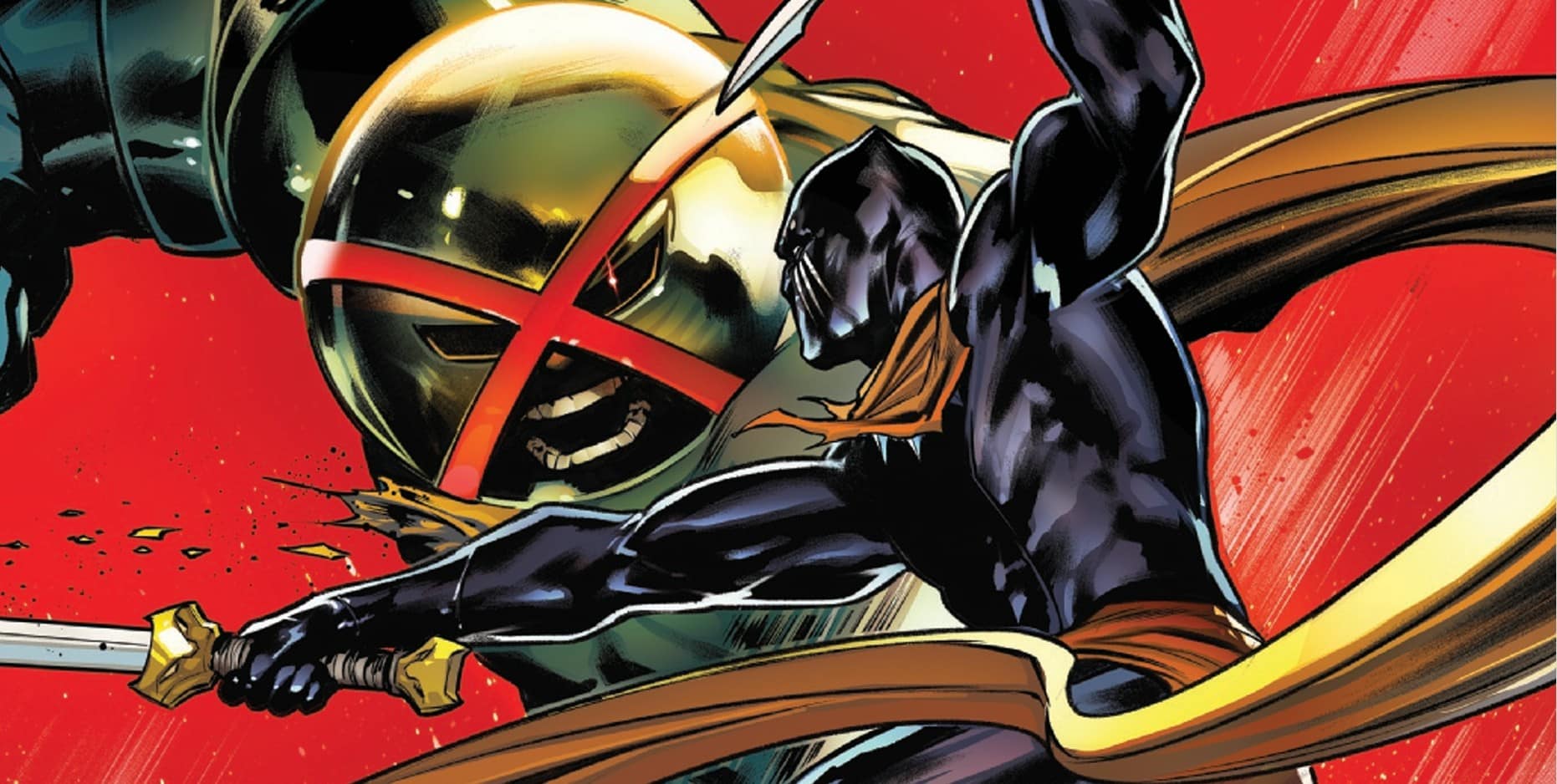
- A Daredevil/Green Arrow story by Kevin Smith, Adam Kubert, Frank Martin and Caramagna.
- A Rocket Raccoon/Green Lantern story by Al Ewing, Dike Ruan, Morena Dinisio and Caramagna.
- An Old Man Logan/Dark Knight Returns Batman story by Frank Miller, Sinclair and Caramagna.
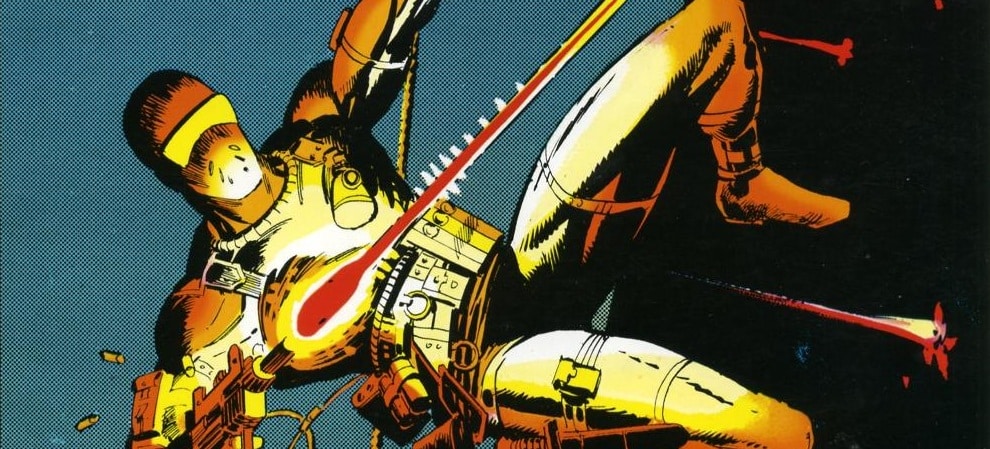
- And introducing Logo by Ryan North, Ryan Stegman, Martin and Caramagna.
Tony Thornley: Hello, everyone, and welcome to the biggest event in two universes since Superman picked up Thor’s hammer! And what a big event it is! Kinda. Sorta. I guess.
Dan Grote: It is a big event! It’s probably not X-Men Vol. 2 #1 big, but considering it’s been more than 20 years since Marvel and DC last crossed streams, it’s fair to say attention must be paid.
The problem is, everyone’s gonna be distracted by Hitler.
Tony: Dammit, Adolf!
When Wade Went to Gotham

Tony: Mostly, I liked the main story, but I am famously the cross-company crossover guy for ComicsXF. Deadpool bursts in on Bruce Wayne in a parody of the famous “I shall become a bat” scene and kicks off nearly 30 pages of chaos. Naturally that means Jim Gordon, the Joker and lots of fourth-wall breaking and dumb jokes.
The broad strokes are that the Joker uses technology and magic and such to find someone crazier and more annoying than him from another universe to help take care of the Bat once and for all. Batman sees right through it, Wade turns on the Joker and it all ends with a tease for November’s DC companion one-shot.
Wells is fairly reserved, giving us a decent balance between Wade’s crazy and Bruce’s grim and gritty. The art is on point (funny enough, this is Capullo’s second cross-company crossover in three years, after 2022’s Spawn/Batman). It’s fluff, but it’s fun fluff with some flaws.
Margot Waldman: Why are there, like, three jokes about Batman being weird toward kids? Was this necessary? Was this funny? Was this enjoyable? I feel like if we’re buying this comic we like Batman and are fine with the tropes of his world. We know Jim Gordon has a dumb mustache and that Robins do not make much sense. But this is a world where there have been like six Camelots and it is extremely logical to put on Bat-Kevlar. I feel like JLA/Avengers was wonderful at understanding the different levels of absurdly heightened reality that the Marvel and DC universes respectively inhabit. This is just snotty.
Tony: I can see that, and if it had been any co-star but Deadpool, it would have bothered me more. Having Wade as the co-star made those jokes an eye-roll but not much more.
Scott Redmond: For the first official Marvel-DC crossover in a long time, this was kind of underwhelming. Deadpool is already a hard-sell character, despite his popularity and the sacks of cash he might have brought on the big screen. Having Batman be the stoic “straight man” to the joke machine isn’t something new, but it feels especially old at this point. There’s not a ton here other than Batman is naturally 15 steps ahead and knows how to pull the right threads with both Deadpool and Joker to barely pull off a win in the end. Even Joker trying to co-opt therapy language and subcontract out feels forced in so many ways, even if it’s a very Joker thing to do.
Dropping the same tired jokes about Batman and his world quickly reminded me of how tiring I find most renditions of Deadpool — nothing of real substance, a character who exists to break walls and spew “hilarity” across the page at every instance. Why he’s paired with Batman doesn’t even make any sense.
If we’re going to go for grabbing the characters that are the most prolific cash cows for the company, it’s not Deadpool that’s supposed to be on that title line. I’m just saying, the Bat and the Spider could have been more fun. Maybe. Who can say with how comics stand at this moment.
Dan: See, I tend to have more of a soft spot for Deadpool than most, seeing as I got into him well before he’d worn out his welcome, when the idea of him having a solo ongoing was a novelty. Notably, that’s about when Marvel and DC had their big crossovers in the ‘90s, and Wade didn’t really get to play. Fast forward 30 years, and Deadpool’s a movie-headlining A-lister, like it or not, so it makes sense why they’d pit him off against Batman, comics’ most popular superhero. And I liked the story playing Deadpool as a wildcard or possible third in Batman’s co-dependent relationship with the Joker.
What I didn’t like about this story was the lettering. And you might think it’s all the custom word balloons for Deadpool and Joker, but no, it’s actually the plain word balloons for Batman. There’s a slight, too-thin quality to them in places, almost like the printer ran out of ink. Thirty-plus years of comics have trained my eye to accept Deadpool’s yellow balloons and slightly bolder speech. I’m not as expertly read in Joker’s wobbly balloons and curvier fonts, but if it’s standard DC practice to letter the character that way, fine. But given they saved Cowles — one of the better letterers out there, mind you — for the main story leads me to think I should have noticed his work less.
Rasmus Skov Lykke: I liked the main story fine enough. I felt the first half of it was vastly superior to the rest, as we saw Deadpool and Batman interact, which brought a decent amount of fun moments (and a lot of eye rolls, as is usual with Deadpool). This kept up when Deadpool met Gordon, with him having none of Wade’s attempts at humor. A very one-sided fight broke out, which I found delightful. In the old crossovers, there was a lot of consideration made to not make either character look weak or lose face. And here Wade just gets his butt kicked by Batman. (Sure, we later learn it’s by choice. But there’s no triumphant rematch where he beats Batman. And this is even in Marvel’s part of the crossover!)
I think the story fell apart with the introduction of the Joker. It didn’t feel like Wells had a good handle on him. There was no menace, no chaos to him. Just a lot of dull talking and exposition. The story beats were very easy to see coming, and everything just fell flat after the drive in the Batmobile.
Luckily, there’s a number of backups to save us!
…right?
That second story

Adam Reck: For a book that seems to be advertising a good time, its second story hinges on a story beat from Chip Zdarsky and Terry Dodson that I would argue is antithetical to the entire ethos of what Marvel Comics was born from. A premise that, if Jack Kirby were alive to see it, would have enraged him. I’m talking, of course, about Wonder Woman stopping Captain America from killing Hitler.
If Kirby were known for anything aside from being one of the founding creative forces behind Marvel, it would be his adamant and justified hatred of Nazis. He famously drew Captain America punching Hitler in the face a full year before American troops entered World War II. Multiple anecdotes and quotes (ex.: “The only politics I knew was that if a guy liked Hitler, I’d beat the stuffing out of him and that would be it.”) point to his willingness to throw down with anyone who associated or aligned themselves with Nazis. And he didn’t just punch Nazis, Kirby killed them abroad during his time in the infantry, just as his creation did, with Cap killing countless Nazis in his adventures abroad on the page.
Over the decades, Marvel has lived up to Kirby’s firm anti-Nazi stance mainly through fictional analogs like the Red Skull and Hydra. One of the best of those moments came from Mark Gruenwald and Kieron Dwyer, who had Holocaust survivor Magneto bury Red Skull in a hole to suffer and die like his victims as part of the 1990 “Acts of Vengeance” event. In other cases, Marvel has made poor jokes out of whether or not to kill Hitler. In 2014, Duane Swierczynski and Pepe Larraz had Deadpool don swastika-laden armor and defend Hitler from Cable (yes, you read that right) in Deadpool vs. X-Force.
Zdarsky’s story also completely ignores the Marvel Universe’s actual, canonical death of its fictional Hitler, who was burned to death by Jim Hammond, the original Human Torch, in Young Men #24 (1953). Lest that be forgotten as a Golden Age relic, Roy Thomas and Frank Robbins retell the story in the prologue to What If? Vol. 1 #4 (1977), and Mark Waid and Javier Rodriguez make sure it’s part of the definitive timeline in 2019’s History of the Marvel Universe #2.
Tony: It’s canon to the current Ultimate Universe too, as Ultimate Jim Hammond recounted the moment in loving detail.
Margot: It also showed up in a Pride story like three seconds ago. So.
Adam: Marvel and DC are both owned by multinational corporations whose primary shareholder concerns range from theme parks to farming IP for streaming media. Given the current political climate and the aggressive stance of retribution from the current administration, it makes cowardly sense why Cap could be convinced to stand down. But it reeks of centrist apologia, and Zdarsky should know better. It would have been better to avoid this topic at all than make it the centerpiece of what “justice” means in this story. The creation and addition of this into what will inevitably be a best-selling crossover issue is hugely problematic and deeply disappointing. Surely, Kirby is rolling over in his grave.
Dan: I see what Zdarsky and Dodson are trying to do. Effectively, they’re trying to make Steve Rogers Wonder Woman’s Steve Trevor in an amalgamated reality — the career military man in Man’s World whom Diana comes to love, albeit seemingly platonically. A history of a combined Marvel and DC Universe flashes before our eyes — Cap coming out of the ice, the coming of Galactus, Crisis on Infinite Earths, Civil War, a last stand against Thanoseid — but it centers on the pivotal moment when Diana talks Steve out of killing Hitler, an injection of the real world into the fantastical born from the fact that many Golden Age superhero comics were propaganda filled with ads for war bonds.
It’s shocking, seeing Cap with a gun. There’s precedent for it, especially in the original Golden Age comics and the First Avenger movie, but it’s not something you see all that often. You could make the argument that a young Steve Rogers, early in his career, fresh out of boot camp, would use a firearm and would be tempted to use it on ol’ Adolf. You could also argue it’s wildly out of character in modern contexts.
But also, like, we all took a meeting about this, right? Like, we were good with killing Hitler. Did someone rewatch Inglorious Basterds recently and decide, “Y’know what, on second thought, that’s a bit much. Let’s try bringing him in by the book”? If we’re gonna hedge on this, why even have Steve and Diana meet during WWII? Why not put them both in Siancong or Latveria or one of the made-up places?
Anyway, the Hitler thing overshadows a smaller creepy moment toward the end of the story: Why is Carrie Kelley or whatever Robin that’s supposed to be sitting on Unca Steve’s lap like that?
Sean Dillon: That would be Wonder Robin, Wonder Woman’s daughter with Steve Trevor. Given the combined history of the Marvel and DC Universes expressed here (presented rather drably and lacking the implications of Zdarsky’s Spider-Man: Life Story), the implication appears to be that in this timeline, she’s the daughter of Steve Rogers. Which is rather boring, all things considered.
Margot: I don’t know why this story even had Hitler in it. It’s just … inconsequential. And frankly, Steve Rogers as Steve Trevor is kind of insulting to Steve Rogers, if we’re very very honest with ourselves. I mean, Steve Trevor is just some guy.
Rasmus: Agreed!
The comparison between the two Steves doesn’t come off well for poor Steve Trevor either, because the moments of seeing Diana and Cap’s relationship throughout the years were very sweet and a lot of fun. Zdarsky has said this story would be everything we would want from the team-up, and I’m inclined to agree. All of the amalgamations of key DC and Marvel moments were fun, touching and clever. The Dodsons do a wonderful job with the art, striking the proper hopeful tone for both characters.
Which is why it sucks that they drop the ball on the Hitler issue so bad.
Scott: My wonderful colleagues spoke about all of the issues with this story perfectly. Just a really odd story that had some potential with the two characters, which was promptly thrown away for the Hitler bit. Hell, even just a journey through time of the conjoined Marvel-DC ’verse with two characters always out of time could have been more fun on its own.
Tony: Outside of the “always punch Nazis” of it all, I think this is one of the best of the special, but man, that plot point drags it down BADLY.
And the rest

Sean: In many regards, the problem with this issue is that it feels so … standard. All of the stories feel like business-as-usual affairs. Kelly Thompson and Gurihiru’s Jeff the Land Shark meets Krypto the Superdog feels like yet another Jeff strip without anything that makes the presence of Krypto notable. Kevin Smith’s long-awaited return to Green Arrow (and, to a lesser extent, Daredevil) feels like a standard “two heroes meet while fighting baddies” story without any flair. Frank Miller takes the premise of Batman vs. Wolverine and basically does nothing with it. (Not helped by having only three pages to work with while the aforementioned Green Arrow/Daredevil and Captain America/Wonder Woman stories each get eight, making them the longest backup stories within the issue.) And Logo is … not so much a story as a pitch for a series that will never happen.
Tony: I liked Krypto/Jeff and Green Arrow/Daredevil, but you’re absolutely right. GA/DD was a really solid take on both heroes that didn’t have enough space for Kevin Smith to get too Kevin Smith, and Krypto/Jeff was cute. But it was just a normal Jeff strip with a guest star (which is neither good nor bad).
Rasmus: I believe this is my first time reading a Jeff strip. It was fine. I like cute animals, and this was two animals being cute. Nothing that made me want to explore more with either character, but a cute little comic that brought a smile to my face.
I was a big fan of Kevin Smith’s early movies as a teen, and then his Daredevil and Green Arrow runs hit just a few years later, both of which I adored as well (if nothing else, the art on both is sublime). So I was looking forward to this, despite Smith’s quality lessening considerably in the years since.
This was a fairly simple story. The main reason for putting these two characters together is that Smith has history with them. But he manages to find a good hook in them both fighting ninjas, which gives Adam Kubert some great visuals to draw (once again, the art is the highlight of the story).
The ending with the Battlin’ Jack Murdock boxing glove arrow is either cute or saccharine, depending on your tastes. It managed to thread the needle for me, and felt like a nice little bow on this vignette.
Sean: The closest to doing something with the idea of Marvel and DC crossing over in these backups is Al Ewing and Dike Ruan’s Rocket Raccoon/Green Lantern. But that’s basically just a two-page shitpost about how bad of an idea doing a crossover between Rocket Raccoon and Green Lantern would be. It’s a funny crossover, probably Ewing’s best Marvel work in a while, but it’s still very light, not the least of which due to being the shortest story in the collection at two pages.
One gets the sense reading these stories that they really shouldn’t have been made. No one has an idea of what to do with these characters meeting in a way that isn’t the most bog standard and obvious things imaginable. There’s no clever wit to any of these. Even the main feature feels tired, like an old showpony that’s been dragged out for everyone to gawk at, but the beauty and spirit of the thing has long since dispersed into the ether.
Contrast it with the recent Aliens vs. Avengers, where things are radically altered on the Avengers front to fit within the implications of Alien. It’s not simply modern-day Captain America fighting a facehugger or Kraven the Hunter joining the Predators to kill all the Marvel characters in a way that emphasizes absolutely nothing interesting. There is real engagement in the themes of both Jonathan Hickman’s earlier Avengers run as well as the moral and thematic implications of the various Alien stories. There’s a reason for these characters to be crossing over beyond “I just want the action figures to bash each other again and again.”
Even from an artistic perspective, there’s simply no sauce here. It’s not even that the art is consistently bad, though this is perhaps the weakest work Frank Miller has done, lacking the perverse horror of his Scrooge McDuck variant cover or even the abstraction he appears to be angling toward. Rather, the work is consistently mediocre. Gurihiru’s cartoonish art style feels rather basic, lacking a dynamism in action that the premise of “animals play volleyball” would require. To pick an American example, Sophie Campbell’s Streaky the Super Cat short, “Hissy Fit,” in Superman: Red and Blue animates its titular character with a high degree of emotion, highlighting more interiority than “is cute animal.”
Adam Kubert, meanwhile, is constrained by Smith’s dialogue and, as such, isn’t able to go as full HAM. There are hints of it in the brief encounter with Count Vertigo that distorts and removes the panel borders to highlight the villain’s sonic abilities. But it’s far too brief to fully work. In some regards, one wishes this was a six-page fight between Daredevil and the Count rather than a team-up between the two heroes, if only to allow for the visual inventiveness of a sonar-based hero fighting an audio-based villain.
Instead, the eight pages make the story feel overlong and drab, like the rest of the collection. There’s no care for form, for theme, for meaning. It’s not even interesting from the perspective of lore-pilled nerds who obsess over the intricacies of Batman’s bowel movements. It’s just a book that was released with the assumption that the novelty would be enough. It’s not and never will be.
Adam: There’s no better argument against publishing new Frank Miller pages than actually seeing them. I can’t get mad at a Guruhiru/Thompson Jeff & Krypto.
Rasmus: I recently went on a library-fueled Miller binge, reading all of Sin City, all three Dark Knight Returns, Ronin and 300. And his legacy is almost enough that I’m willing to cut him all of the slack, because goddamn has he done some amazing work.
But then there’s Holy Terror, which just threw a lot of his previous material into a clearer light, making it clear that what we thought was satire was perhaps less complex. So there’s a lot less benefit of the doubt to go around.
And, as Adam said, we can just look at his current work and see that he is simply not capable of producing work that would be published were it by anyone else.
Dan: That Miller backup was ASS. A scene-setting caption describes the action as taking place “somewhere deep in Gotham City,” but when you don’t bother drawing backgrounds, how is anyone supposed to know that? It might as well have been a Marvel vs. Capcom training stage. And ultimately, it was just two old men yelling at each other about them being old. All the action happens in silhouette; you don’t see any hits connect. It looked like a crudely drawn doodle in a child’s notebook. And if it’s Old Man Logan, why does he have Regular Man Logan’s hair?!
I mostly liked the Daredevil/Green Arrow story, except for two things: 1) The horizontal two-page spread. I understand it’s meant to be read physically and you can just turn the page in your hands, but given it happens once in the entire book, there’s no real warning for it and it’s just a pain in the ass for the sake of being “interesting.” 2) The scene opens with DD and GA fighting their respective groups of ninjas, but then it only introduces Count Vertigo, so whatever parallel construction the story had going for it was lost. You couldn’t find a way to work in Typhoid Mary or Bullseye to even things out?
Jeff and Krypto were cute little blorbos being cute little blorbos, Rocket/Green Lantern was more fun than I was expecting, and Logo was an Amalgam throwback in that it was little more than a thin pitch document but I didn’t hate it.
Margot: I like Jeff, and I like Krypto. I like Rocket being silly. I did not much like anything else.
Scott: Jeff and Krypto is the type of silly little crossover thing that at least elicited a smile from me. Did I need it? Not really, because it’s just clearly capitalizing on both characters being in massively popular media projects at the moment. At the same time, at least it was something the creators tried to have some fun with.
The rest just feels so very forced in a lot of ways. Throwing characters together, finding loose reasons for them to be together, and requisite action or quipping bits peppered in. Most aren’t offensive or bad in any sort of way. They are just sort of there for the most part. Definitely would have left the Miller stuff to the side, because … yeah.
This issue might stand as the perfect evidence of the depth of capitalization of media we now face: an amalgamation of characters and bare basic ideas pushed together for the money-making potential and not because anyone had any genuine “need to do this now” grand creative ideas.
Tony: For me, the other shorts went — from worst to best — Miller’s disaster, Logo, GL/Rocket, Krypto/Jeff and GA/DD. All of them were flawed in one way or another but ultimately were worthwhile to at least some degree, except that Miller short. That was trash.
Amalgamated afterthoughts

- Logo being the name for the amalgamated Wolverine/Lobo is a pretty funny meta joke about their ’90s overexposure. Otherwise, that was nothing.
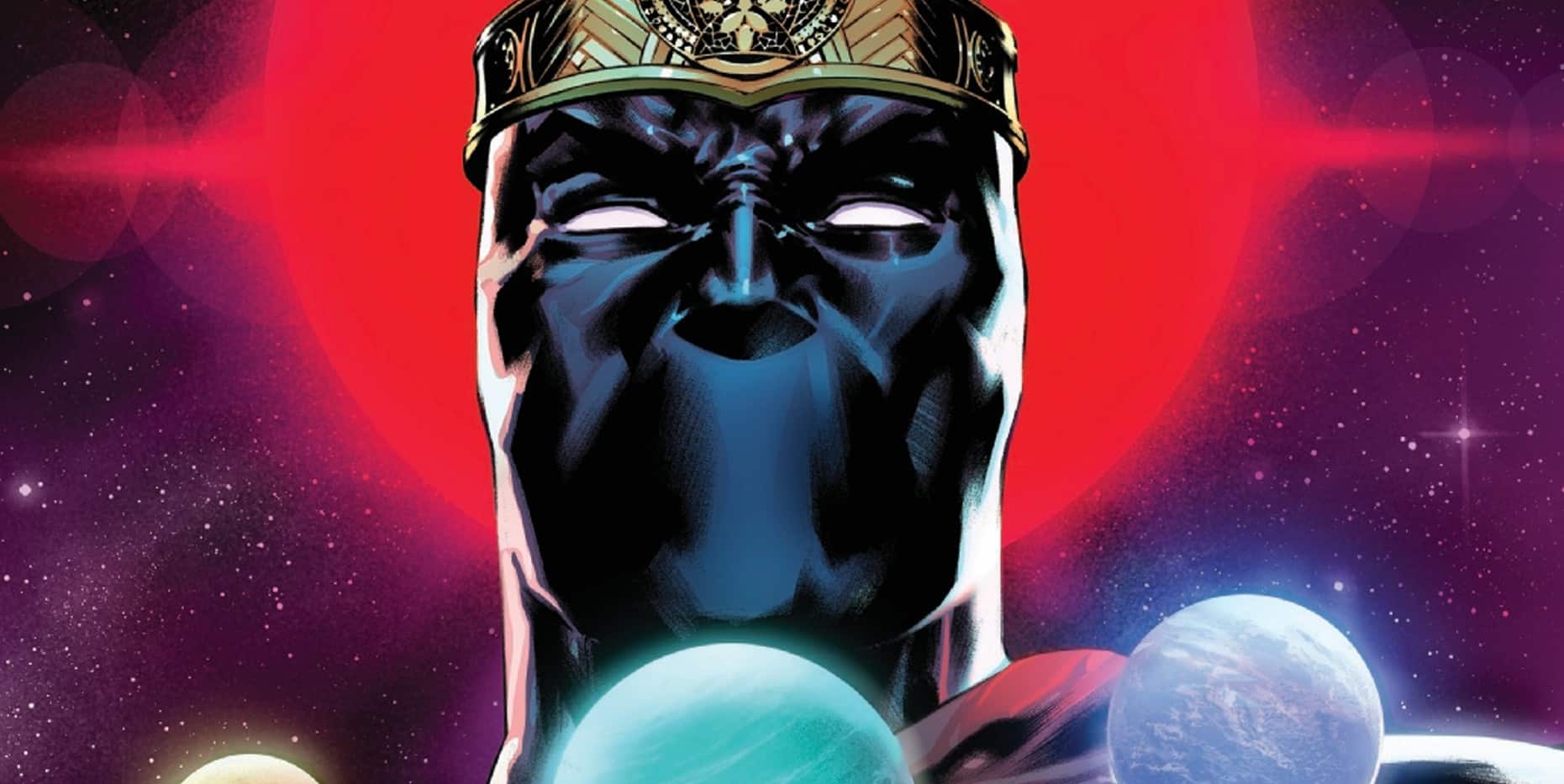
- It did give us the “Thanoseidcopter” too, which is delightfully dumb.

Tony Thornley is a geek dad, blogger, Spider-Man and Superman aficionado, X-Men guru, autism daddy, amateur novelist and all around awesome guy. He’s also very humble. Follow him @brawl2099.bsky.social.

Dan Grote is the editor and publisher of ComicsXF, having won the site by ritual combat. By day, he’s a newspaper editor, and by night, he’s … also an editor. He co-hosts The ComicsXF Interview Podcast with Matt Lazorwitz. He lives in New Jersey with his wife, two kids and two miniature dachshunds, and his third, fictional son, Peter Paul Winston Wisdom. Follow him @danielpgrote.bsky.social.

Adam Reck is the cartoonist behind Bish & Jubez as well as the co-host of Battle Of The Atom. Follow him @adamreck.bsky.social.

Margot Waldman
Margot Waldman is a Mega City Two-based scholar, researcher and writer. Her great loves are old comics, Shakespearean theater and radical social justice – in no particular order. One day, she hopes to visit the 30th century.

Scott Redmond
Scott Redmond is a freelance writer and educator fueled by coffee, sarcasm, his love for comic books and more "geeky" things than you can shake a lightsaber at. Probably seen around social media and remembered as "Oh yeah, that guy." An avid gamer, reader, photographer, amateur cook and solid human being. Follow him @scottredmond.bsky.social.

Sean Dillon is a writer/editor for numerous publications, including PanelxPanel, Comic Book Herald, and Arcbeatle Press. He is the author of two books.

Rasmus Skov Lykke
Rasmus Skov Lykke will write for food (or, in a pinch, money). When not writing, he spends his time with his wife, their daughter and their cats, usually thinking about writing. Follow him @rasmusskovlykke.bsky.social.