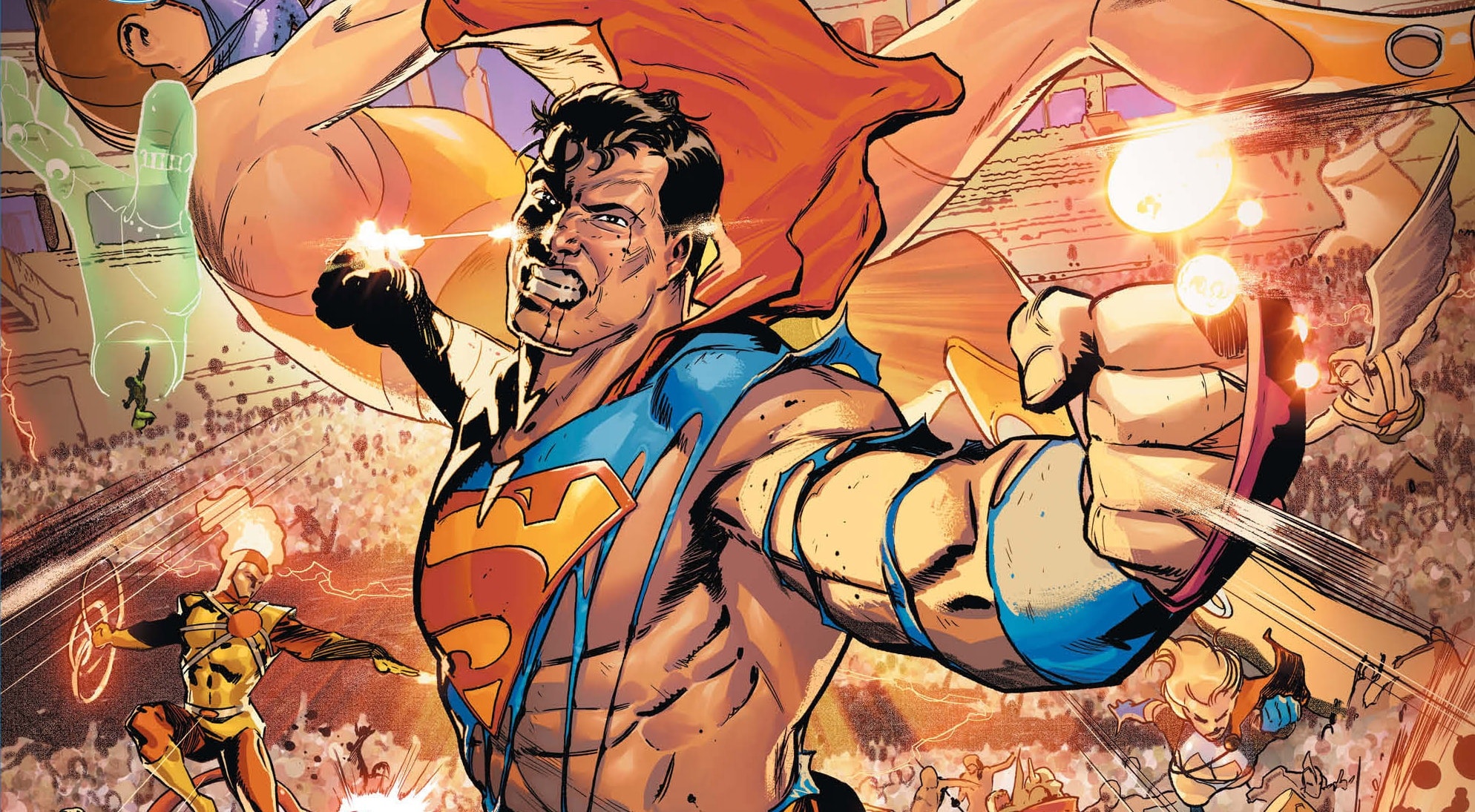
The Heart of Apokolips has transformed Earth into a hellscape in preparation for the return of Darkseid, and the Justice League’s only chance to defeat him is to enter a deadly tournament. The world’s greatest heroes fight to become the champion to enter the ring against Darkseid, but there’s a catch: The closer you get to the Heart of Apokolips, the more it corrupts you, changes you into something dangerous. Which DC character has what it takes to make it to the end? DC K.O. #1 is written by Scott Snyder, drawn by Javier Fernandez, colored by Alejandro Sanchez and lettered by Hassan Otsmane-Elhaou.
After Absolute Power, DC Comics has been building to a universe-ending crisis for the past year-plus. It’s been the focal point of Justice League Unlimited, Superman, the Absolute line and more. But now, our heroes have been given a timeline: The universe is going to end in the next seven days, unless a champion is able to take up godlike power and face the approaching threat head on.
Darkseid is. And this time, he’s more powerful than ever.


Snyder goes no-holds-barred with this debut issue, and frankly, it’s a breath of fresh air. I usually like Snyder’s work, but it often has a thread of pessimism or nihilism underpinning it (his Justice League and Superman excepted). Sure, sometimes, it’s about the hero overcoming the darkness, but still, it’s ever present.
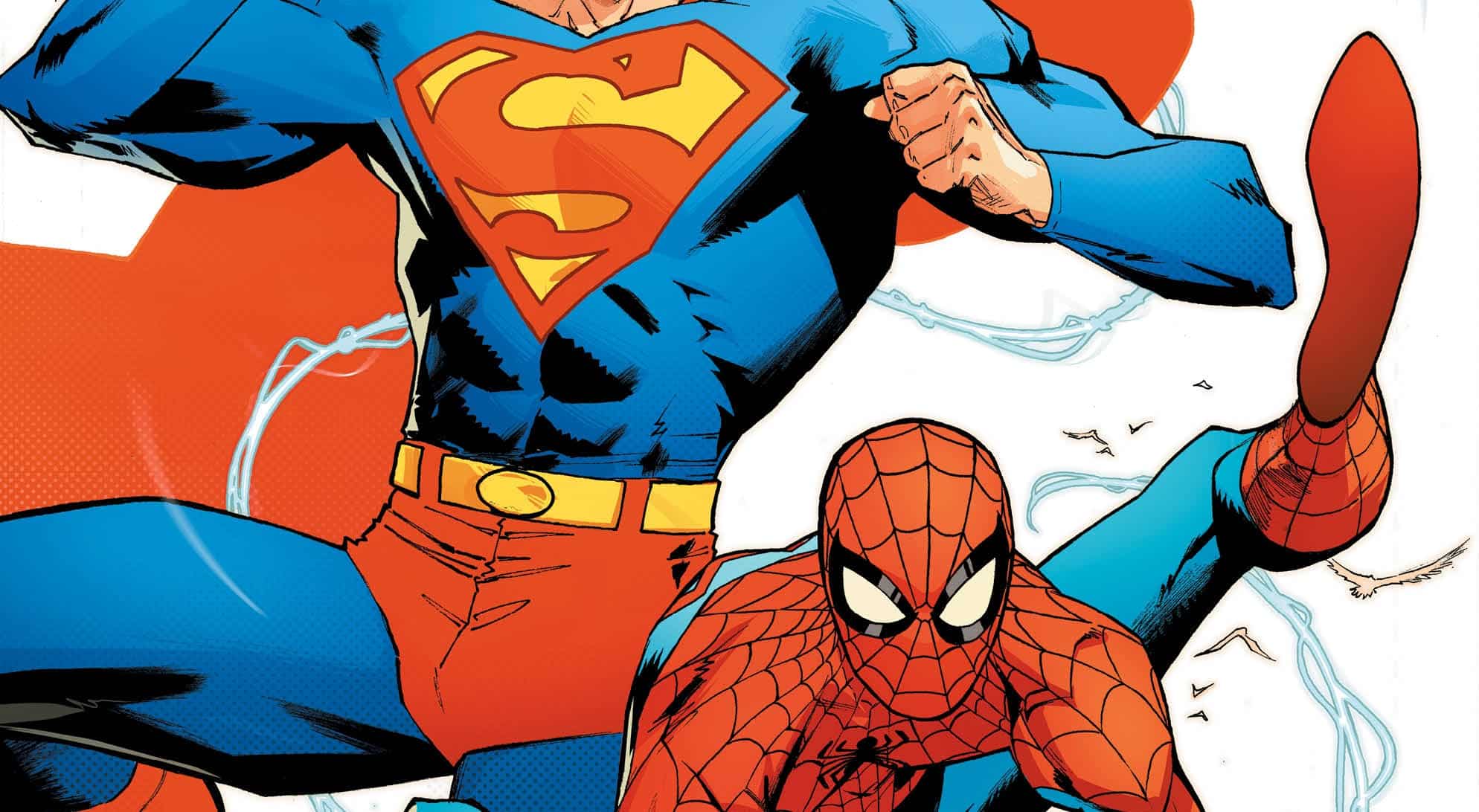
This story is about hope, though. And by focusing on Superman, that hope comes through strong. This is a story about Clark Kent leading the Justice League to save not just the world, but the universe (maybe the multiverse). More than anything else, this issue reminds me how good Snyder’s take on Superman is. He’s not just the ultimate optimist, he’s the ultimate defender — someone who will sacrifice his life to ensure that his friends and family are safe.
The stakes are set early. There’s a plan that could give a single member of the League godlike power to save the universe, but it’s entirely possible that people — heroes, friends, family — will die along the way. The godlike power could save them or bring them back, so the reward outweighs the risk, especially since it’s apparently only the League competing for the power.
(Honestly, it’s a pretty complicated plan that requires you to read the issue to get the full scope.)
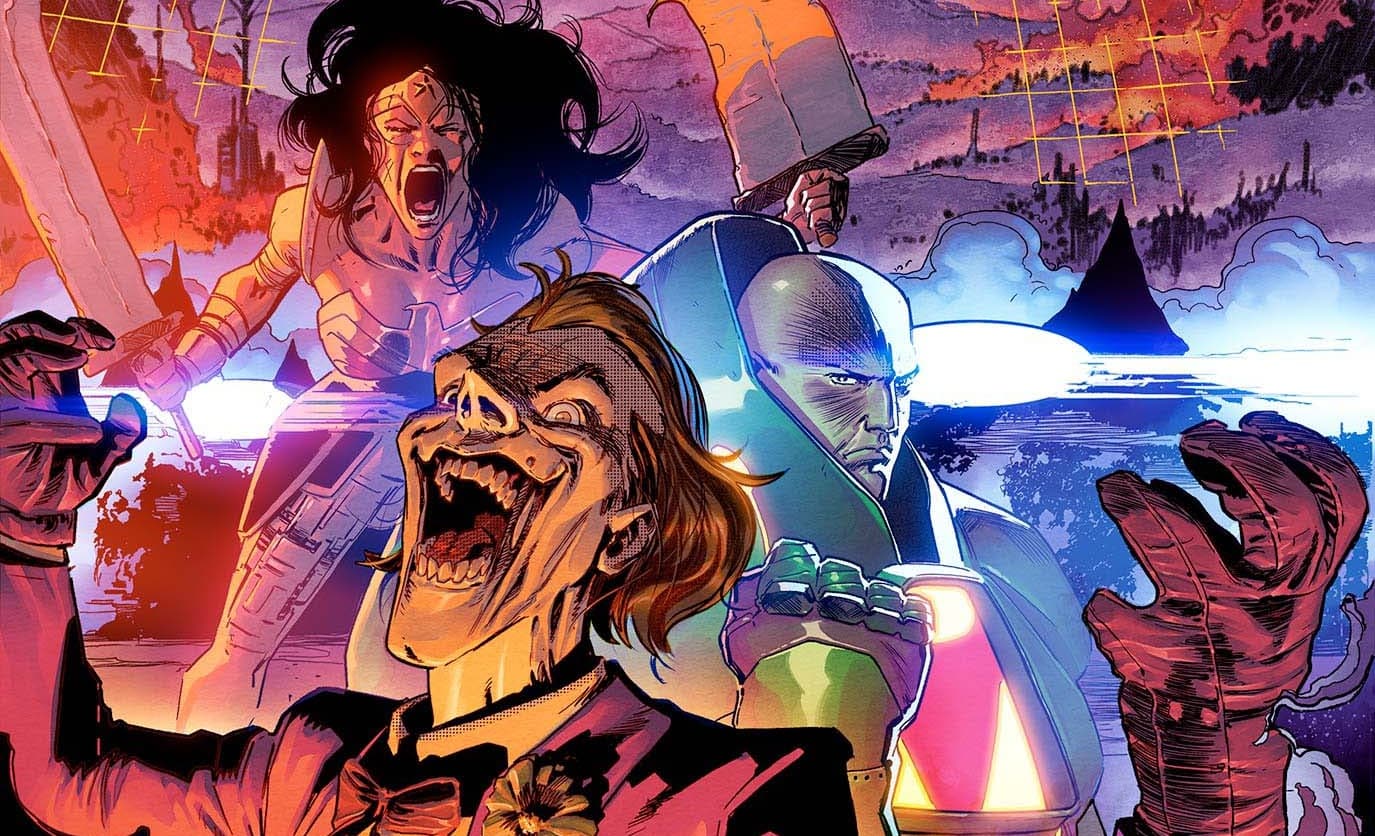
What’s that, you say? There are villains in the fight bracket? You’re absolutely right, and there lies the first of several fantastic twists in the last six pages. Despite (horrifyingly) locking away the villains in the Phantom Zone, in the last moments of what I can only call the preliminary round, the Legion of Doom breaks through and enters this cosmic tournament … by killing Batman.
Yep. The Dark Knight, DC’s #1 hero, the character this event’s writer has the most affinity for, dies in the debut issue of this massive event, and the Joker takes his place on the bracket.
[Editor’s note: Fortunately, none of us in the ComicsXF DC K.O. office pool picked Bats to go all the way! Keep hope alive, Power Girl fans!]
It’s a shocking moment that establishes the stakes of the story. The villains could win, and then what hope does the universe have? (I won’t spoil the other twists, but they’re equally huge.)
Fernandez’s art is fantastic throughout, and I think a big part of it is that it’s a break from the DC house style (closer to Marvel’s, really, or maybe Nick Dragotta and Hayden Sherman). Now, don’t get me wrong — I like DC’s house style. Dan Mora, Daniel Sampere and Jorge Jimenez are all fantastic artists that do great work, and set the standard for DC’s style throughout the line.
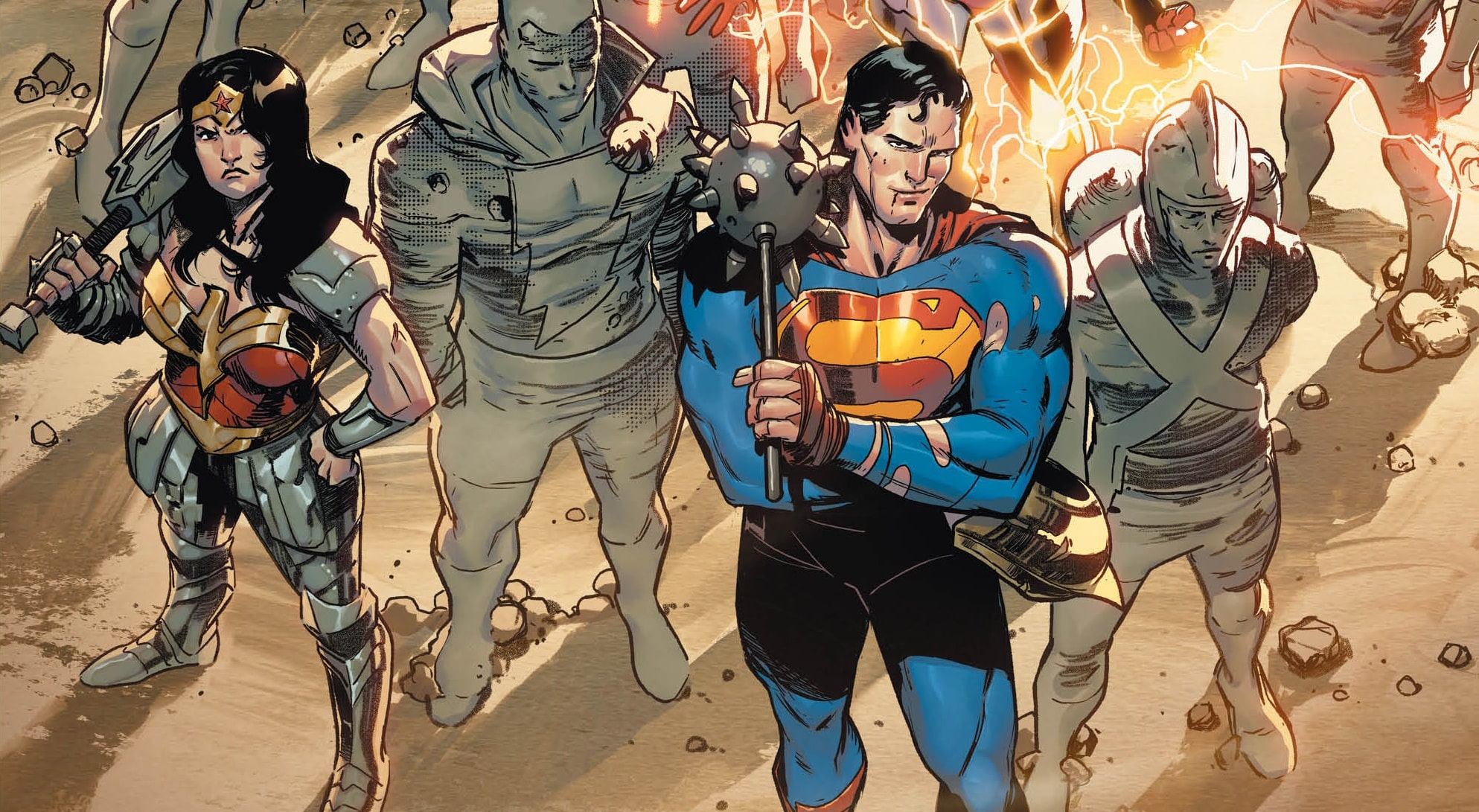
But Fernandez’s work is much more fluid, and that makes it more versatile. He’s able to create dynamic action beats, interesting expository panels (something that doesn’t get noticed enough) and quiet emotional character moments. Best of all, they all look equally great. Sanchez also keeps up with the colors. The Darkseid attack is bathed in red without being saturated in it. The preliminary fight is covered in dust and grit mostly conveyed in the grays and browns Sanchez uses. It’s such good complementary color art.
I especially have to call attention to Fernandez’s work on Superman himself. Snyder and others have called DC K.O. a Superman story. Without his depiction of Clark throughout, I don’t think that would have come through quite as much. In the quiet moments, you can see Clark’s body language and facial expressions talking as much as the dialogue and captions. In the chaos of the action, even when Superman isn’t the focal point, he gives us flashes in inset panels or backgrounds that keeps Clark in the frame.
Meanwhile, Otsmane-Elhaou’s letters convey tone and changes in speech patterns in interesting ways. But the narration does have some weird shifts in font to emphasize certain words and phrases that I’m not totally sold on, because the emphasis font is SUCH a big change in both style and size.
Overall though, I came out of this issue not just enjoying what I read, but excited for what’s next. I don’t just mean the next issue of DC K.O., either. For the first time in a long time, I’m curious about the tie-ins (particularly Knightfight) and how the overall DCU is going to be affected.
This is what an event needs to be, and I’m down for the next round.

Buy DC K.O. #1 here. (Disclaimer: As an Amazon Associate, ComicsXF may earn from qualifying purchases.)

Tony Thornley is a geek dad, blogger, Spider-Man and Superman aficionado, X-Men guru, autism daddy, amateur novelist and all around awesome guy. He’s also very humble. Follow him @brawl2099.bsky.social.