You’d expect to find these pictures buried under dust in a photo album hidden in your attic: a nascent student-artist exuding an innocuous humility; a high-watt smile very possibly fueled by the Heineken in the background; warmly tinted photos taken on a warm day. Chadwick Boseman, the talented actor, the international superstar, the man best known as a king … the disarmingly normal human.
That humanity is why I haven’t written about him until today.
There’s a maxim known among us older Black folk, an ironic double entendre that took root among Black people before Black people were called Black people: “It’s a small colored world.”
I did not know Chadwick, and to my knowledge we’ve never met. Yet our community is shockingly small, with social circles deeply intertwined, professionally and personally. He graduated from a school where many of my friends were educated at the same time those friends took residence there. We, in fact, share a few friends.
Unsurprising: It is a small colored world, after all.
It’s because of that smallness that I bet I can make some grand assumptions about him.
I bet we listened to the same music. I bet we liked the same art. I’m willing to bet we found the same kind of women attractive, were inspired by the same kind of leaders, and were incensed by the same kind of tragedies.
I did not know Chadwick, yet I felt like I did. In fact, in so many ways, I felt like I was Chadwick.
So of course I couldn’t write about Chadwick’s death, for I was not yet ready to write about my own.
The life expectancy in the neighborhood I grew up in was, at one point, 59 years old. So many Black men — from the poor and destitute to the prominent and resourced — have failed to make it to 60. Cancer specifically has taken so many around me; cancer took the closest person to me.
Cancer took Chadwick; cancer may possibly take me.
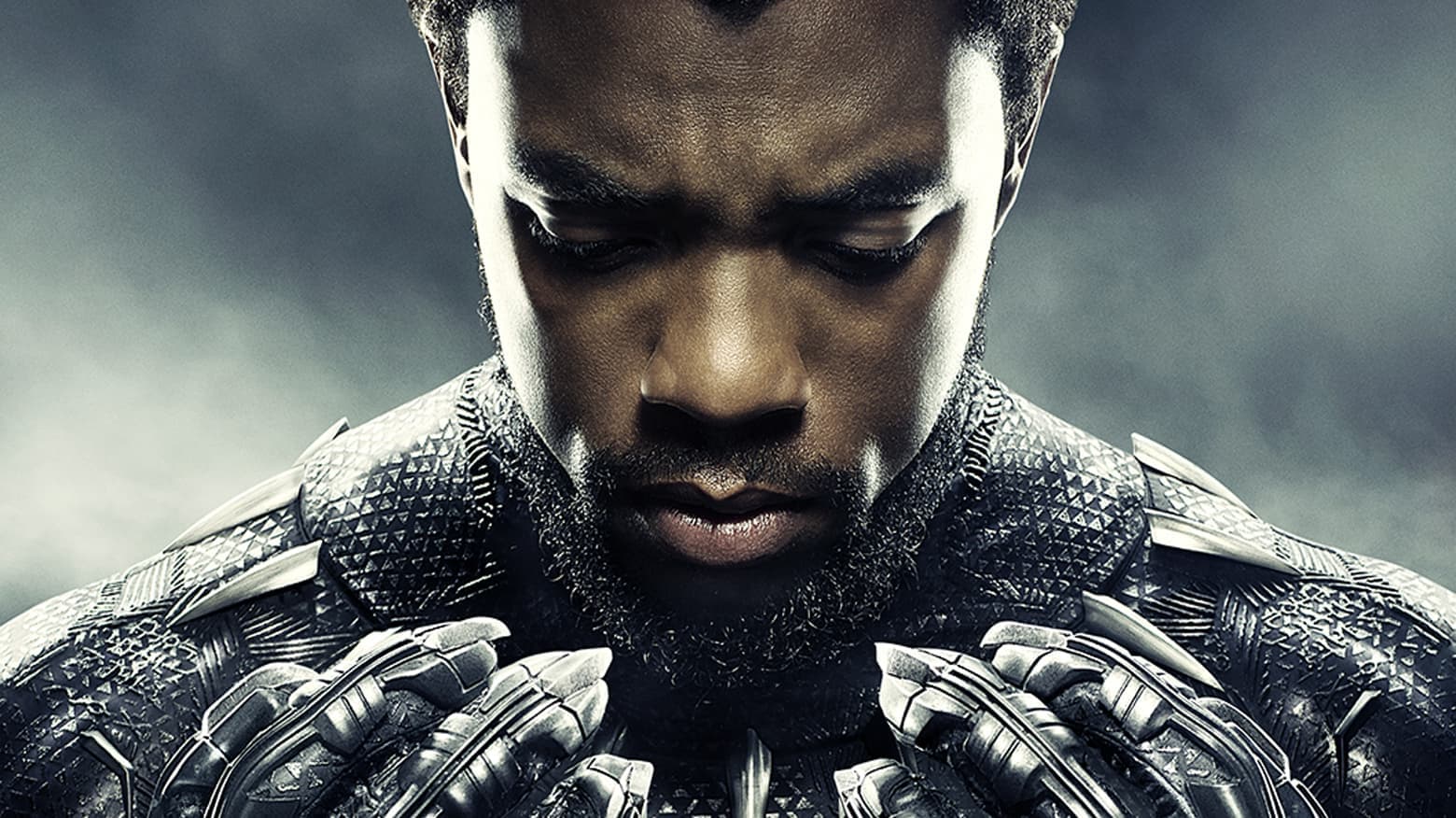
Look at him in Captain America: Civil War, then look at his significantly slimmer body in Black Panther. In retrospect, he looks emaciated. Even within Black Panther, you can compare scenes where Chadwick’s heft fluctuates noticeably.
He was dying to make that movie, literally killing himself for our entertainment.
Therefore I couldn’t write about Chadwick, because I was not yet ready to acknowledge what might be inevitable for me, and I was guilt ridden at the cost of my enjoyment. Thank goodness others filled the gap, doing much more than just writing, while finding a way to alleviate that guilt.
Wakanda Forever was many things: a towering visual achievement, a masterful reimagining of one of Marvel’s linchpin heroes. Yet more than anything, it was a motion picture memorial, a purposefully unsubtle means of mourning, a visual jazz funeral.
For years I’ve held a grudge toward those who disparaged the film because they felt an immediate recasting would have been right. I felt it coldly inhumane to ask all those on set and behind the scenes to replace their actual, real-life friend so coarsely and quickly. Still, I acknowledge the lack of Black American leads in film is unnecessarily frustrating. I acknowledge cinema (and comics) have a history of sidelining Black talent, so the fear that the gap left by Chadwick might never get filled comes with empirical data. I acknowledge Chadwick almost certainly would not want excessive accolades or reverence; the humility and humanity present in those early pictures almost certainly would not want to burden the world with never-ending bereavement.
But mourning is for the living, and bereavement is never a burden. Real humans deserve precedence and reverence over fantasy. I believe there should be (and will be) another T’Challa, and I believe that there’s no shame in taking time to honor the reason so many cared about T’Challa so deeply in the first place.
He deserved every accolade he received, from that memorial movie to an eponymous acknowledgment at his beloved alma mater to the star on Hollywood Boulevard.
I believe he would want his memory to elicit joy and progress, and all of these things elicit both.
Kids are learning to act because of him. Creators are creating better art because of him.
I have a doctor’s appointment in a week because of him.
Joy and progress. Joy and progress.
Maybe a bit too often, for reasons not joyous or progressive, I’ve faced my own mortality. In those moments, I’ve asked myself how I would be remembered, if I would be remembered. I asked myself what my legacy would be.
So I’m writing this, fighting the good fight in the only way I know how, hoping and praying that something I write sticks with someone and inspires them to be a little bit better, to become a little bit more comfortable being a bit more human.
That’s why I write about Chadwick today.
I hope his humanity permeates these pages and makes you feel inspired to be as human as you can be.
Maybe hope is the best kind of memorial.
Maybe your own memories — your own warmly tinted photos — will inspire a stranger to be better.
Maybe you should write today, too.

A proud New Orleanian living in the District of Columbia, Jude Jones is a professional thinker, amateur photographer, burgeoning runner and lover of Black culture, love and life. Magneto and Cyclops (and Killmonger) were right. Learn more about Jude at SaintJudeJones.com.