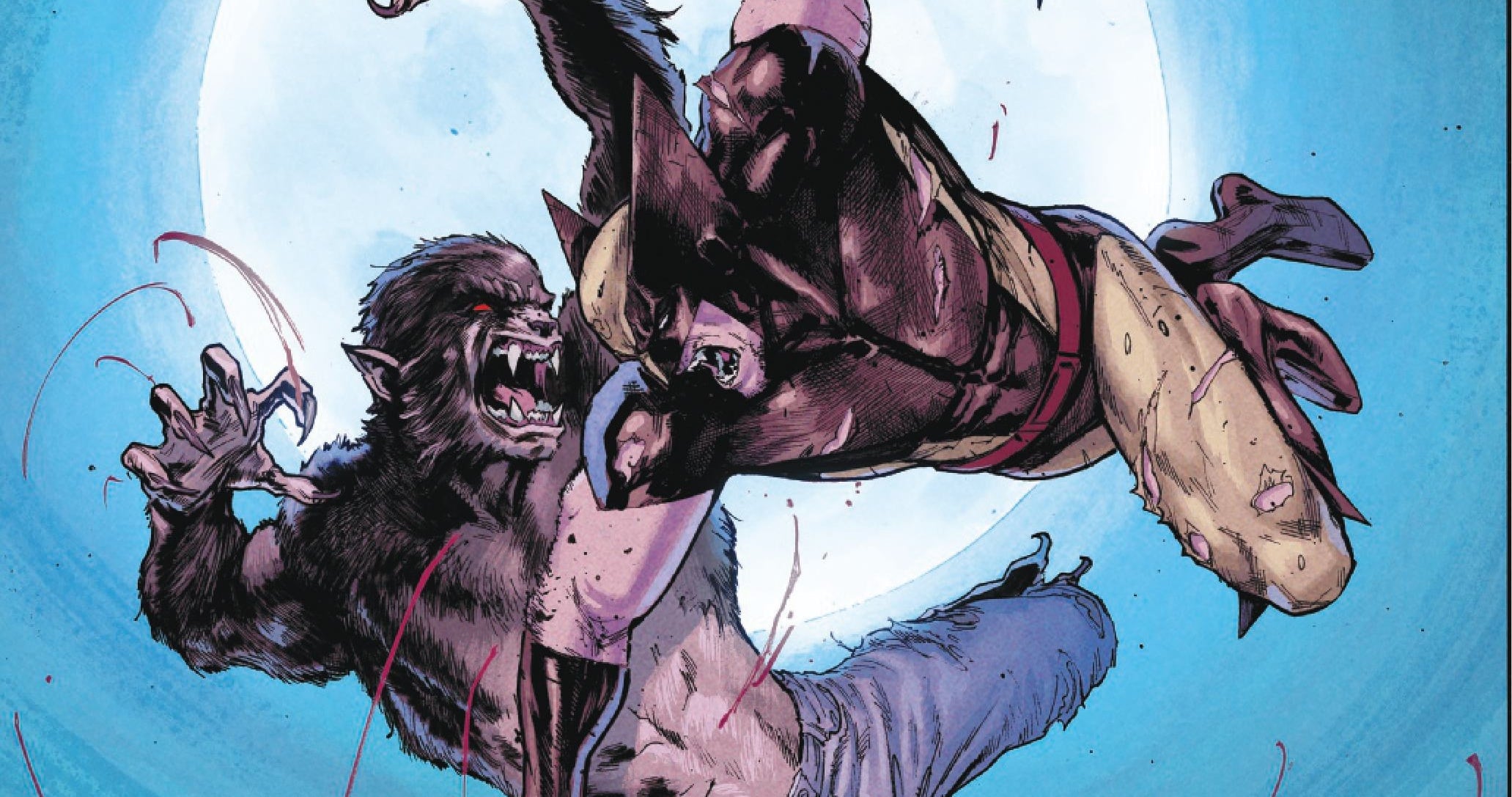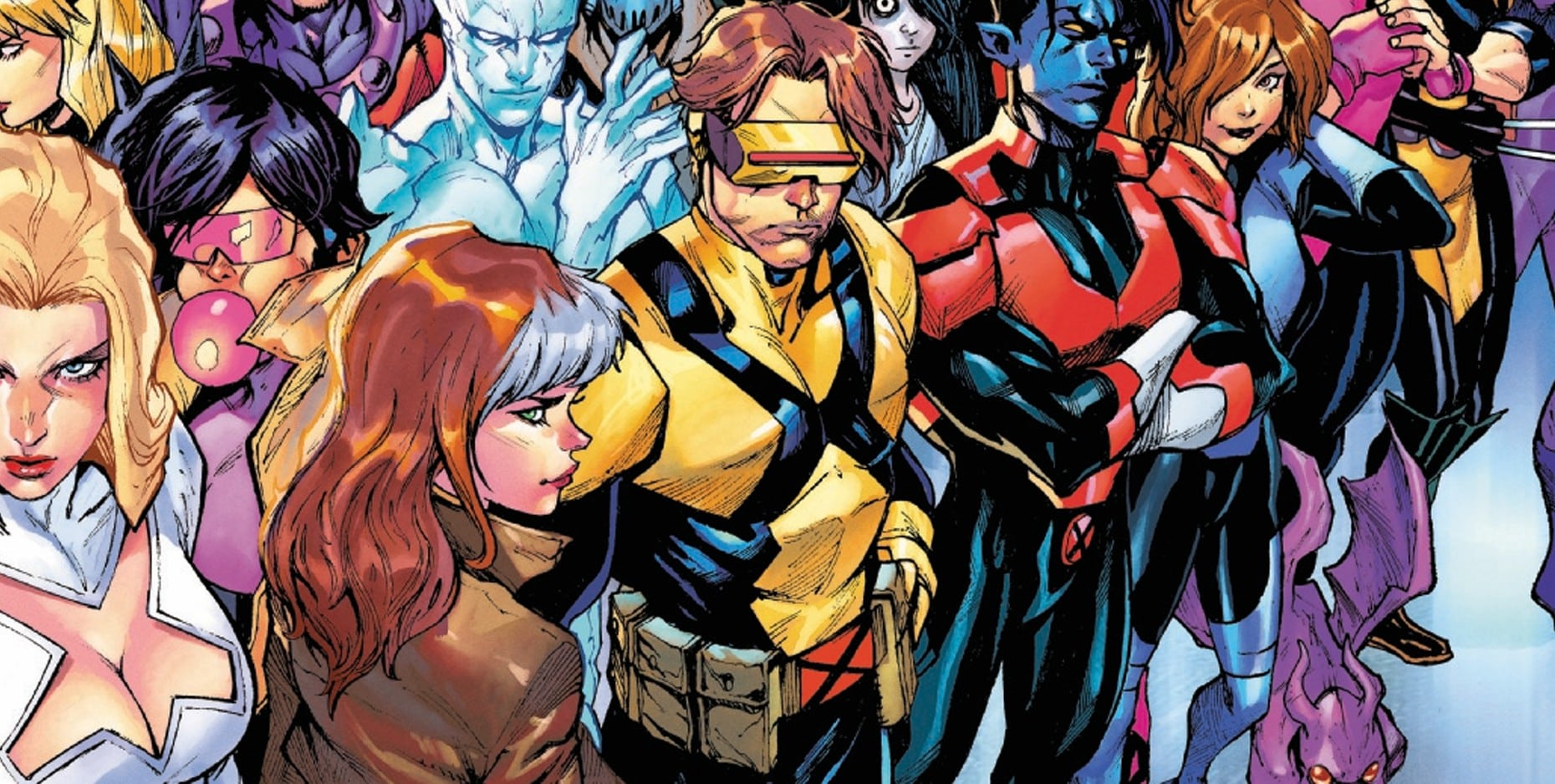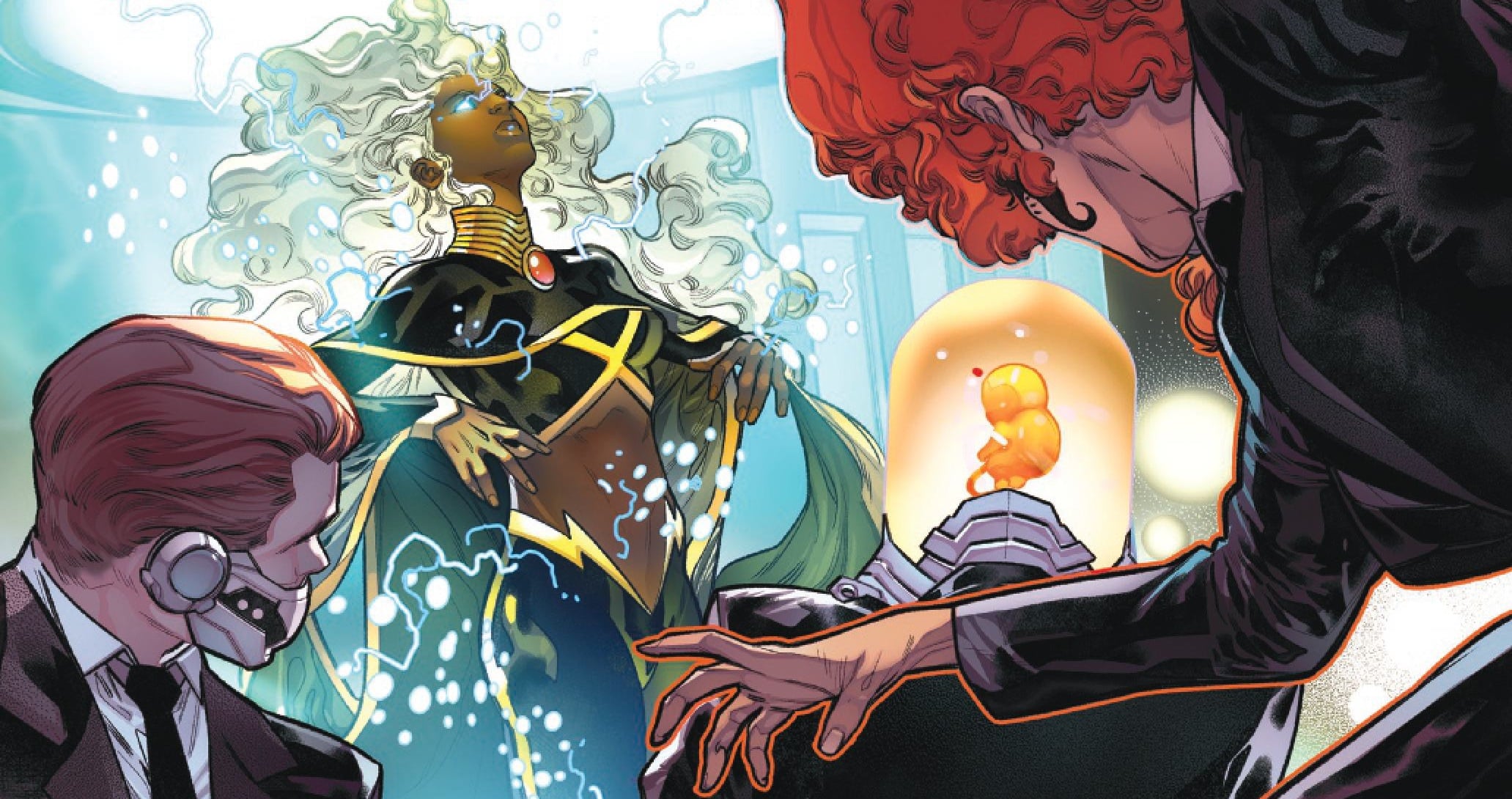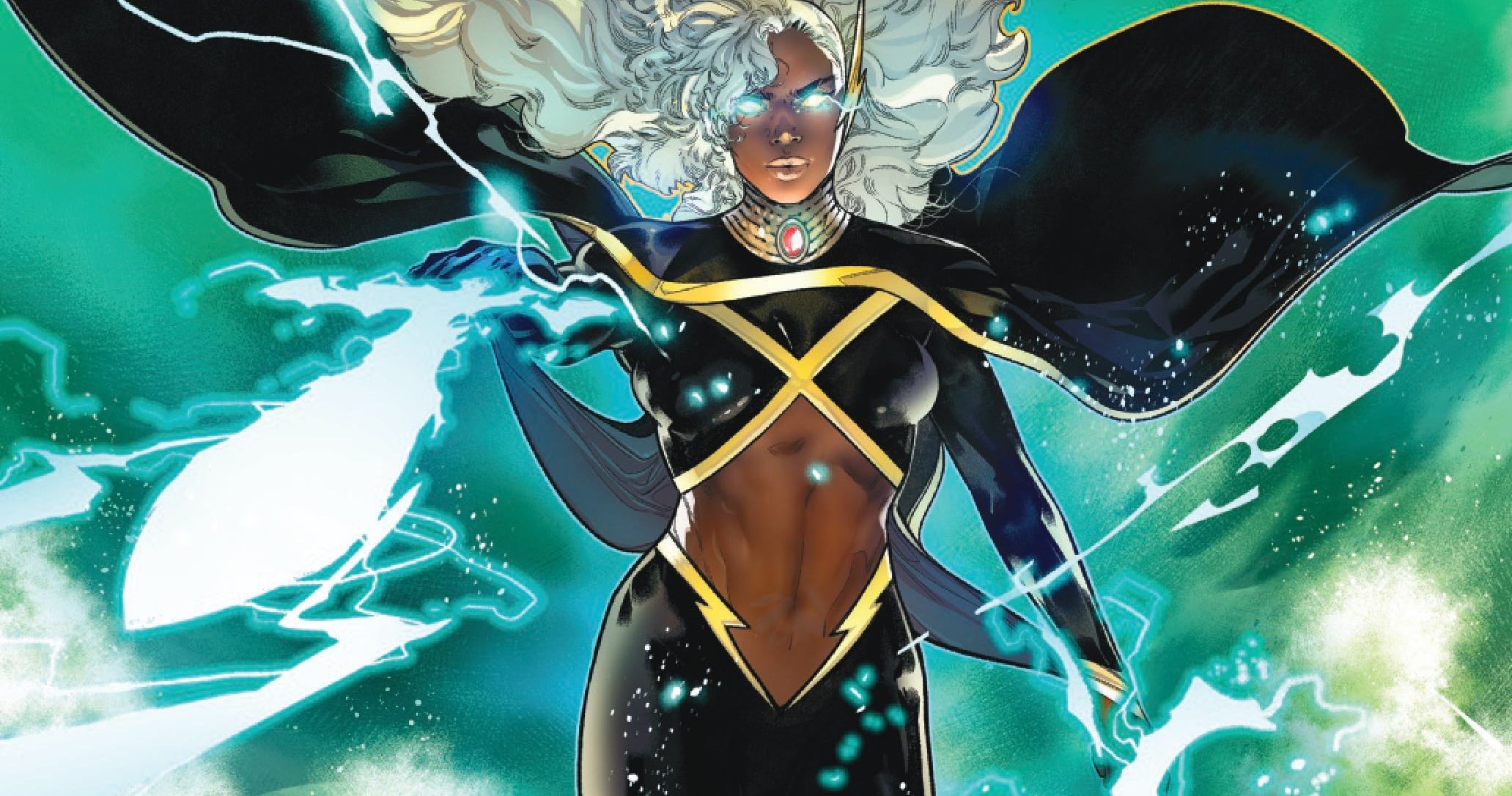
The War Above All thunders louder and closer. As the cosmos braces for annihilation, Storm, unaware of the coming threat, turns her gaze to her home, to Earth. In this new beginning, she shares a Japanese tea ceremony with an enemy and visits France for a masquerade with monsters. It all ends in a gut-wrenching funeral, for in this new era, Mistress Death is never far behind. Storm: Earth’s Mightiest Mutant #1 is written by Murewa Ayodele, drawn by Federica Mancin, colored by Java Tartaglia and lettered by Travis Lanham.
One.

Of the many complications within the relationship between my father and me, little complicates things more than his consistency. He is 79 years old; I’ve known him for 43 of those years. There’s little he could have done then that would surprise me now; the possibility of change goes down from slim to infinitesimal every year. To love him — and I do love him — requires me to accept him as he is, idiosyncrasies and all: not for what he could be, or for what he should (have) be(en), or should aspire to be.
He is who he is, and even when I don’t like it, I still accept it.
Every critique I’ve made of Murewa Ayodele’s run on Storm applies here, in Earth’s Mightiest Mutant #1: There’s too much going on that doesn’t feel developed or fleshed out (a sentient planet colliding with Earth, tea with a suicidal god, the world’s worst bathroom break, an assault on Basque country, and the Scarlet Witch); Storm’s voice continues to feel muted (she appears in about half of the panels, with the voice-of-god narrator still omnipresent — though, thankfully, less so than in issues past); the callback and cameos seem more cute than substantive (do we really need store-brand Ego and Galactus?); the story does not find any new perspectives for Ororo (empathetic Storm fights a superpower/god, fails to protect everyone, feels bad about it — she’s been stuck in this loop for what seems like years now). I have made these critiques multiple times; I will likely continue to make them as the (limited?) series continues.
And yet.
While the critiques remain constant, so does the praise: He cares about Storm’s character deeply; he wants to elevate her to a pantheon of care reserved for the most revered in comics; he continues to draw liberally from different cultures to build out a pantheon of gods made up of more than blond-haired, blue-eyed Asgardians (Sugaar is the Basque god of storms, often appearing as a dragon). The work may not always connect with me, but the work is absolutely worthwhile. (Also: Storm looks amazing, and even if you don’t like reading the comic, looking at it, through the eyes and hands of artist Federica Mancin and colorist Java Tartaglia, is a treat.)
This is what reading Ayodele’s stories means. He is who he is. I accept it. It’s certainly worth loving, even if I don’t always like it.
Two.

I have three theories about us comic readers. First, our impressions of good are based on the stories that introduced us to the genre, and we do not react well to deviations from that first high. I came into X-Men comics at the onset of Krakoa, and there’s been little since its fall that’s captured my attention and admiration. That’s not fair, and I often need to check myself to determine whether I’m giving new material a fair chance.
(I am; I just don’t like it.)
Second, consistency only matters for things we care about. Most of us don’t care that Superman originally couldn’t fly, but let them take away an ability for one of our faves, and we’d be at the front offices of the comic company with pitchforks. Thus I’m trying not to care that Storm, who has absolutely killed and maimed before, now doesn’t want to kill; that she who recognized that throwing people in pits wasn’t beneficial now believes in doing so to gods for their own good. This feels like a regression of growth or a dismissiveness of what’s come before. Maybe it’s both; maybe it’s neither.
Maybe I wouldn’t care if I felt invested in the story.
Third, we do not do a good job of recognizing that “what I would write” and “what is worthwhile to read” don’t always intersect. There are the things I’d like to see, the things I’d write, but just because the present doesn’t align with my dreams, doesn’t mean the present doesn’t have purpose.
Just because I struggle to see greatness doesn’t mean it isn’t there.
Three.

I’m writing this on the third day of Black History Month, under a neo-fascist regime that’s intentionally and consistently pushed back progress for Black Americans — especially and specifically. Any “progress” made over the summer of 2020 feels relegated to a fever dream; in many ways things feel worse than they were in 2019.
As with the country, so go comics for the Big Two.
Marvel has no Black character with an ongoing (Miles Morales: Spider-Man and Ultimate Black Panther just ended; both this Storm comic and Black Panther: Intergalactic are limited series); the jury is out on how DC will yet again try to integrate the Milestone Universe into its main line, but its past few Black History Month specials have yielded little to nothing of permanence (Power Company, anyone?). I’m struggling to think of how many Black creators are writing for ongoing series, save (the amazing) Dr. Eve L. Ewing.
Thus, even though I don’t like this comic, I continue to write about it. I continue to support it. I parse it, to find the good and, yes, critique the bad. For while this doesn’t resonate with me, it is also objectively better than much of — most of — what’s being published. For while this work is far from mediocre (despite what my harsh critique might otherwise imply), Black creators deserve to create mediocrity in the same way white creators do without fear of failure or the hopes of entire cultures on their backs.
It is a complicated relationship I maintain between my love for comics and my love for people, and yet I find myself balancing both: managing expectations, expressing honesty, appreciating things for what they are, where they are. It’s a delicate dance, yet I manage to move in rhythm without fear of disappointment, only honest appreciation.
I wonder where I learned that from? Who can say?
Who can say.
Buy Storm: Earth’s Mightiest Mutant #1 here. (Disclaimer: As an Amazon Associate, ComicsXF may earn from qualifying purchases.)

A proud New Orleanian living in the District of Columbia, Jude Jones is a professional thinker, amateur photographer, burgeoning runner and lover of Black culture, love and life. Magneto and Cyclops (and Killmonger) were right. Learn more about Jude at SaintJudeJones.com.