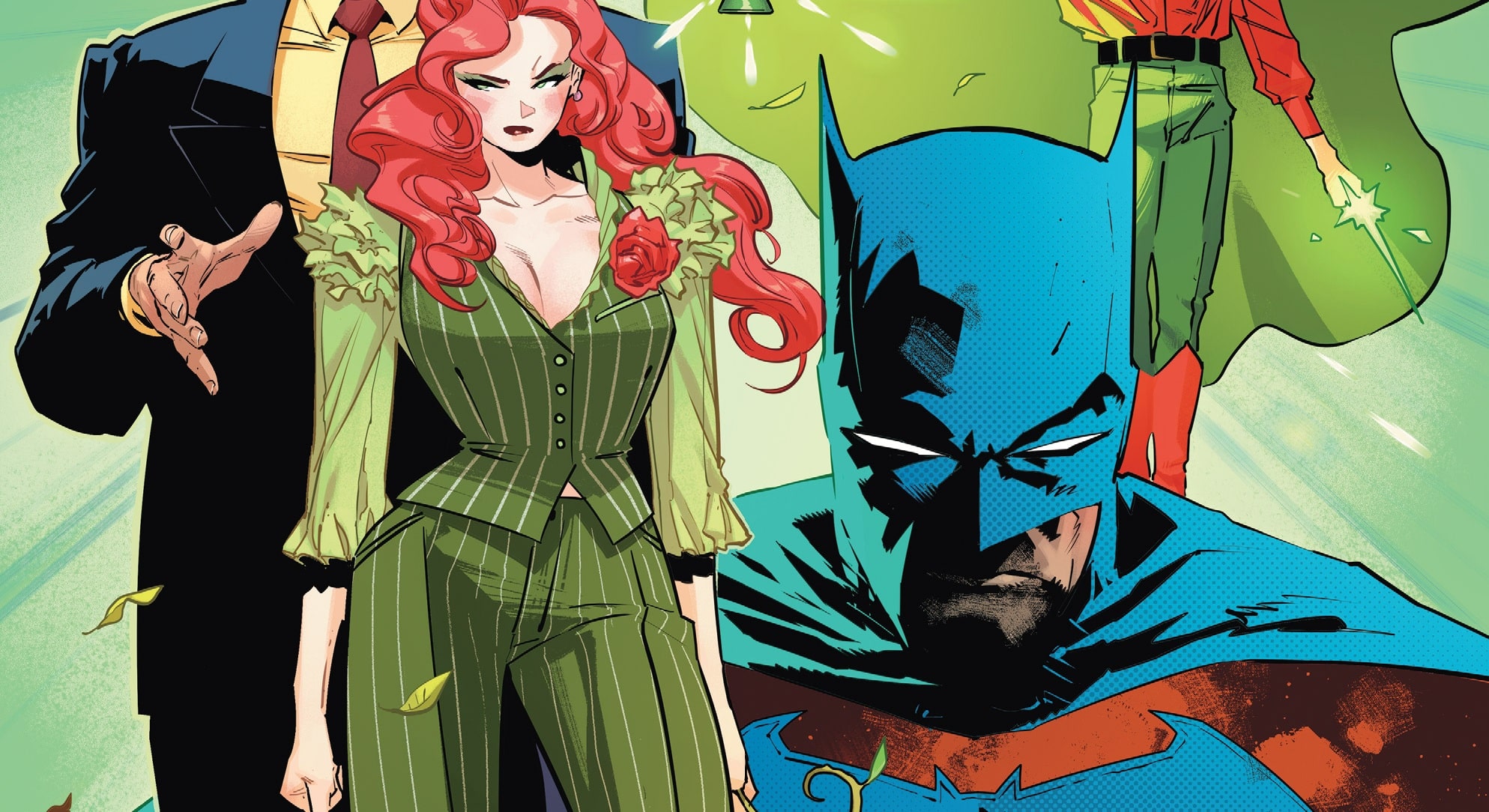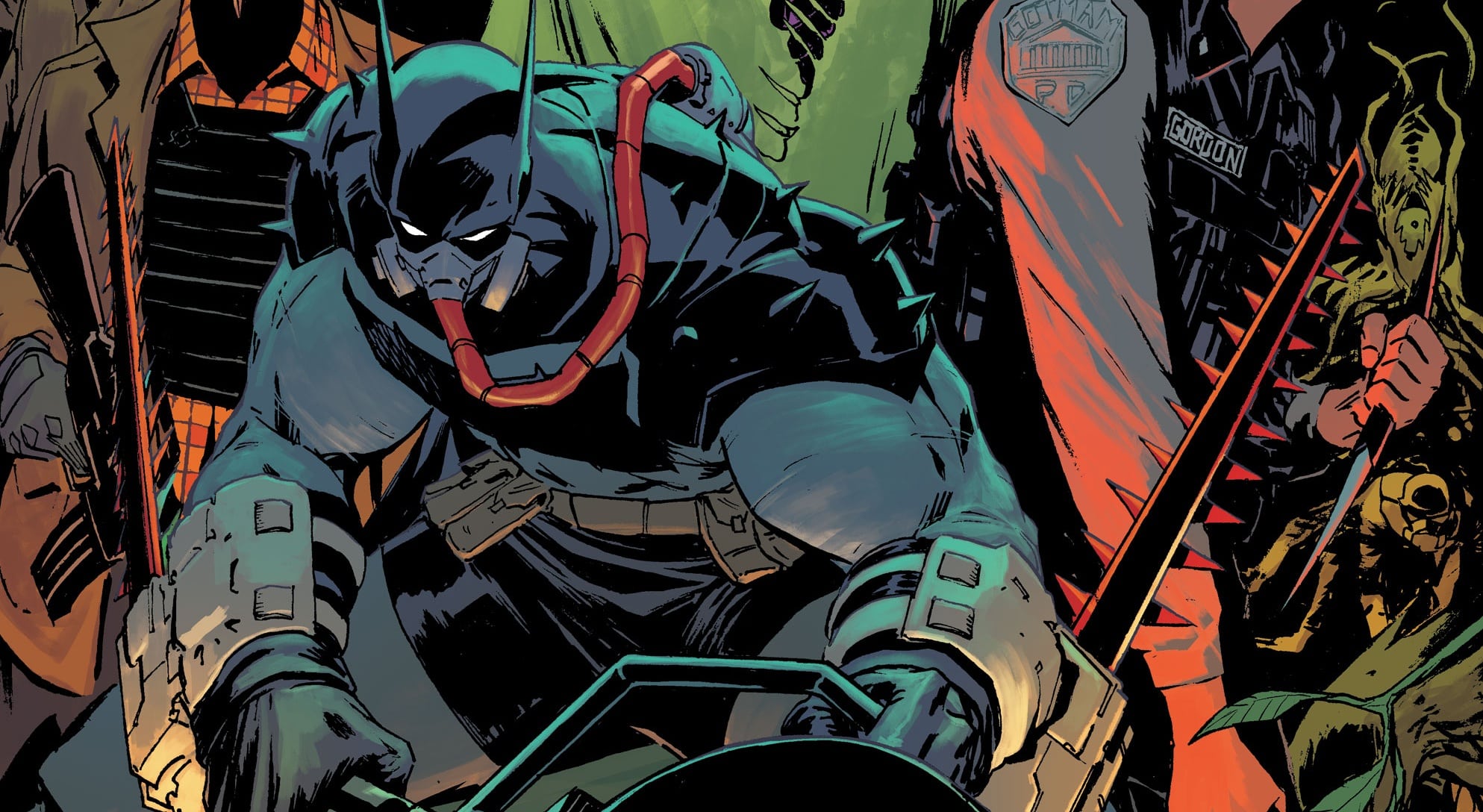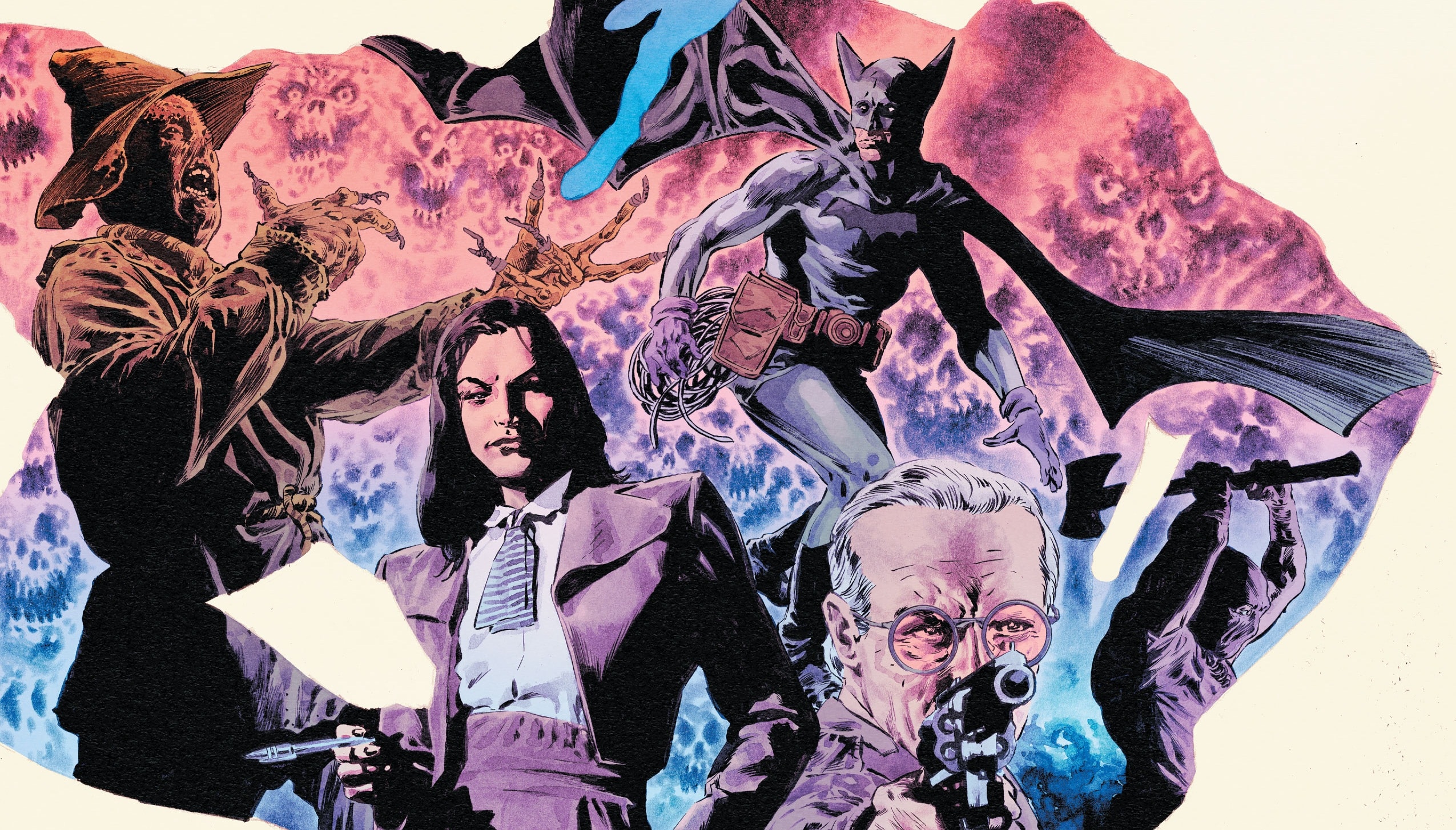
The Bat-Man and Superman must put aside their differences as they face down the Scarecrow and his ally The Hood in one final attempt to rain chaos down upon Gotham. The Bat-Man: Second Knight #3 is written by Dan Jurgens, drawn by Mike Perkins, colored by Mike Spicer and lettered by Simon Bowland.
Will Nevin: Matt! You survived the 2026 Northeastern Snowpocalypse of Doom! I’m so pleased.
Matt Lazorwitz: That’s what snowblowers are for. I’m too darn old to be shoveling 10 inches of snow anymore. The best thing about snowy days at my age is not going out and making snowmen and snowball fights, but being able to curl up on the couch with a movie and/or a stack of comics.
Damn, I’m old.
Will: I’d make some joke about never needing a snowblower nor having to shovel, but I’d gladly trade your blizzards for my tornadoes. Fucking weather, man.
But, yes, *we* are old.
Christmas of Fear


Matt: In a practical sense, I understand why a city like Gotham needs to hold public events, but thinking back to Batman Returns and other stories featuring Christmas in Gotham, you have to wonder why anyone would hold a Christmas tree lighting in that urban hellscape. It really just leads to more trouble.
Will: How many civic leaders were determined to maintain a facade of normalcy during the pandemic? The desire to put on an air of “everything is OK, no need to worry, folks” can be overwhelmingly strong. So I absolutely get it … even though it’s dumb as hell. And remember, we’re *just* out of the Great Depression here, so the push to continue Christmas shopping and other acts of consumerism is important. This book is crazy deep.
Matt: Is it ever. That was a minor point in an issue with a lot of other plots going on, but it just jumped out at me as a nice little ice breaker before we get into a lot of the deeper stuff.
We start this issue where we left off last issue, with the first meeting of Bat-Man and Superman in this world. While we are in the ’40s, and Batman’s tech is more limited and grounded than we get in most continuities, his way around Superman here, using a high-frequency sound device used to drive away dogs, is ingenious and keeping with the nature of the world. High points right at the start.
Will: Has there been a “meeting for the first time” done more often in the history of comics? We’ve seen it done well, and we’ve seen it done poorly (looking at you, Frank Miller). This is a time of overwhelming paranoia, so I think the vibes here work. Yes, Bat-Man and Superman are not instantly best friends. But over the course of this final book, they reach a working understanding of each other — one with a bit more subtlety than “MARTHAAAA” but getting to the same emotional core.
Maybe my only complaint in this whole book (or, more precisely Book 3) is that we didn’t nail the chapter break here. It’s fairly awkward to wrap up the adventures of last night in four or five pages before moving on to what was the bulk of this issue. That could have been handled a bit cleaner. But overall? Minor complaint.
Matt: I don’t know how you could have handled it otherwise. Ending the previous issue on the cliffhanger of Bat-Man and Superman face to face for the first time is such a strong ending. You could have wrapped that meeting up, I suppose, but it doesn’t have the same oomph as the titans facing each other.
Will: But I think we intuitively know that these guys aren’t going to go to war against each other. I see your point, though. I still think Book 2 and 3 could have been split to better serve the overall story rather than highlight the meeting of the world’s finest.
Again, though, I’m not saying this wasn’t excellent! The character moments are what make this book. That and the visceral pulp thrills in moments like Bat-Man’s anger at Crane selling out his country to the Nazis or the triumph in figuring out Crane had a handy antidote ready to gulp down.
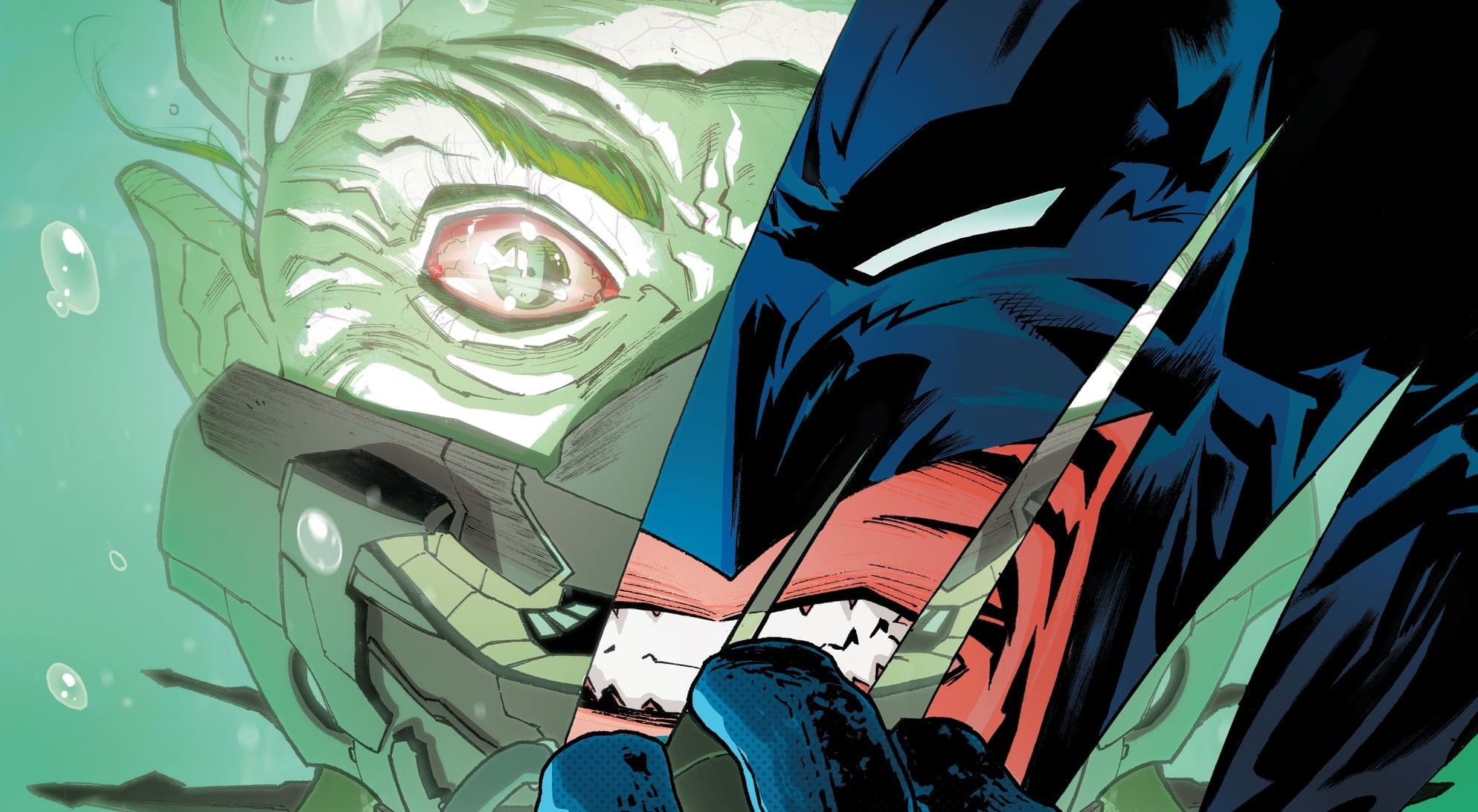
Matt: The use of lettering for Crane is one of those great examples of lettering done right. All along, we’ve assumed that the weird, jagged lettering for Scarecrow has been because of either some sort of voice filter on the mask or him putting on a voice. But when he gets unmasked, and we see the horror that he has inflicted on himself, we get another level; that weird lettering is because his voice is screwed up because he himself is some sort of abomination under his mask. The mad scientist who tests on himself? Crane is always pretty close to the edge, but this version might be the most far gone.
Will: As an academic myself, I understand the impulse to disagree strongly with your colleagues and possibly murder an administrator or two. (Me? I would never. Love you, Dean!) But selling out your country to the Nazis? Too far, Scarecrow. I loved Bat-Man’s offense at that. Like, you can terrorize Gotham, sure. But collaborating with Germany? TRAITOR.
Also, here are a few real–life instances in which scientists experimented on themselves. My favorite has to be the guy who definitively proved that stomach ulcers aren’t caused by stress by downing the yummy, yummy bacteria that actually causes them.
Matt: Bless the scientific method, I suppose.
We’ve spent a lot of time speculating over the identity of The Hood/Hangman/Executioner, and it turns out it doesn’t matter. He’s just some guy who was not in his right mind and wanted to create chaos. And sometimes, that’s enough. You could have done something to make him connected to the mythos, I suppose, but with Scarecrow already in play, in the end you didn’t need to. Some men, Will, just want to watch the world burn. And in the process get betrayed by mad scientists and blown to kingdom come.
Will: Yeah, if you work with Scarecrow — this version in particular — you deserve to get blowed up. And, look, I’m never too proud to admit when I think something is dumb, but I had one heck of a stupid suspicion that Maxie was going to be revealed as the Hangman, given when Bat-Man confronts him in the story. Yes, upon reflection, that could not have been the case. But that would have been a heck of a turn.
Matt: I won’t deny it; I had a similar thought myself, even though they were in the same place at the end of issue #2.
You know what might have been my favorite touch in this entire issue? The tweak to Superman’s origin, about the Kents losing everything in the Dust Bowl. Not only does it add a great historical touch to the character’s origin, but it puts him more diametrically opposed in background to Bat-Man. The Kents have never been rich, but they’re usually portrayed as comfortable. Having him crusade against injustice because he witnessed so much of it as part of an itinerant family is a really, really smart move by Jurgens. I would totally be down for a Superman spin-off based on that one line.
Will: This book has been so fuckin’ smart from the jump, and just like you, I loved that tweak. And it naturally leads to you wanting more from this universe. Not just a Third Knight but Superman and whatever else is floating around in Jurgens’ brain. Superman ruminating on how to end the coming world war? That was so good.
Matt: One of the best passages, for sure. And this is a Superman whose power levels are more in line with the Golden Age. He doesn’t fly; he just jumps really far. He is tough, but not invincible. X-Ray vision but no heat vision. I don’t agree with the idea people have that Superman is too powerful and so you can’t write stories that challenge him; that’s an excuse for a lack of imagination. But in this more “real” world? I think limiting his powers makes sense.
The other moment that got me was Rabbi Cohen’s crisis of faith. He has been so steadfast and moral and plain ol’ good throughout this series, that seeing the ramifications of Scarecrow’s toxin and him being pushed to a point where he almost throws in the towel is important. As is Gordon’s reasons for not going to war. We all know the Nazis are bad, bad guys. And often, the reasons for America’s late entry into the war are purely defined by isolationism. But a good, moral man like Gordon saying he sometimes feels like we shouldn’t get involved in a war where we have no direct part because he’s seen the horrors of modern war? Historically it may be incorrect, and maybe even morally, but it is definitely understandable.
Will: And this is not a Gordon who fucks around. He showed up ready to go to war in Gotham, at least. And, yes, I loved that moment with Rabbi Cohen, who has been such a great addition to Bat-Man’s cast of allies, I hope someone else picks him up for future use. Speaking of, we haven’t seen the last of this universe, right? As with all things, it depends on the numbers, but I can’t help but feel the definitive ending is not so solid, especially when Bruce Wayne is more or less defined by heartbreak. There are so many more stories to be told as Gotham and the rest of the United States slide into the abyss of World War II. Fuck, here’s my pitch: We take it all the way out to 1943/44 and have our heroes deal with Japanese internment. And the Joker, I guess.
Matt: We eventually will have to get Joker, won’t we? I don’t know if I want him to be a fifth columnist or just an opportunist looking to take advantage of the war.
I think dealing with Japanese internment would be fascinating, and more grounding in the fact that as much as there’s this illusion that the entire Greatest Generation rose up against Nazism, a lot of them were both anti-Semitic and perfectly in line with Nazi principles.
And as you said, the happy ending of Bruce hanging up the costume and marrying Julie Madison lasts until something or someone terrible that the GCPD can’t wrangle shows up, and then he will be called back to duty. Because the only thing that defines Batman more than heartbreak is his sense of doing what must be done to protect others. Superman had that spot on.
Will: Additional pitch material: Bruce Wayne gives up the life in sunny Southern California to come back to Gotham after reports of a flying Man-Bat who’s terrorizing the city. I’m working to manifest that.
Matt: The Bat-Man: Third Knight, a Jurgens/Nevin/Perkins joint. Get on it, DC.
Bat-miscellany
- Patreon backer Sam Hopper joins the BatChat podcast as we talk about three Catwoman stories from different eras: one each from the Golden Age, the Silver Age and the Bronze Age.
Buy The Bat-Man: Second Knight #3 here. (Disclaimer: As an Amazon Associate, ComicsXF may earn from qualifying purchases.)

Matt Lazorwitz read his first comic at the age of 5. It was Who's Who in the DC Universe #2, featuring characters whose names begin with B, which explains so much about his Batman obsession. He writes about comics he loves, and co-hosts the podcasts BatChat with Matt & Will and The ComicsXF Interview Podcast.

Will Nevin loves bourbon and AP style and gets paid to teach one of those things. He is on Twitter far too often.