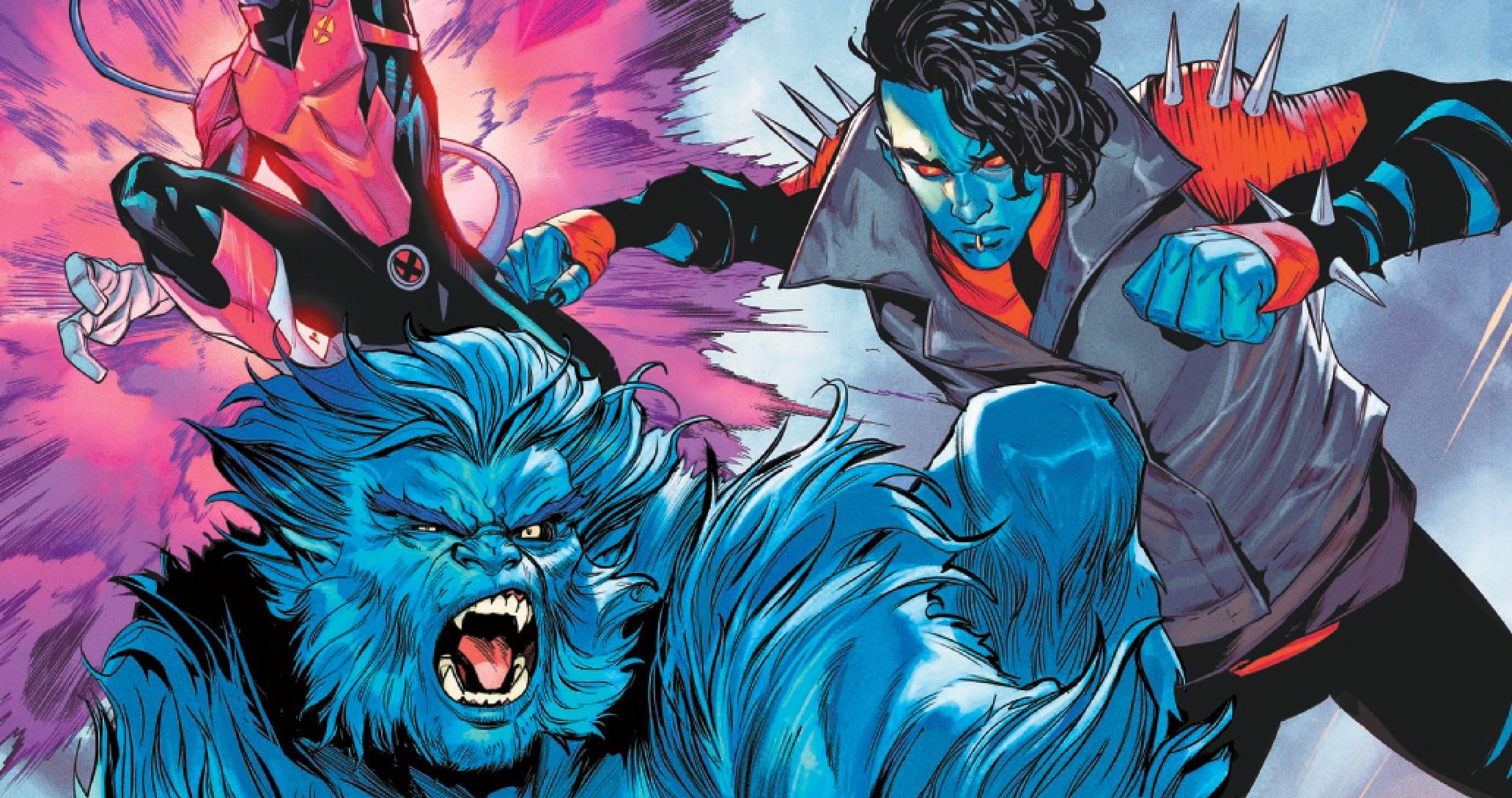
Can Kitty Pryde and Emma Frost’s teen students have just one good day? When that day goes bad, can Ironheart set it right, or at least unite scriptwriter Eve Ewing’s Chicago? Stroll toward the answer in Exceptional X-Men #11, written by Ewing, drawn by Federica Mancin, colored by Nolan Woodard and lettered by Travis Lanham.
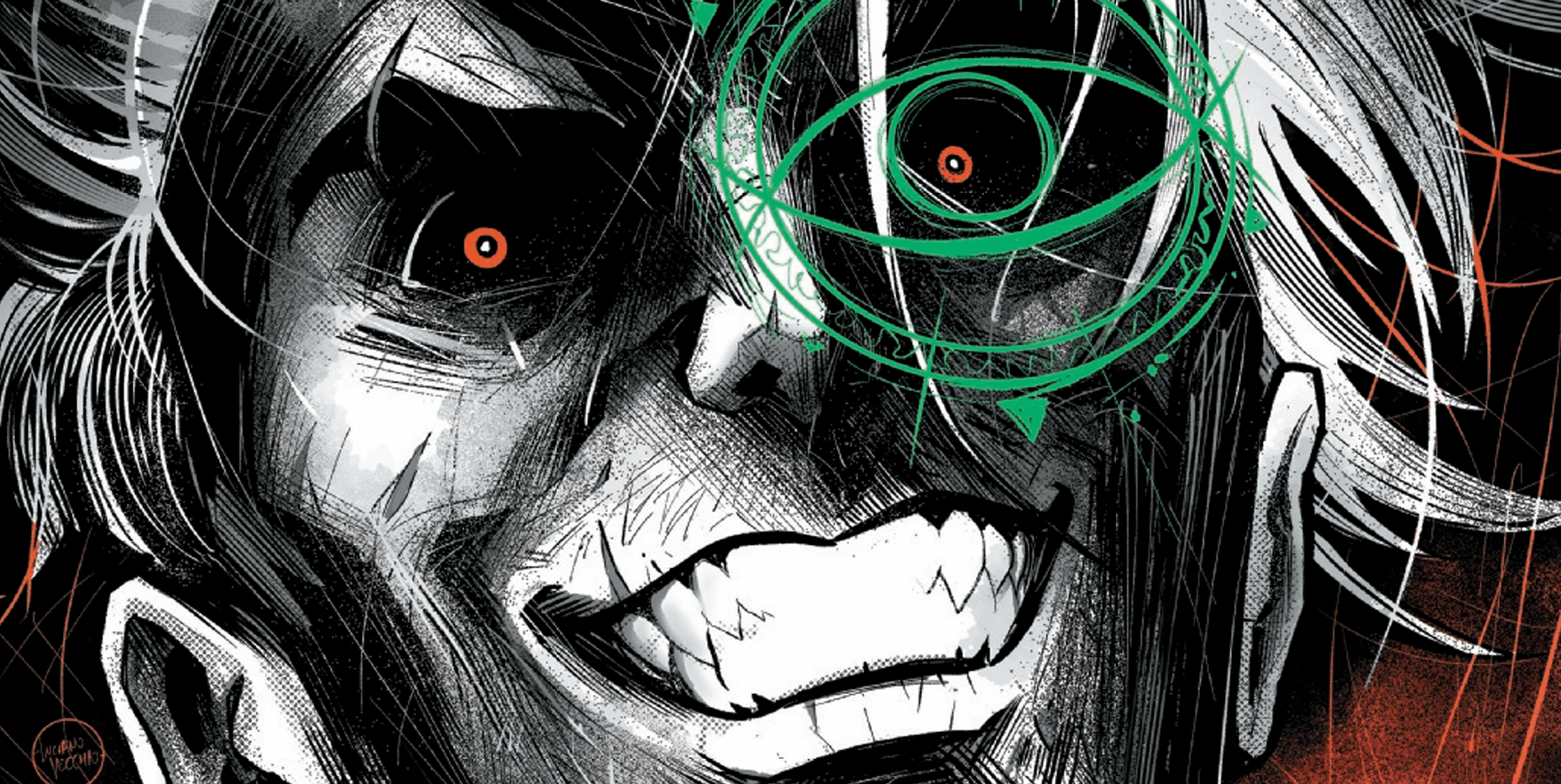
Plus! An ultramega-unhinged version of Legion has pursued Kamala Khan through a few ultramega-famous moments in X-Men continuity. Now they’re in House of M, the 2005 story in which mutants dominated humans and Magneto ruled the world. Kitty might, or might not, help Kamala undo the damage in Giant-Size House of M #1, written by Jackson Lanzing and Collin Kelly, drawn by Francesco Manna, colored by Edgar Delgado and lettered by Clayton Cowles, with a Wolverine backup story written by Saladin Ahmed, drawn by Martin Coccolo, colored by Matthew Wilson and lettered by Cowles.

What do you do with your privilege? You might know you have a little or a lot. You might feel privileged just because you feel relatively safe, most of the time, within your body or with your belongings, while people who openly or secretly resemble you get teased, or harassed, or fired, or kidnapped, or worse. You might walk around with other kinds of privilege: a stable income, a neat place to live or a sense that other people look up to you. And no matter how hard you’ve worked, you can never deserve it: So many other people could use what you have — money, safety, self-defense skills, passing privilege, white privilege, pretty privilege — even if someone else also has what you need.
Many X-Men stories never raise those questions. All the good stories about Kitty Pryde, though, do. As Emma Frost once put it, Kitty doesn’t break through — she cannot, usually, break — barriers. Instead she gets to ignore them. Her primary power is, literally, passing. She also defeats surveillance (by shorting out machines), and she has always known how to find favor among adults (when she was a teen), among teachers (when she was a student), among the safe observers who want to see mutants act brave without breaking or rocking the proverbial social boat. Since her first appearance, she’s been a standout student among teachers, or a standout teacher to her students, or (barring that) a self-insert or girl-next-door-girlfriend who knows someone’s writing her wrong. She barely has peers, but she always has privilege, and she has to decide what to do with it: seek safety, or make a speech? Use her stealth powers, or make herself visible, exceptional, take a deep breath, then take risks to train the next generation?
Give her enough time, and Kitty gives the same answer: With great passing privilege, and super-genius academic skills, and training (thank you, Storm; no thanks, Charles Xavier) comes great responsibility. And then, having next to no peers, she burns herself out, and moves back to Chicago, and then realizes she’s a born teacher, a destined teacher, and she’s doing it again.
That story constitutes Kitty, more than her bisexuality, or her scientific prowess, or her questionable costume design, or your favorite one of her romances. Eve Ewing understands it better than anyone younger than Chris Claremont has.

That story — summed up in one panel from Exceptional X-Men #2 — does not just provide the spine for Ewing’s run (so far) on Exceptional, alongside the angst and hijinks of the teen characters. It also shadows alternate versions of Kitty, none more so than the Cincinnati middle school teacher from this week’s Giant-Size House of M one-shot. Raised in a mutant-dominated society, Kitty would neither conspire to overthrow institutions nor rise within them: She’d just teach, and love doing it, until she learned that how things are isn’t how things ought to be.
Giant-Size House of M is the fourth in a series of Kamala Khan (Ms. Marvel) stories. In all four — and a projected fifth in two weeks — the nearly omnipotent plural figure called Legion has lost its dominant persona, Charles Xavier’s estranged son David Haller. The remaining, malevolent personae gang up to seek even more power throughout the multiverse, while Kamala — still adjusting to her mutant identity — bounces around trying to stop them. The first two Giant-Size issues felt, to some of us around here, like exploitative balls of cheese (if a ball of cheese can be exploitative), rolling backward clumsily over the greatest hits of the continuity that brought Gen X’ers to X-Men, without conducting especially skillful character work or pointing to anything new.
This one’s different. Kamala’s trip to the House of M universe (Earth-58163, if you’re keeping score) lands her in Cincinnati, in a middle school bathroom, first interfering with bullies (“There will be zero hate crimes in this bathroom, Regina George!”), and then encountering the least ambitious, most satisfied Kitty who’s ever been. Of course, as Kitty discovers, this world is unstable. Our heroes have to fly off together and put it back the way it was, where the X-Men in general, and Katherine Pryde in particular, spends her supposedly free time “hiding in ghettos and being hunted by aliens and trying to keep the next generation alive. Maybe it’s more real, but is it better?”
Let’s say you live, or work, on a college campus where kids who look different feel safe. Is that real? Is it better, when kids elsewhere get kicked out of school, or kicked out of their parents’ homes, or grabbed off the street by masked goons? What would it even mean to agree to live within, and try to change, the “real” world? It’s hardly a fanciful question, especially now. It’s a Kitty Pryde question, especially now. It’s one whose answer depends on how much power you, the safe one, the teacher, might actually have, and on what kids you can really protect, and where. I’ve tried to protect a few, too few, lately myself.
And it’s a question the art, and the dialogue, show a realistic Kitty trying to answer. “I liked it here,” she says about House of M’s southern Ohio. “Every day I saw mutant kids living normal lives, making normal mistakes I never got to make. Just once, for a change, can’t we live in a world we don’t have to fear?” Meanwhile, in real Ohio, there’s this. And this.
Back in the Giant-Size story, the House of M falls, the Earth returns to the status quo ante of the Decimation, and (as Emma tells Kitty and Kamala) “we do the only thing we’ve been able to do since the day we started educating mutant children … we try to keep them alive.” We see emotionally decimated students at the Xavier Institute weep and hold one another and freak out, as the sharp, shiny, full-color palette of the world they left gives way to shadows and tans and muted tones. (Some of those kids will soon die in a school bus explosion, but this Kitty doesn’t know that yet.) Kamala and Kitty discuss, sensitively and tersely, the legacy of the Holocaust and the history of Partition on the subcontinent. They take apart the mutant metaphor. And they go back to their chosen, or unchosen, lives.
Kamala’s life, when she’s not stuck in time-travel stories, interacts with who knows what these days: Last month we saw her as a reader-insert character at the decidedly messy Hellfire Vigil. Kitty, however, knows where to go and what to do: She’s teaching the mutants of Eve Ewing’s Chicago, who get most of an issue to hang out and be themselves, and meet Riri Williams. Hi, Riri!
You may recognize Riri from her earlier solo titles, or from the MCU version that showed up in Wakanda Forever and now on TV. The Ewing version’s the one you want. She’s an ex-child genius, now in her teens, who talks to the AI who lives in her suit of armor and who’s really got way too much to do, or at least she says she does: “Your mom told you to thaw some chicken and that’s it.” Riri’s also (at least in Chicago) famous, or at least she thinks she is, till Bronze pops her superhero bubble and the two kids bond over what’s real: “My mom’s best friend’s grandma went to church with your grandma.”

Riri shows up because the teen Exceptionals — Axo, Bronze and Melee — have to fight an Ironheart villain called Tank. Which they do. Federica Mancin gets the kids’ body language wonderfully right, both in combat and noncombat scenes. There’s an ease and a fluidity to her work that reminds me of Enid Balám, and like Balám she can get slapdash with characters’ heads, jaws and faces, especially in closeups. Give her 10 people, two picnic tables and one interdimensional vortex, though, and she’s gold. And Bronze. Who’s got a crush on this shy theater kid. Who’s got a crush on her, if he can only bring himself to text her, after 15 drafts. Too real.
As always, Axo — who dresses the most punk rock — feels the least need for independence; Thao/Melee, who wears normie hoodies and slacks, wants to blaze her own path. As drawn by Mancin and written by Ewing, Axo and company live something close to the life that Kitty wants her pupils to live: likely to flirt and get awkward and chat and explore and try out for school plays, ready to defend themselves against small-scale Marvel menaces, able to call for help. Maybe. Most of the time. What do you call a weird interdimensional vortex on a park bench on a weekend afternoon? Axo knows: “A ‘Call Kitty’ is what it is. Also known as a ‘Call Emma.’ In Spanish, ‘Llama a Kitty.’”
His pals disagree, and Riri shows up instead. And then, like a bookend, here’s Kitty, wondering whether she can have nice things. Remember Nina, Kitty’s first-ever on-page serious girlfriend? They meet! They smooch! In Nina’s leafy, comfy-looking neighborhood! Where our Kitty worries so much about keeping the kids safe that she’s gone all Spider-Person and kept the “after-school club’s” purpose secret. Nina doesn’t know. Kitty doesn’t want her to know, because keeping mutant teens safe comes first.
And that’s why our girl wants to end this lovely and very normal romance almost as soon as it starts. “I care about you, Nina,” Kitty says, while we look down on both women from a disorienting overhead perspective, as if we ourselves got wrenched out of the intimate closeup a panel or two ago. “But I have a lot going on. I just think this deserves a longer discussion.”
She’s been having that discussion with herself since, at least, the day she turned 14, or the day not long after that when she insisted on staying with the X-Men, rather than joining the New Mutants. She’s never felt comfortable with her peers: She’s either a student who belongs with her teachers, or, these days, a teacher who needs to look after her latest students. Except what if she looks after them too hard? “Deep down I know I should stop babying the kids,” she tells herself, taking a walk in the same park we saw a few pages ago.
If she pulls back and tries to live for herself more and stop protecting others quite so assiduously, will the others protect themselves? Or just get whacked? How on Earth could she know? Is it selfish, or silly, to even ask? Who’s she looking at, anyway, on the seemingly direct-to-camera panel where she says “I’m at a crossroads?” Does she want answers from herself? From you? From me? From Emma Frost? From a certain once and future roommate who’s busy in her own solo book? Does she even know?
Oh, then she’s kidnapped into some other dimension. Next issue the teens get to look for her. Smart money says they’ll find her long before she finds herself.
Points of Pryde
- Kitty baked her students a cake to celebrate a fabricated (it’s been less than a year) “Teamiversary.” With a classic X-in-a-circle symbol, leading Melee to ask ‘Are we X-Men or not?” if Kitty doesn’t want the kids she’s teaching to consider themselves X-Men, does that make her the jerk?
- Anyone know what Chicago park we’re in for most of the issue? It looks like a lovely place for an angsty walk.
- Back in Giant-Size, Kamala and Kitty never look alike (they shouldn’t), but they sometimes mirror each other’s determined, or disillusioned, expressions: Kamala sees some versions of Kitty as someone she might someday grow up to be. An aspiration? A role model? Or an ambivalent warning?
Buy Giant-Size House of M #1 here and Exceptional X-Men #11 here. (Disclaimer: As an Amazon Associate, ComicsXF may earn from qualifying purchases.)

Stephanie Burt is Professor of English at Harvard. Her podcast about superhero role playing games is Team-Up Moves, with Fiona Hopkins; her latest book of poems is We Are Mermaids. Her nose still hurts from that thing with the gate.