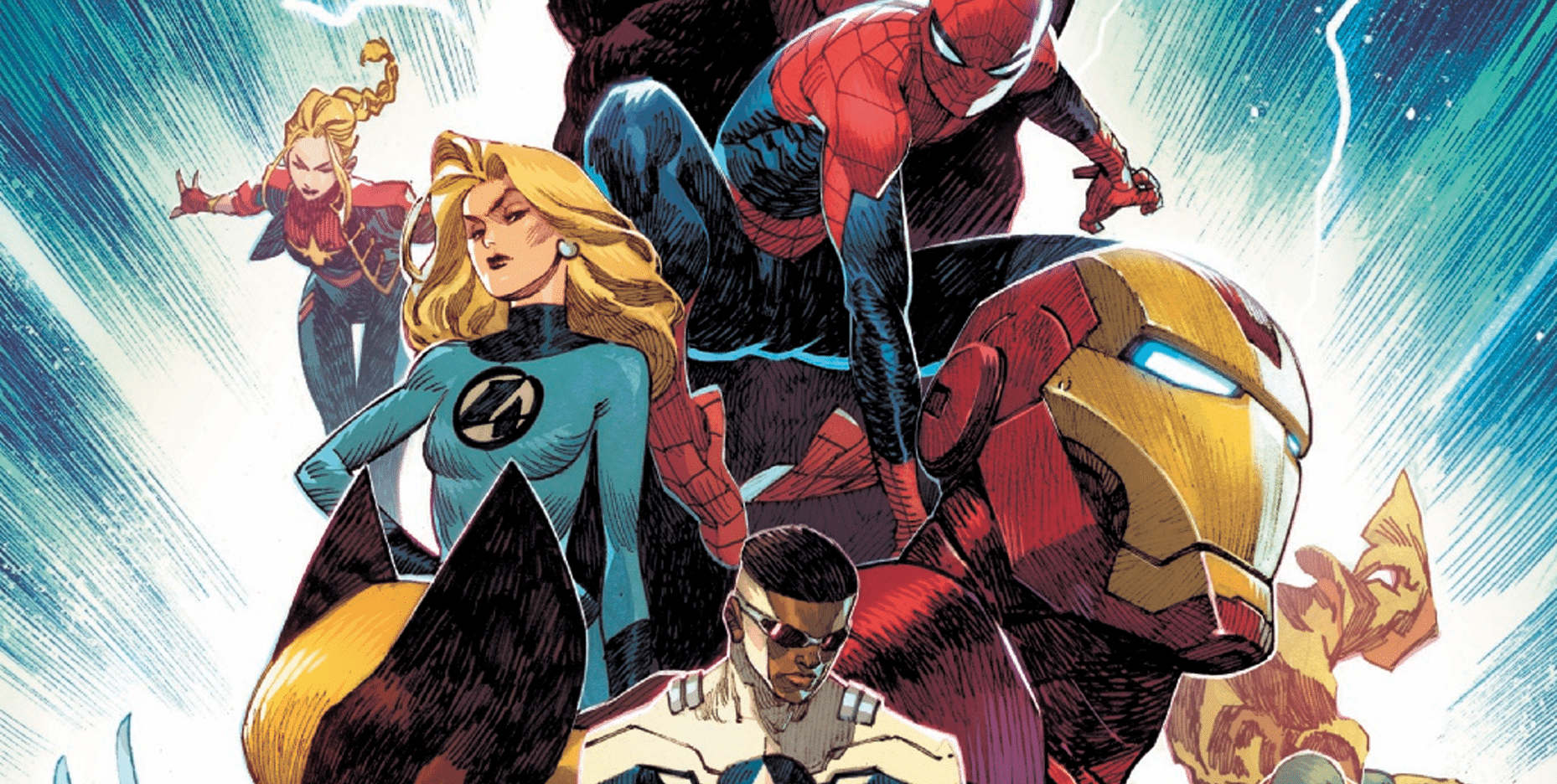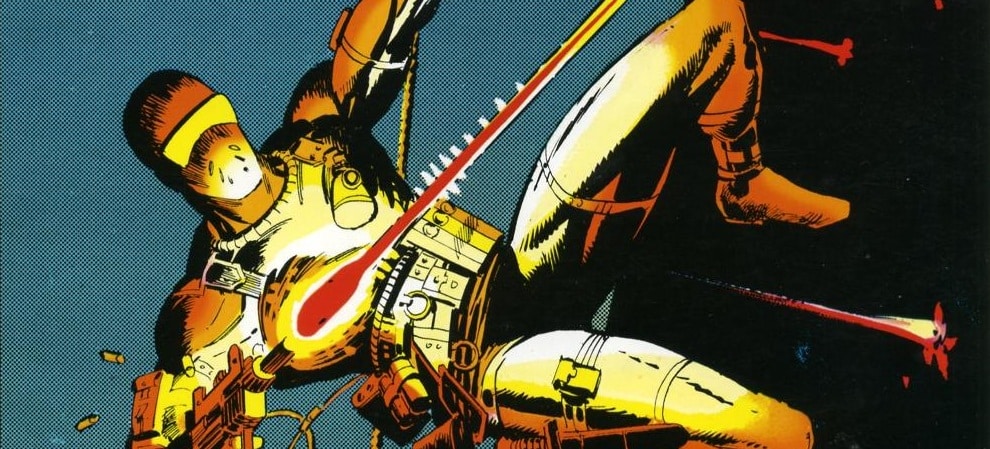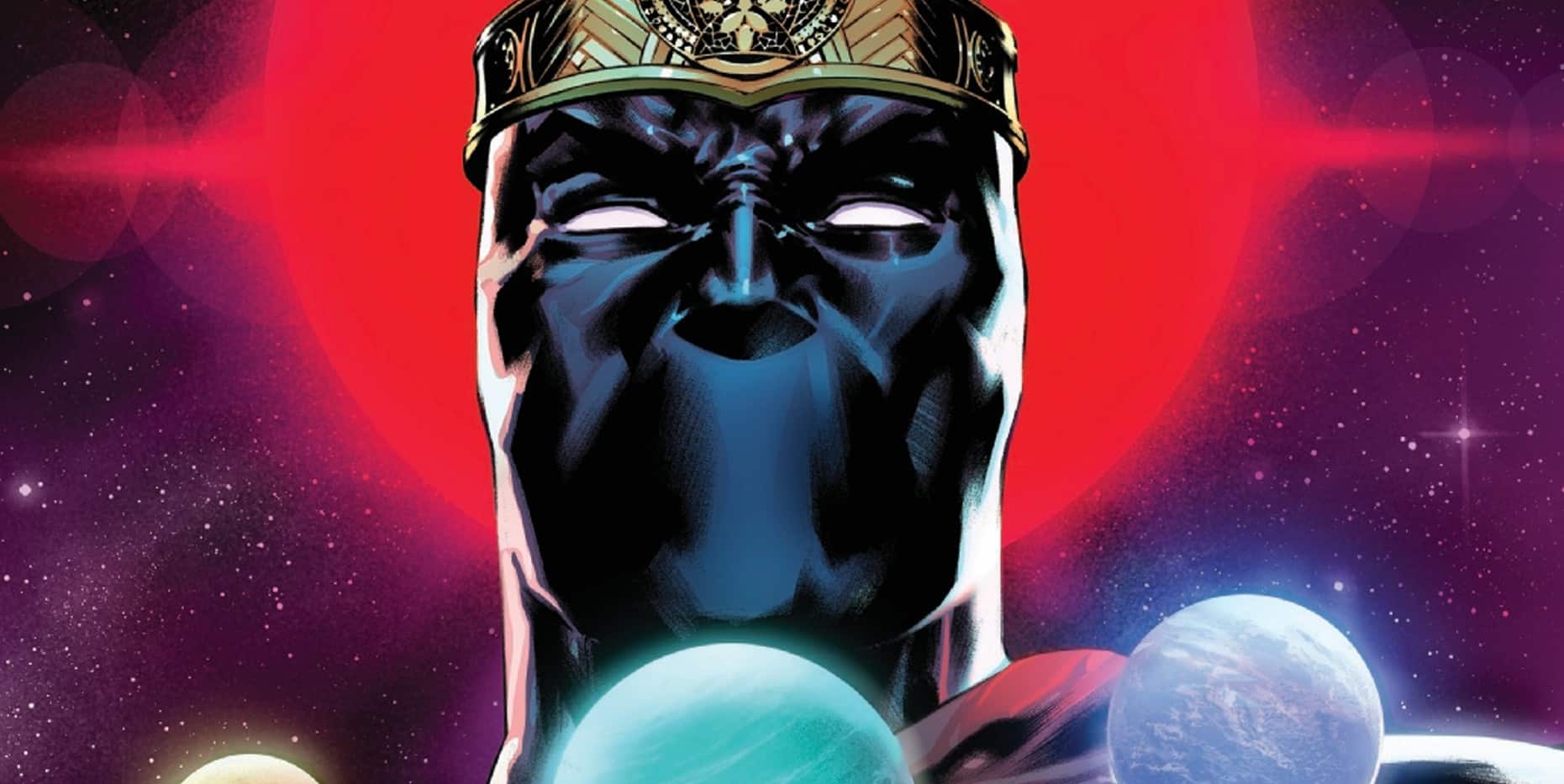
Time is running out for the Ultimates to formulate a plan to save the world before the Maker is released back into the timestream. For Doom, the matter has become all the more pressing, as he’s discovered the true identity of the Maker, and now knows that the greatest threat they’ve all been facing is none other than his own self. In the past, present and future, Doom needs to come to terms with himself. The Ultimates #17 is written by Deniz Camp, drawn by Phil Noto and lettered by Travis Lanham.
If I Haven’t Been Clear: I Have ADHD
I got into the college of my dreams. It was everything I wanted it to be. The problem was that I couldn’t keep up with assignments – or to be more specific, I couldn’t get started on a single one. I would look at a blank page excited about what could be, my mind wrestling with the intellectual challenge put forth in front of me, buzzing with ideas of what to put down.
The page would remain blank.
Missed assignments led to missed … everything. I would avoid classes because of missed assignments – telling myself if I could just get all the work down in one big burst of productivity, I’d be back on track. Guilt, anxiety and shame overwhelmed me. It grew to the point where I could not leave my room because there were expectations past my doorstep. I spent a year without seeing the sun.
Long story short, I dropped out of college. A year or so later, I tried again, somewhere closer to home, lowered expectations, lower tuition, lower academic standards (it’s mean, but true), and lower stakes.
The pages remained blank.
There’s a grief there. I think of what could have been if I had just been able to pull myself together. If I had been able to get a degree, if I had been able to stick to the life path laid out for me of school, college, job, lifelong stability. The ghosts of that timeline have never quite left me (though they’ve quietened), and likely never will.
It would be many, many years later that I would find out what attention deficit hyperactivity disorder is. Even more years before I was officially diagnosed with ADHD. In all that time, I still struggle with blank pages, but I’ve since learned some ways around them. Ways to get the words trickling in. To get the thoughts, so loud, so clear in my head, finally down onto the page, and get them out into the world. I still struggle, yes (as anyone who has wondered where the rest of my New Gods reviews are can imagine), but with the kindness and patience of others (including but by no means limited to my own colleagues at ComicsXF), I have managed to not give up entirely. There are many times I’ve wanted to.
The more difficult thing to learn was how to forgive myself. How to absolve myself of the guilt of not being better, to see myself as more than just a failure. To look into myself and see more than just a problem that needs to be fixed, because looking at yourself that way will drive you mad.
So let’s talk about Doom.

How We Got Here
I’m diving into this review at the tail end of the series, so in case you haven’t been reading along, let’s catch you up on what you need to know:
A megalomaniacal version of Reed Richards known as the Maker from a timeline known as the Ultimate Universe (Earth 1610) escaped custody and went back to a version of it (Earth 6160), rewriting it as he saw fit. The Maker used his knowledge of the “proper” timeline to erase many heroes’ origins, creating a darker world that he controls.
Some of this world’s heroes have discovered this. Discovered the life they were supposed to have lived, and are fighting back against the Maker by taking advantage of the fact that he’s trapped in time for two years.
Perhaps no one’s been more harmed by the Maker than this universe’s Reed Richards, however. As we saw in the devastating The Ultimates #4, the Maker took this younger, ignorant version of Reed aside to break him. Tortured him mentally, physically and temporally, trapping this Reed in timeloops, stretching out time, even killing him and undoing the moment. The Maker broke this Reed’s mind down until this Reed took on the face, costumes and self-fulfilling moniker of most Reeds across the multiverse’s mortal enemy: Doom.

So three Reed Richards:
The good one, the one we know about, the one whose adventures we’ve all been reading since 1961, from Earth-616. Let’s call it the Home Universe.
The Maker – who began as a hero in the Ultimate Universe (Earth-1610), who had his heart broken in the aftermath of a traumatizing, world-changing war, and who began an irrevocable descent into villainy that first pushed all his friends and family away from him, then left him as one of two survivors of a universe forever gone.
Lastly, Doom. The Reed Richards of Earth-6160, the new Ultimate Universe. A man who is aware of the Reed of the Home Universe. A man who has been broken, time and time again, by the Maker – and who, it is very important to note, has not known why until this very moment.
Doom did not know that the Maker was also a Reed Richards. He found out in the most recent issue of Ultimate Spider-Man: Incursion. So what does it mean to find out that the person who broke you, who is responsible for who you’ve become, the person you fear, the person you can’t escape – what happens when you find out that person is just the worst version of yourself?
To paraphrase Beth Kane from Batman: Urban Legends #9, everyone is afraid of themselves. Realizing that is the first step.
It doesn’t have to be the last.
Fragmented Moments in Time
The current run of The Ultimates has a somewhat unique format to it. Where most series follow the story at a pace that works best for the telling (a single action sequence can last for three issues, then jump across several weeks in a page), The Ultimates is operating off the premise that the two years leading up to the Maker’s release are two years in real-world time – meaning that every month the series comes out is another month that’s passed within the comic itself. This means that every issue is but a glimpse into the larger story. The series is an exercise in glimpses.
In both issues #17 and #4 of the series, we focus on Doom, and those glimpses are a lot less linear. Doom is a man obsessed with time, who is fighting a war across time against a man who stole Doom’s past. Doom can’t think linearly if he’s to win. He has to focus on the future, on the past and all the moments in between – and all the moments that weren’t.

The Maker’s put a wall around the past. As much as Doom and Iron Lad have been manipulating time, there’s a certain point in time they just can’t go past. Try as Doom may (and he’s been trying hard), he can’t just go back and fix everything. There are other moments that need his attention.
We see the good times, we see the bad times. We see Doom wrestle with the fact that the great enemy the Ultimates have been fighting against is essentially a version of himself. We see how little he trusts himself – and we see how much Iron Lad still does. The patience and kindness of others.
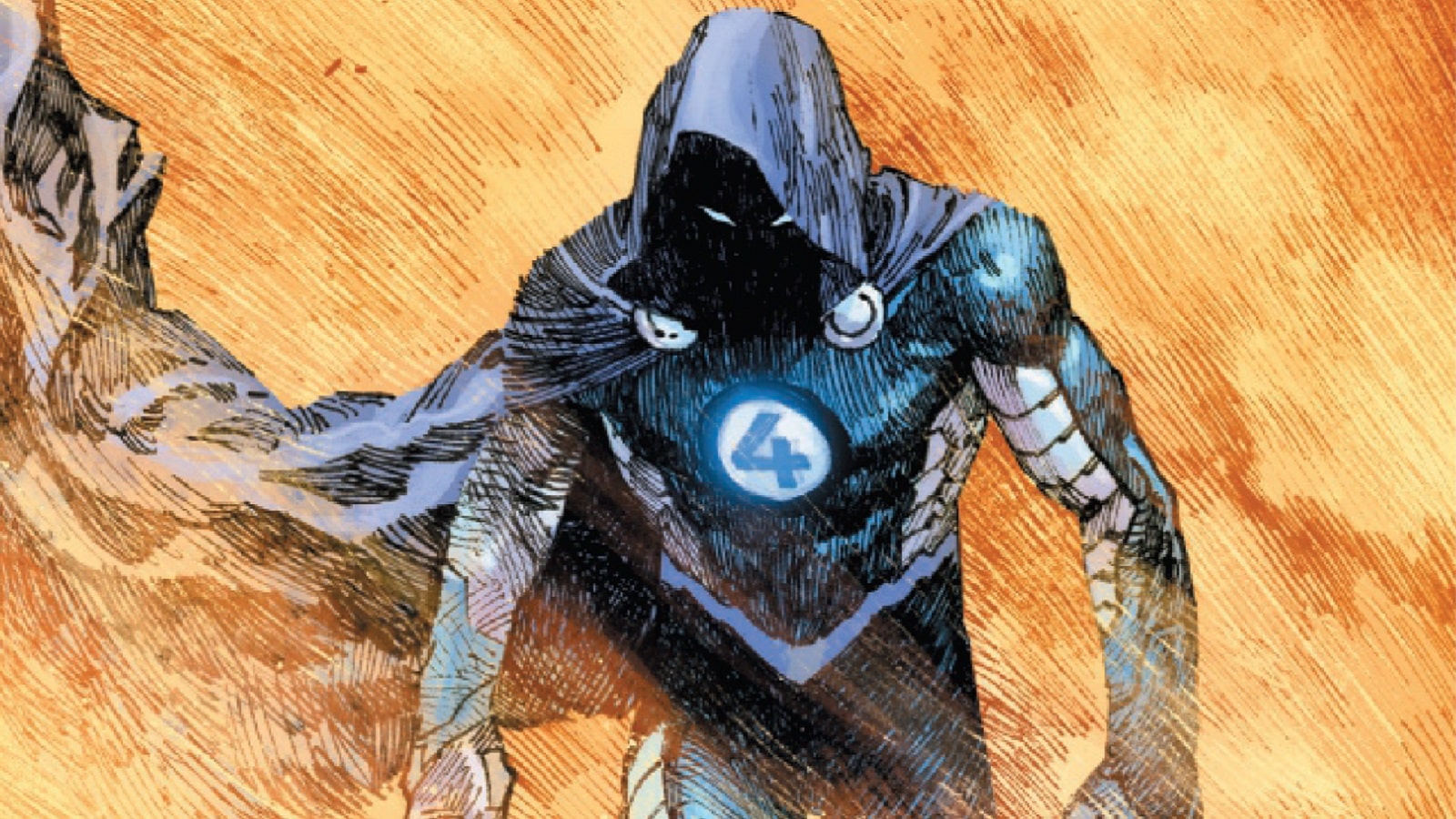
We see Doom’s work on Project 4 – his attempt to recreate what he lost when a world with the Fantastic Four in it was taken from him. He’s attempting to use cosmic radiation to recreate their unique abilities. There are successes, there are failures. What he creates is not what he lost – it’s the Fantastic Force, not the Fantastic Four. It’s something new, maybe something better. It’s not what he wanted, but it was all he could do, and in this timeline? The Fantastic Force may be what’s needed.
We see the ghosts, silhouettes of a lost timeline, hovering over Doom’s shoulders – blank spaces where his family should be. Blank spaces he can’t escape. They may never go away.
And we see the Maker. Moments of the past, where the Maker tortures another version of him. The glee in the Maker’s maliciousness.
When I first saw Phil Noto’s art for Doom’s story in #4, it didn’t feel right. Noto’s a great artist – his art regularly evokes deep feeling despite its apparent simplicity. It works great for iconic moments – and there’s a softness to it that amplifies moments of nostalgia, of memory, of moments meant to represent better times. The Maker’s glee, however, felt wrong. It felt silly, almost as it if was undercutting the seriousness of the torture he was committing. The more I read it, though, the more the art works. Evil should be incongruous with the page. It should feel wrong – it should feel absurd – for a man to be smiling as he breaks you down and tears your body apart. Reading that issue again – and seeing the Maker here – it’s as haunting as it’s meant to be.
The Maker takes a truly perverse delight in breaking down this version of himself, taking all of the Maker’s internalized hatred out onto a literal embodiment of who he is. Above the maliciousness, though, the Maker wants control. So he does something that combines both things – he removes the part of Reed’s mind that feels joy when his big brain puts something together. When Doom accomplishes a task, now, he feels nothing.

If Ultimates #17 Hasn’t Been Clear, Doom Has ADHD
One of the symptoms of ADHD is that there is no feeling of joy, or satisfaction, when a task is completed, and that’s certainly the case with me. At most, I feel a mild release of stress as the pile of Things I Must Do becomes slightly smaller. This effect compounds – when there is no satisfaction received in the completion of a task, it becomes harder to find the motivation you need to complete a task. Tasks pile up, move closer toward or even past deadlines. You have so much you need to do, and you can’t manage any of it. You’re smart enough to be able to do it, but it’s so hard – and any one thing you choose to do feels worthless in the face of the increasing number of tasks you aren’t doing.
So once this part of his brain was removed, why did Doom do anything at all?
Fear, shame and guilt can help. The Maker certainly provided the first of those. Doom has been providing the other two. It’s not healthy. It’s not sustainable – but when you call yourself Doom, what do you care for sustainable?
We ADHDers do have one thing in lieu of healthy, regulated motivators, as well: hyperfixations. We’ll spend weeks, months, even years stuck on something, but this one project comes along and we’re suddenly spending every waking hour on it, nonstop, a torrent of productivity we can’t hold back. Whether it’s diving solo into the heart of enemy territory to pick up spare parts for a cosmic radiation machine or spending three hours looking up the specific Batman: Urban Legends issue you wanted to quote, suddenly no task is beyond you as long as you’re letting your obsession take the wheel.
It is worth pointing out here that both on and off page, Reed Richards has been considered autistic. People with a better understanding of autism than I can speak to that, and how it may relate to this particular character. It is also worth pointing out that autism and ADHD can sometimes be linked, and that hyperfixation is a feature of both disorders.
The world he lost, the family he’s only briefly known – these fuel his obsession. The Reed Richards of our Home Universe once sought a way to fix everything. This Reed, this Doom, only wants to fix himself.
Comfort finally comes from an unexpected source. Where most of the heroes of the New Ultimate Universe look up to the shining examples of their selves from a more heroic timeline, Hank Pym is aware that his alternate self did a great number of terrible things. Hank has been haunted by the idea that if the Ultimates try to make this timeline more like that one – what’s to stop him from doing those terrible things all over again?
Hank Pym (who, in our Home Universe, has been diagnosed with bipolar disorder) has a feeling that, like Reed, there is something inside that is broken. That does not fit with the visions everyone has been given of a better world.
But as he tells Doom – just because you are broken doesn’t mean you need to be fixed.

The reason I write this review – the reason I opened it the way I did – is to try to communicate just how hard this one panel hit me. I’ve made some measure of peace with my ADHD, with my issues of productivity, with my shame, guilt and anxiety – but being able to let go of the idea that I need to be fixed is a challenge.
On a practical level, neither Doom nor I can be “fixed.” Part of his brain has been removed. Part of my brain never developed the same way other people’s did. Medication can regulate things, can help things – but there’s no “cure” for ADHD. Nor is there a cure for how much it broke me to have dropped out of my dream college, or for having lost a family to the machinations of a madman.
On a more profound level, there is nothing to cure. There is nothing to fix – or, at least, there is nothing that needs to be fixed. Doom lives a different life, in a different world. Doom sees the world differently. Thinks differently. Has different strengths, different problems, different approaches to the world. He’s not an aberration. He is himself.
It’s difficult for me to explain how overwhelmingly powerful this concept is, but the best way I can explain it is this: I’ve mentioned before that I don’t feel less of a sense of joy or satisfaction at a completed task, and more of a sense of relief. The weight of things I have left to do lies heavy on me, and it’s constant – and there are some tasks that weigh more than others, some heavy enough I can physically feel them, a weight in my chest.
Try to imagine, if you will, the sheer relief of realizing that fixing yourself is no longer a task that needs to be done. That it never was – that you can accept who you are, and work upwards from there. Doom in The Ultimates #17 is still not in a great place, but he’s found himself a sense of peace, not in letting go of the past, but in letting go of his need to fix what the Maker broke. A part of him, now free.
There is no greater impact a story can have than bringing someone an understanding of a perspective they might not have ordinarily had. The creative team behind The Ultimates has consistently given us that, their issues making the most of their “glimpses-in-time” format. They’ve covered a wide variety of perspectives through their run, and I think everyone should read the series, because every issue is going to be someone’s forever favorite.
This one is mine.
Buy The Ultimates #17 here. (Disclaimer: As an Amazon Associate, ComicsXF may earn from qualifying purchases.)

Armaan is obsessed with the way stories are told. From video games to theater, TTRPGs to comics, he has written for, and about, them all. He will not stop, actually; believe us, we've tried.