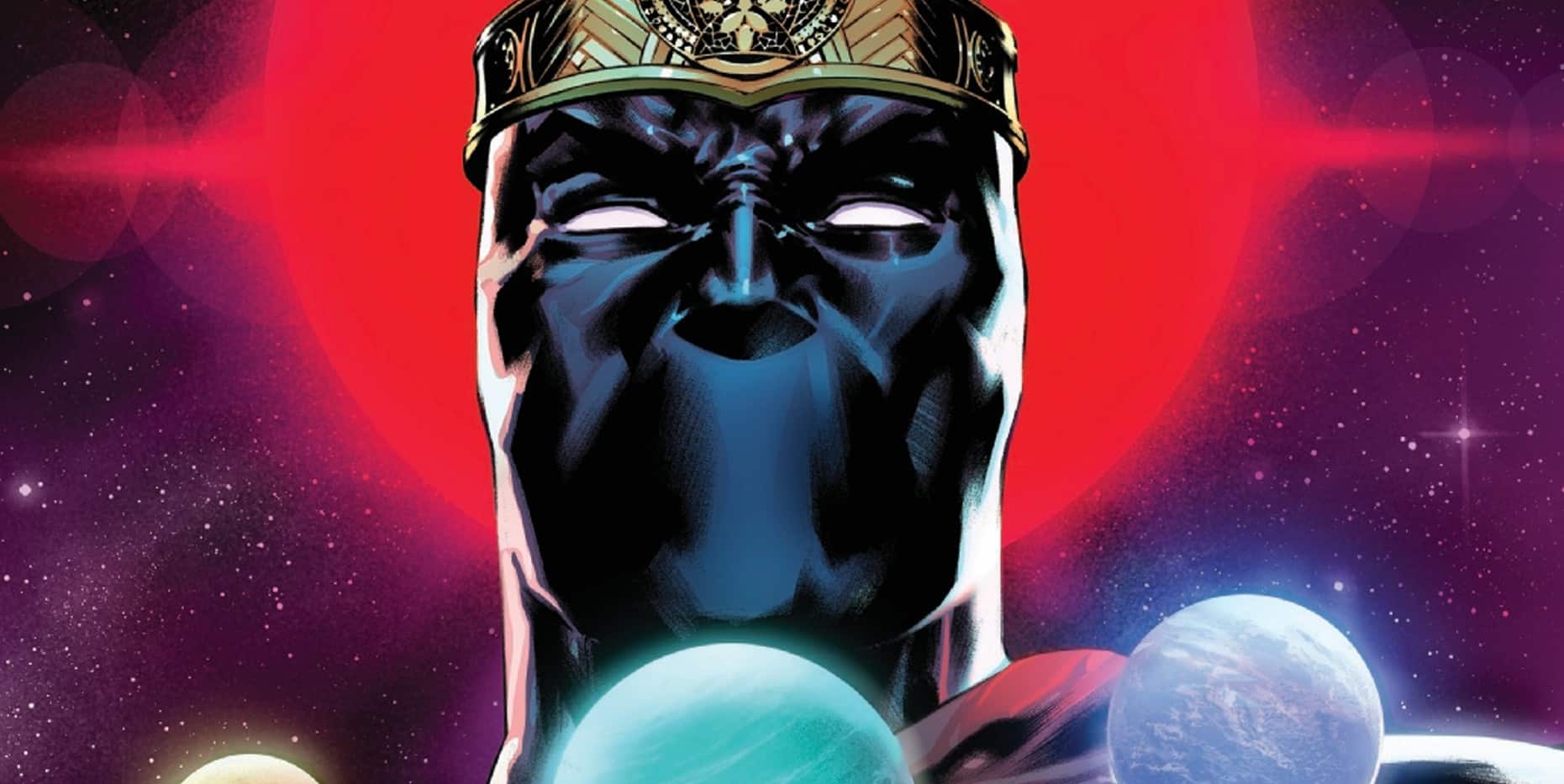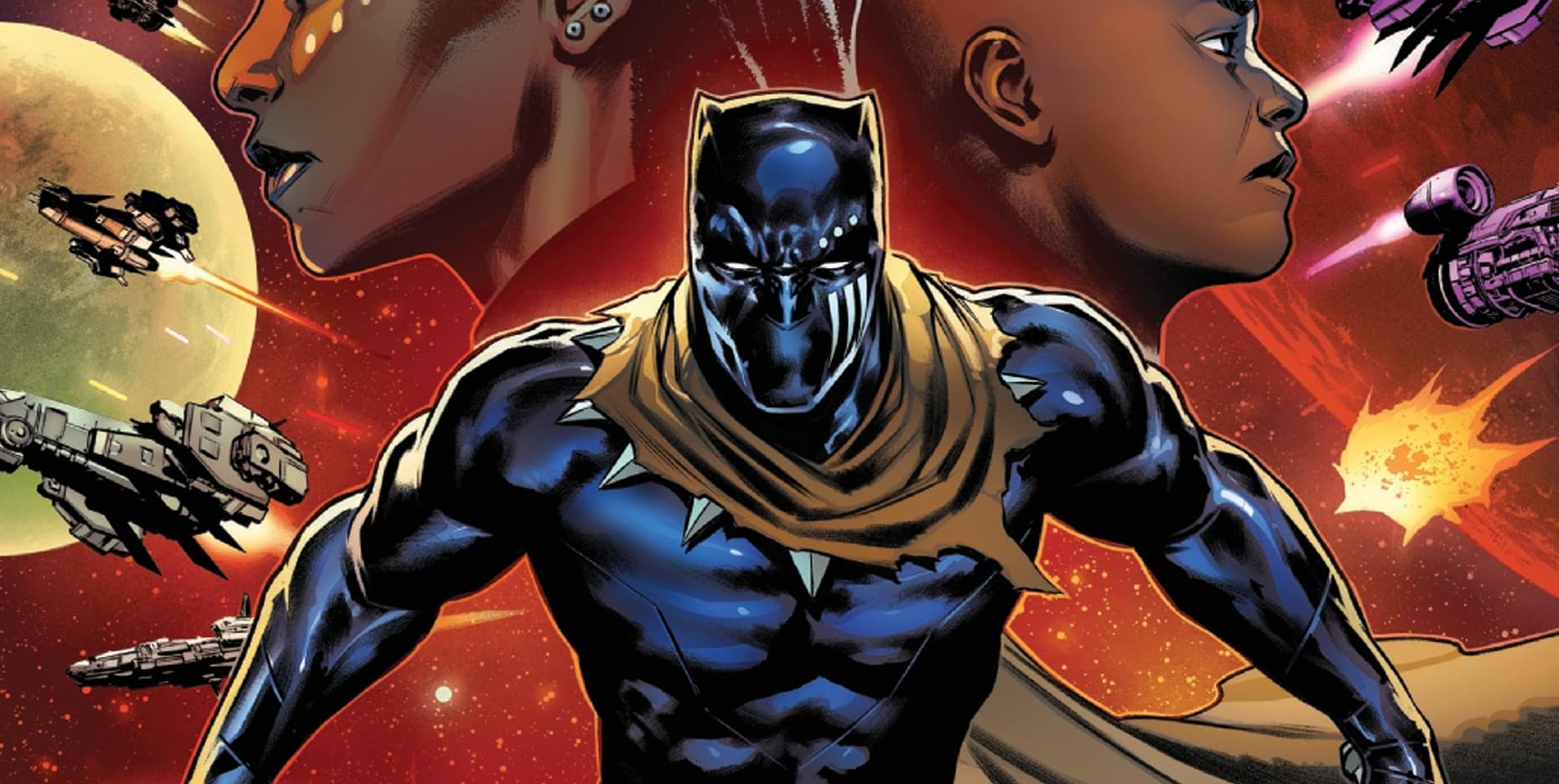
The king of Wakanda faces the challenge of uniting all of his kingdom — on Earth and in the stars. Before he can begin, though, someone — or something — steals him away to a mysterious planet where the Black Panther must fight for his life. Shuri, his sister, works to find him, but with the king and princess distracted, will someone else seize the title of emperor of Wakanda? Black Panther: Intergalactic #1 is written by Victor LaValle, drawn by Stefano Nesi, colored by Bryan Valenza and lettered by Ariana Maher.
Do you remember the first comic you bought? The first time you walked in a store, unintentionally stumbled on (or intentionally looked for) that one issue, and held it tight once you found it? I do, almost 10 years ago. Did I imagine that, 10 years later, I would have boxes upon boxes of comics? Did I think I would be a part of the best comics criticism collective on Earth and beyond? Did I think comics would save my life?
Of course not. That’s what makes life beautiful: You just never know how one thing will snowball into others.
Ten years ago, I had no real concept of who T’Challa was — just that he was Black, African and was married to Storm. I didn’t know about Killmonger, or vibranium, or Shuri, or even about heart-shaped herbs. And thankfully, I didn’t really need to. In retrospect, the first page gave a concise synopsis of what T’Challa had been through; the character, for better or worse (spoiler: better!) would be defined from that page forward.
So I wonder how someone picking up a comic for the first time would react to Black Panther: Intergalactic #1? Would they be able to jump in immediately with the context given? (Yes, because LaValle does a great job getting the synopsis out of the way). Would they understand the nature of the character? (Yes, for we see T’Challa’s intelligence, agility and empathy as he surmises a giant snake he could easily kill is simply trying to protect her eggs.)
I wonder if they would have proper context for who M’Baku is and why his distrust, though (maybe too overtly) ominous, is completely warranted. Here, knowing backstory is critically important, and without having read the past few years of comics (again, that Ta-Nehisi Coates run) to understand he is gruff, cynical, introspective and loyal, one might not get a proper appraisal of his brooding.
That Coates run provides resonance for this issue’s interceding stories — T’Challa, stranded on a planet of killer clones (the text explicitly says they are not clones, but they are absolutely clones. Why does Marvel love clones so?), and Shuri, discovering that the deceased father of the child T’Challa took on as a ward created those clones. All of this is intriguing without a proper read through of Coates’ saga, but so much gravitas is added with one. I’m not sure if the exposition defining N’Jadaka (known more popularly as Killmonger) really does him justice. It’s one thing for a villain to have a name; it’s another thing for that name to have heft. One wonders whether there were maybe more artful ways beyond expository dumps to allow the reader to catch up.
Thankfully, these dumps don’t take away from the work: The characters have clear personalities and motivations, yet have room to both grow and deceive. T’Challa feels nimble in ways that were definitely dulled in the quite frankly horribly reductive John Ridley run. (Though it bears saying that Eve Ewing and especially Cheryl Lynn Eaton did wonderful jobs with their short runs.) This is a great return to form for the character’s mainline interpretation — something longtime fans have been clamoring for.
Do I wish there were more women present here? Yes; I think the presence of strong women was a welcome and necessary reminder that strong women do not neuter strong men. I’m hoping to see more women present as more than just romantic interests or support.
Am I annoyed that he’s barefaced? Absolutely; I’m hashtag team beard, and the insinuation that beards are bad (see the last page) is a mild sartorial annoyance for me.
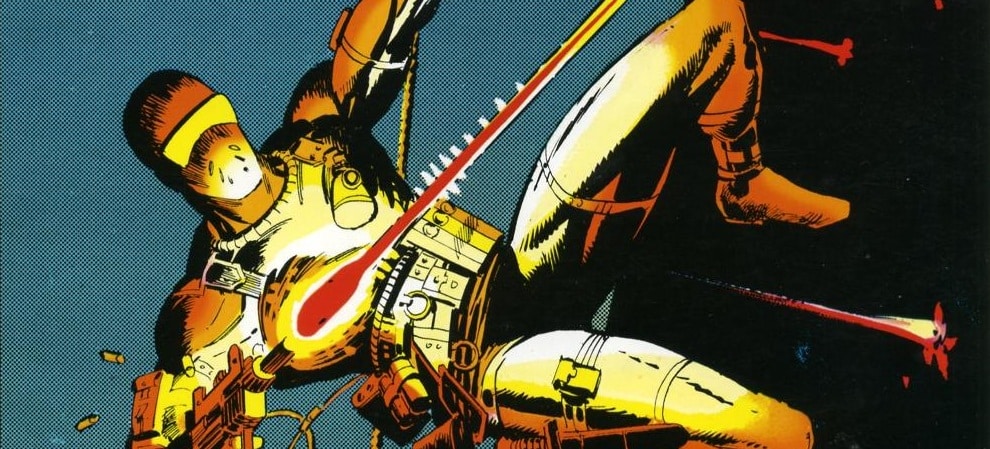
And speaking of sartorial annoyances, forgoing the costume he took during Ewing’s run is a clear misstep. That shield, the scarf/cape, the shurikens — it was peak Afro-future ninja, and I’m going to miss the design.
Still, as a longtime reader of Black Panther, I’m very, very satisfied with this introductory issue. Our hero is back on his throne, feeling as fresh and dangerous as ever. I’ve enjoyed the return to form, and I look forward to seeing what will come next.
I hope this volume of Panther remains equally intellectually adept and emotionally aware.
I hope a first-time reader doesn’t feel overwhelmed, given how much context is necessary to fully appreciate all the action.
I hope that if Black Panther: Intergalactic is someone’s first comic, they feel inspired to read more, learn more and latch on to characters that can change their lives with joy and purpose.
Buy Black Panther: Intergalactic #1 here. (Disclaimer: As an Amazon Associate, ComicsXF may earn from qualifying purchases.)

A proud New Orleanian living in the District of Columbia, Jude Jones is a professional thinker, amateur photographer, burgeoning runner and lover of Black culture, love and life. Magneto and Cyclops (and Killmonger) were right. Learn more about Jude at SaintJudeJones.com.