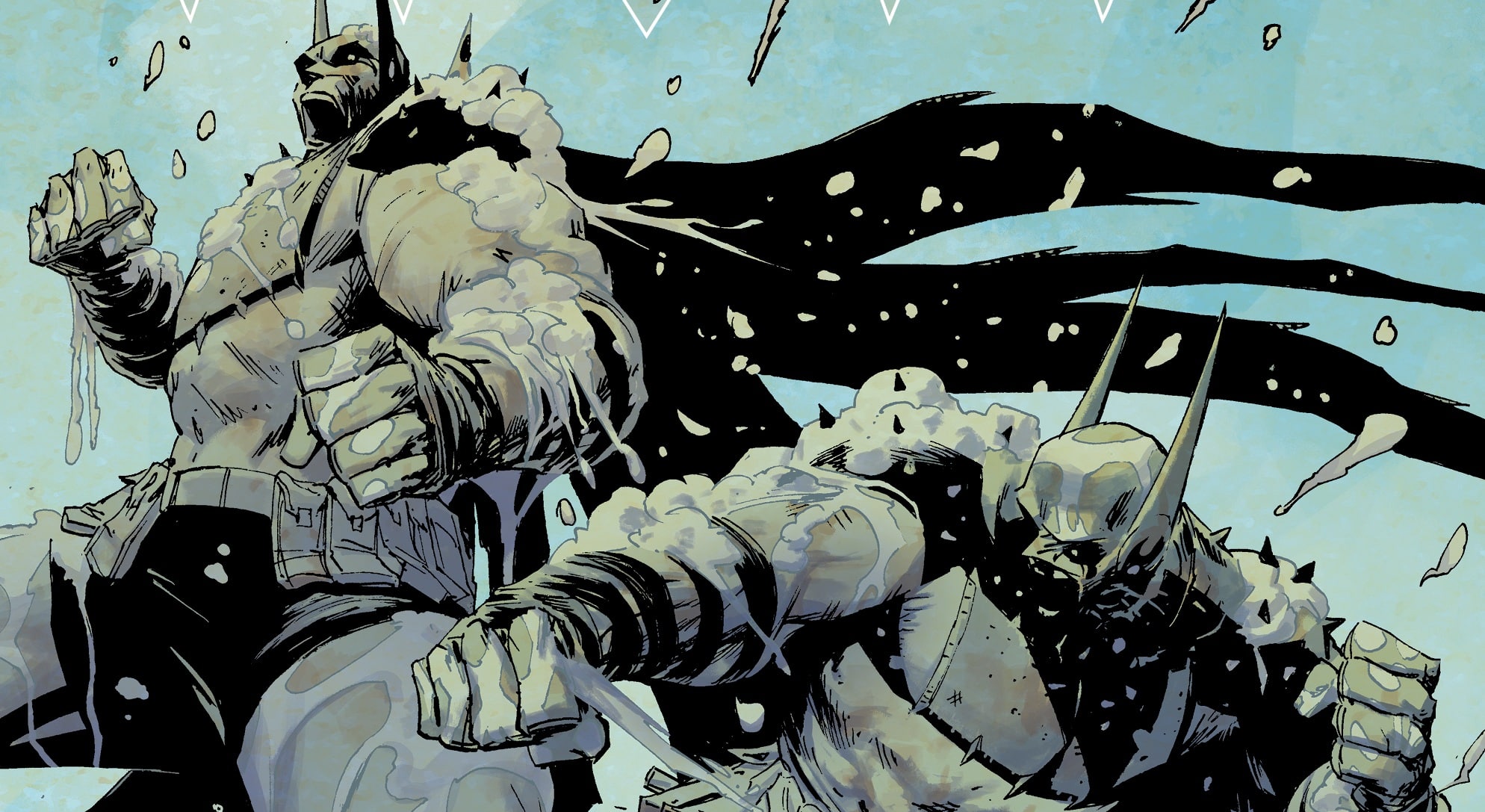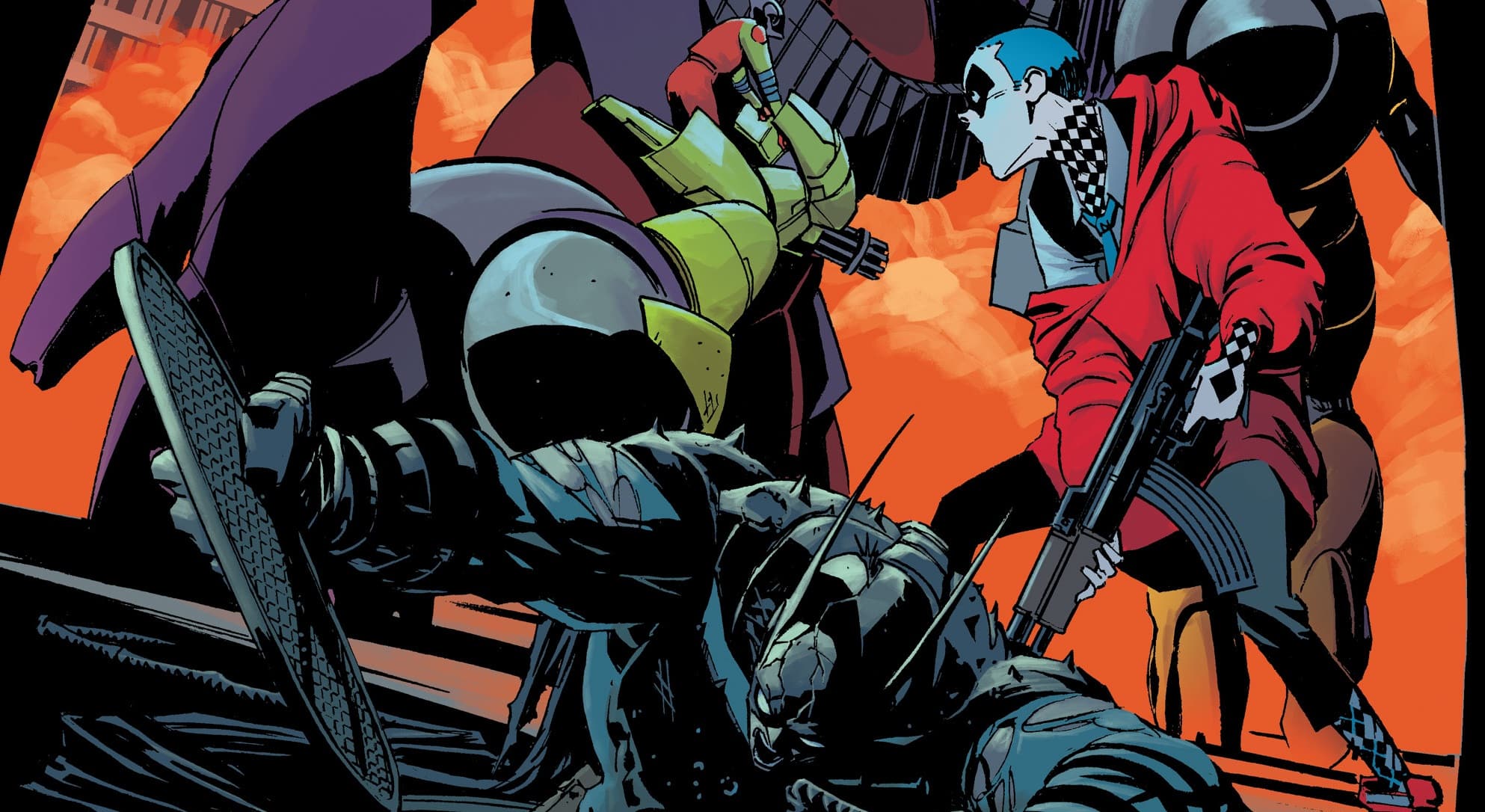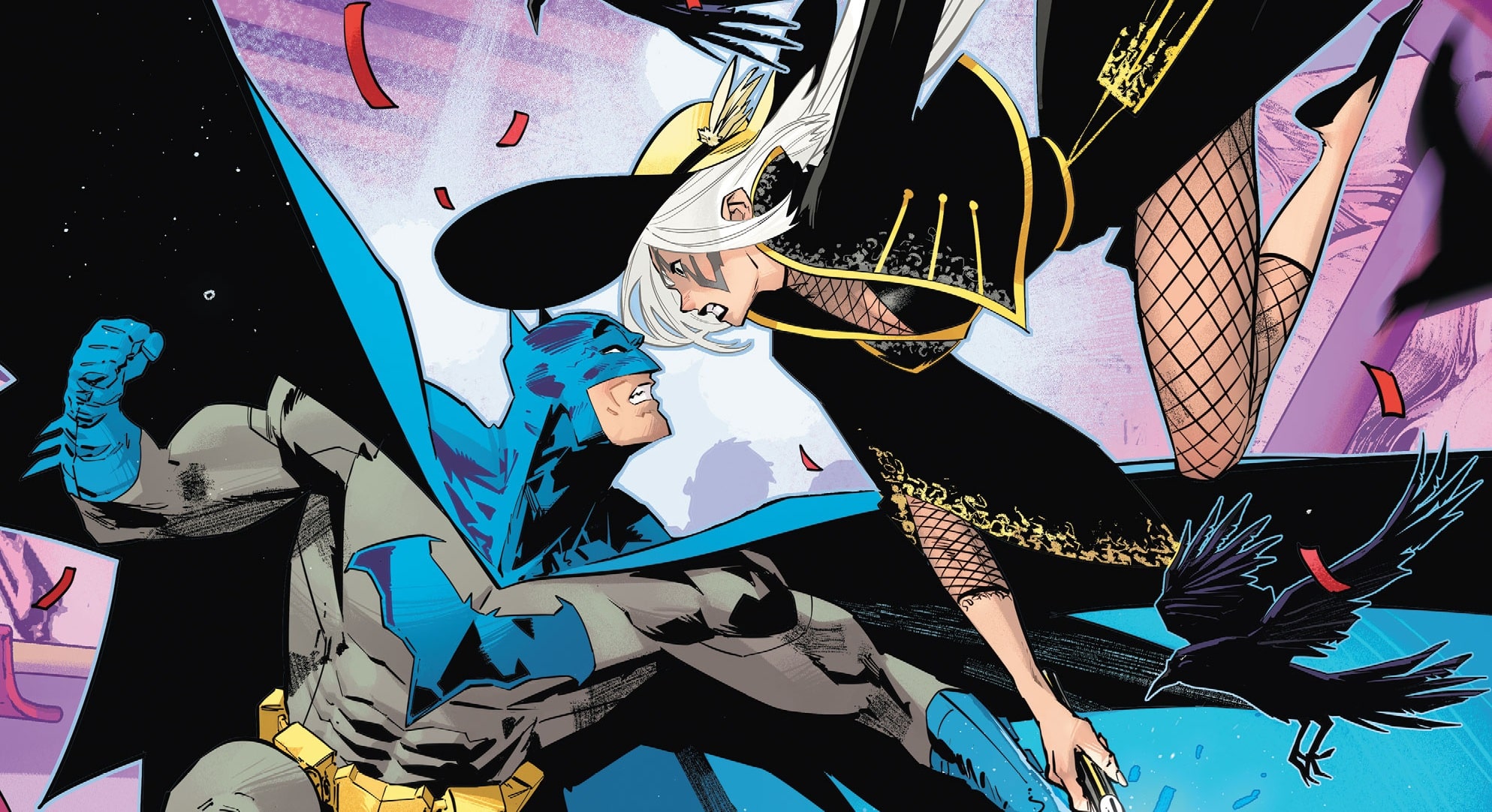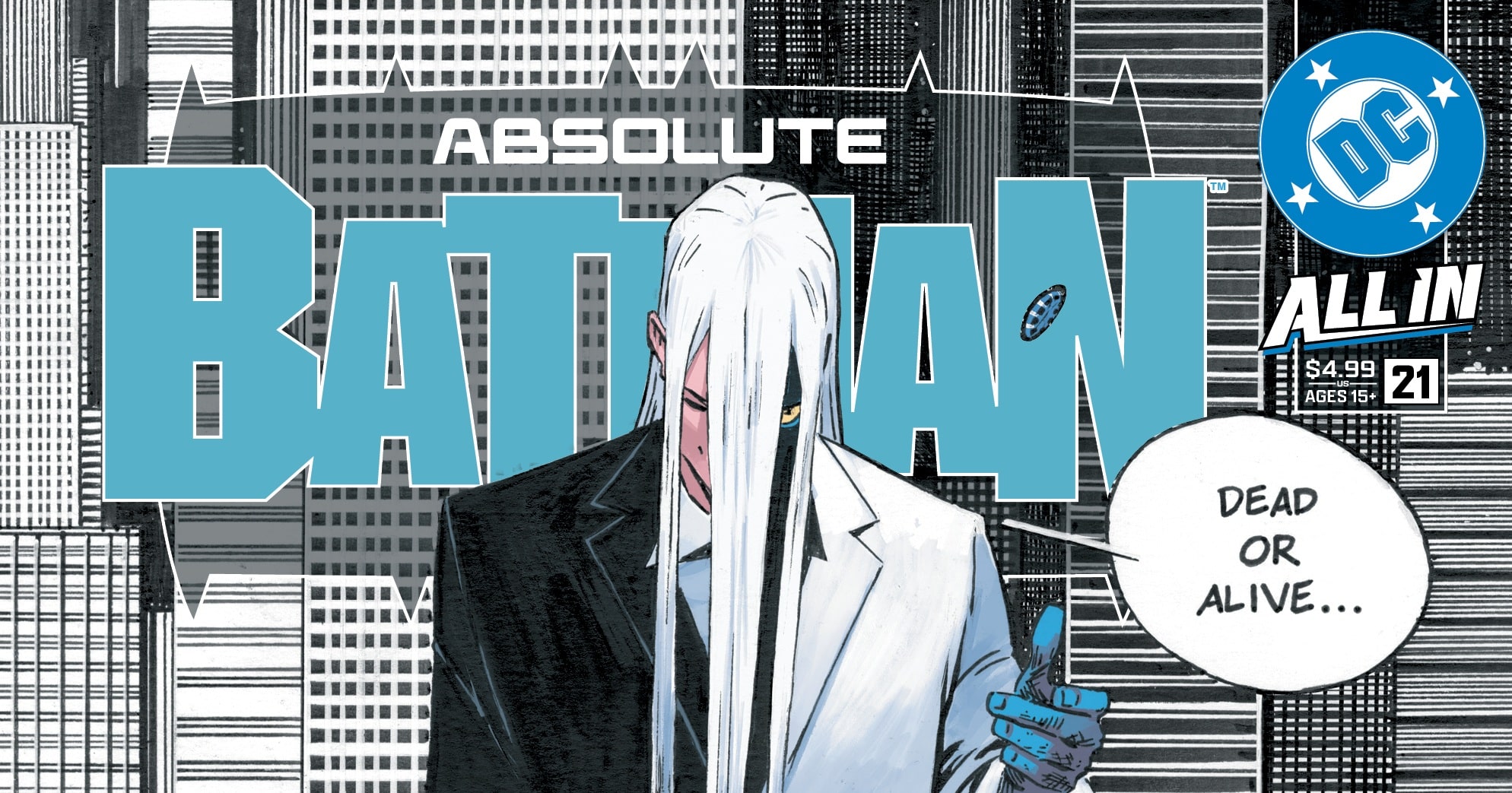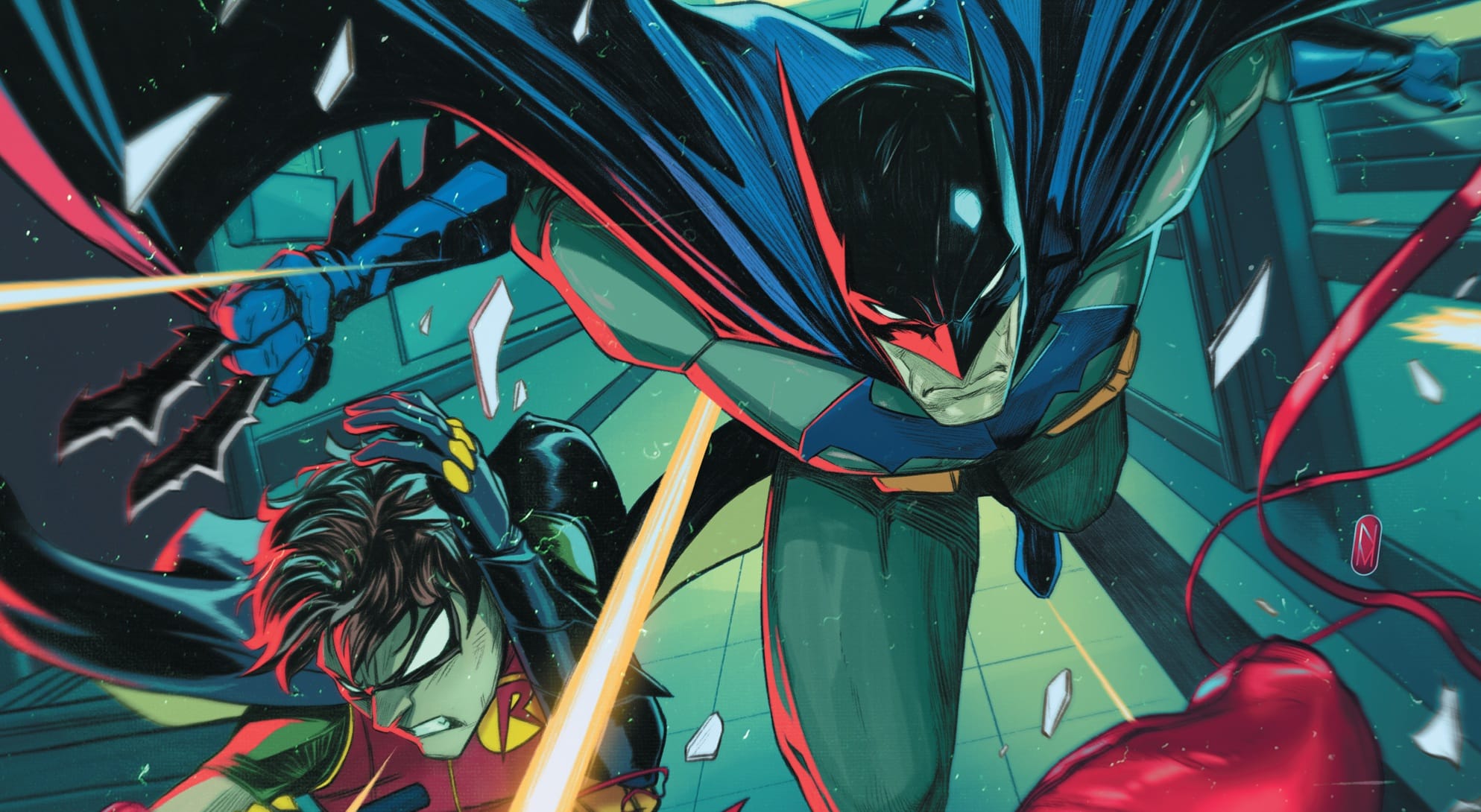
The Quiet Man, a seemingly unstoppable force, is cutting a swath through Gotham’s underworld, looking for vengeance. Can Batman & Robin stop him, as Robin struggles with the legacy of Batman and what the mission to save Gotham really means to him? Batman and Robin #25-30 are written by Phillip Kennedy Johnson, drawn by Fico Ossio, colored by Marcelo Maiolo and lettered by Steve Wands.
Will Nevin: You know, Brother Matt, for the number of people who trade wait — people like friend of the pod’ Josh Weil — we really should review more trades and arcs as a whole. But I guess that’s what we do on the show, innit?
Matt Lazorwitz: Yeah, I read my comics monthly, and so doing more full arcs would mean me reading many things three times. I barely have time to read them twice, consarnit!
Will: Have you considered sleeping less?
A mountain man comes to Gotham


Matt: Will, I know we’ve talked about Phillip Kennedy Johnson plenty, but I’m trying to think if we’ve covered his work much. We did a few issues of his first arc on Batman and Robin, but aside from that, I can’t think of much.
Will: He has to be one of my favorite people in comics, and considering he’s going Marvel-exclusive, we’ll have even less of an opportunity to talk about him in the future. It’s a real shame — getting both the beginning and the end of this Batman and Robin run, you get the sense that he had a real plan going into this and some emotional beats he really wanted to hit.
Matt: We have read a lot of Damian stories for the column and the pod. I know you held him in pretty low regard when we first started, but I think reading the Morrison run, reading a lot of the later stories with him, has helped you find Damian more tolerable, if not full on likable.
Will: To be fair to me, it’s taken writers the better part of a generation to find the handle on a character who, when he was created, was little more than Wesley Crusher with a shitty attitude.
Matt: And there’s a reason for that, as you’ll see in our reading for next week’s podcast, but I digress. What Johnson has done in his run is something that no writer really did before. He moved Damian away from the goal of becoming the best Batman to ever Batman. Damian is feeling the weight of the mission, seeing what Gotham is, and seeing that there might be a better way, or at least a different way, that he can help. A way that draws on his grandfather, Thomas, the one who isn’t a shitty megalomaniac. That Damian, who was trained from birth to be an assassin, could instead become a healer, a doctor, is not something I think Grant Morrison considered when they created him. And the knowledge that before he became said shitty megalomaniac, Ra’s was a doctor too, is sadly unexplored by the end of the run.
Will: What I really like here — aside from the Quiet Man — is that Damian is actually maturing. We’ve seen that as he’s explored art and things not related to The Mission (™), but as you said, he’s actually contemplating a different way of serving Gotham. He’s also critically evaluating Batman and his place in the world — including Batman’s motivations and the high cost of his war on crime. In essence, this is a Damian on his way to being an adult, and that’s a character I’m interested in.
Matt: We often note superhero comics are about the illusion of change, rather than change itself, and that is more true about the icons upon which it rests (Batman, Superman, Spider-Man, etc.) than most. But Robins have a history of growing and changing. And so there is actual potential for Damian to learn and become a different person than any of his forebears intended. And that’s exciting!
Will: Note to the next writer(s) to take up Damian: Remember this shit! Please! Don’t do a hard reset. It would be such a shame if this stuff gets forgotten. But we see that all the time, don’t we?
Matt: See Tim Drake becoming Robin again after a decade-plus of being Red Robin, and Harley Quinn going back to the Joker over and over until that finally got broken. It does seem like Matt Fraction is working in the same vein over in Batman, so I have some faith it will stick.
The plot of this arc, the narrative superhero thrust, though, introduces a new … I don’t want to say villain, so let’s say antagonist. The minute I first saw the Quiet Man, I knew he was going to be a character right in your wheelhouse, Brother Will. And I am glad to see I was correct.
Will: Mine and Johnson’s. The Quiet Man, in fact, could have been plucked directly from his Warlords of Appalachia, which is — by far — my favorite comic in the history of ever and something I need to reread imminently. Just like the Kentucky mountain folk in that series, the Quiet Man is motivated by an esoteric religion steeped in violence, and he is utterly unstoppable. It is precisely my sort of comic nonsense.
Matt: This is a very traditional crime story, the kind of thing we dig on. The Quiet Man lost his son in Gotham mob violence, and so he’s here to exact revenge on the man he blames: the Ventriloquist. And to do that, he’s willing to go through Penguin, Two-Face, Tiger Shark and all their mobs. And one of them gets really taken out. Guess which one? It’s probably the one who hasn’t appeared in multiple films and TV shows.
Will: Ummm, ummmm, ummm … I can get this, I know I can. It’s … Tiger Shark?
Matt: Give the man a prize! What we get here is six issues of this guy cutting his way through the Gotham mob. And I’m sure there are people who will complain about how easy that is for him, but we live in a pop culture landscape with John Wick, Taken and any number of Jason Statham movies. You’re more likely to run across an unstoppable killing machine than not. But as with those examples, there is something tragic and sympathetic about the Quiet Man that makes him compelling.
Will: And having the Quiet Man around is a natural reason to interrogate Batman’s nature and purpose. Almost like a less sexy version of Andrea Beaumont. Johnson is off to Marvel, and this represents a natural end to his story, but I wouldn’t mind seeing him again.
Matt: I absolutely would not. A run on Detective Comics, with some real mob-heavy stories? I’d be down for that. Frankly, this is the most engaging I’ve found the Ventriloquist in years. It’s not like we haven’t seen the basic idea that people think Wesker is cured but he’s really not and Scarface comes back before. But the creepiness of the scenes of Wesker talking to his sponsor and it turning out she’s been dead and this is just more of Wesker’s fractured mind? I dug that.
Will: First, we need to qualify that statement of yours to apply to moderately canon comics, considering that was a hell of a Ventriloquist arc in Batman: Dark Patterns. But yes! Let’s explore exactly how many different ways Wesker’s mind can crack. And also, his voice talent being able to fool Batman over the phone? That’s gotta be pretty good.
Matt: Yes, you are absolutely correct there: canon Ventriloquist. Dark Patterns exists on a whole other level.
Will: If you’re reading this and you haven’t read Dark Patterns, take care of that. Then read Warlords. *Then* come back to finish reading this. Don’t worry. We won’t go anywhere.
Bat-miscellany
- For our Valentine’s week episode, friend of the show Josh Weil joins us for a discussion of the most whimsical story Tom King has ever written, “Date Night,” and two other stories of the Bat family in love.
- While it isn’t central to the main narrative, I was glad Johnson got to write some Damian and Jon Kent fun. That is something that has been sorely lacking since Jon was aged up by Brian Michael Bendis.
- It feels like other writers are definitely reading this book: The possible future/alternate world seen in the fourth issue of DC K.O.: Knightfight features a Damian who has fixed Gotham and retired as Batman to be a doctor.
Buy Batman and Robin #30 here. (Disclaimer: As an Amazon Associate, ComicsXF may earn from qualifying purchases.)

Matt Lazorwitz read his first comic at the age of 5. It was Who's Who in the DC Universe #2, featuring characters whose names begin with B, which explains so much about his Batman obsession. He writes about comics he loves, and co-hosts the podcasts BatChat with Matt & Will and The ComicsXF Interview Podcast.

Will Nevin loves bourbon and AP style and gets paid to teach one of those things. He is on Twitter far too often.