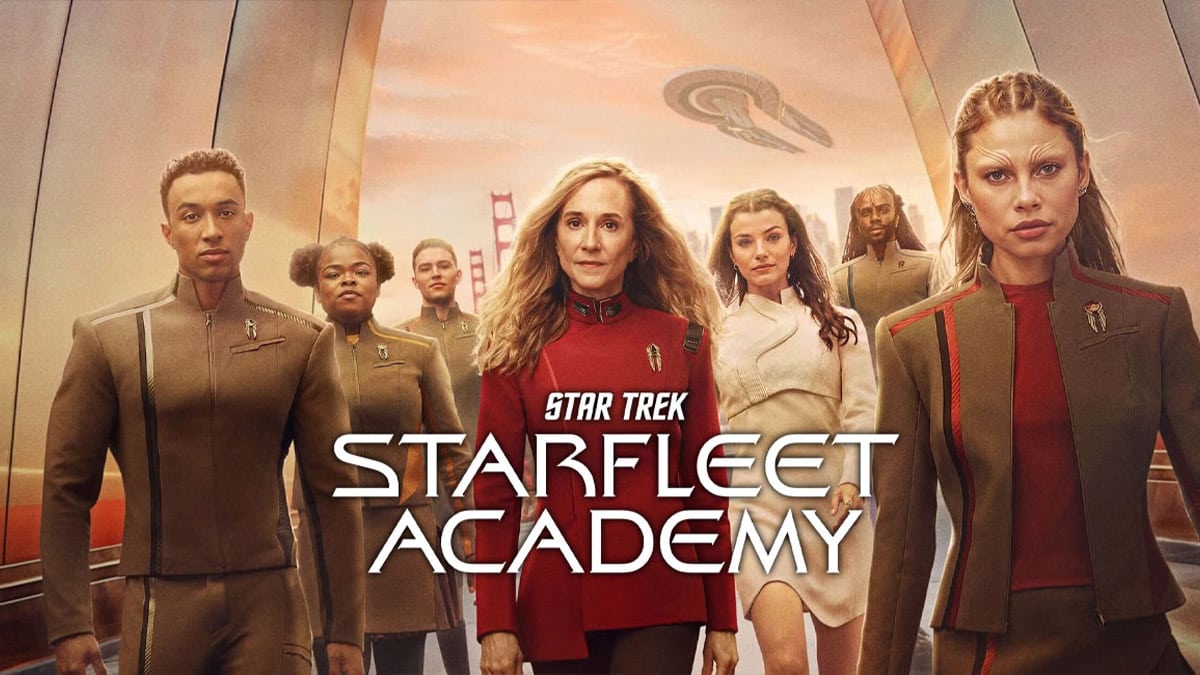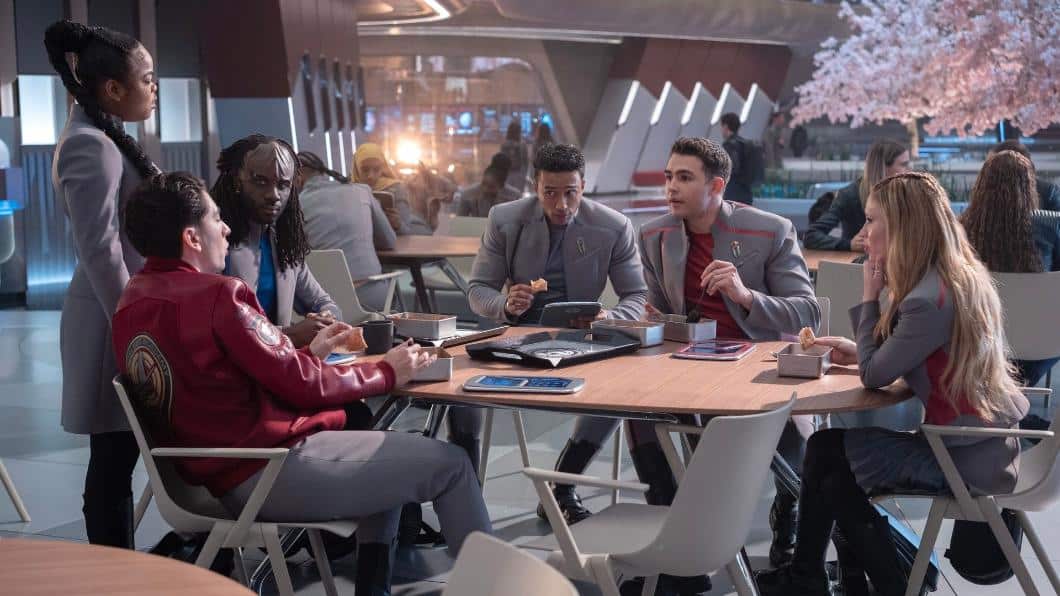
We are back with two cadet spotlight episodes as the first season of Star Trek: Starfleet Academy continues. First, Jay-Den must grapple with his Klingon identity and the state of the Klingon diaspora in the midst of debate class in “Vox in Excelso,” written by Gaia Violo & Eric Anthony Glover, and directed by Doug Aarniokoski. Then, Sam must solve the mystery of “The Sisko” in order to prove her value as an emissary to the Federation in “Series Acclimation Mil” written by Kirsten Beyer & Tawny Newsome and directed by Larry Teng.
Austin Gorton: Mark, we skipped reviewing “Vitus Reflux,” the fun-but-fluffy prank war episode, on account of your winter storm-related power issues. But I understand you’ve channeled your inner Scotty and found enough power to dive into the next two, far meatier, episodes.
Mark Turetsky: Yeah, unfortunately, we had to divert all power away from the holodecks to life support to get through that extended outage.
Austin: More importantly, as CXF’s resident Louisianan, where do you come down on the whole “tomato/no tomato in gumbo” debate?
Mark: I’m only a transplant. Jude remains the true knower of such things.

I Gave the Klingons a Planet and All I Got Was this Bow
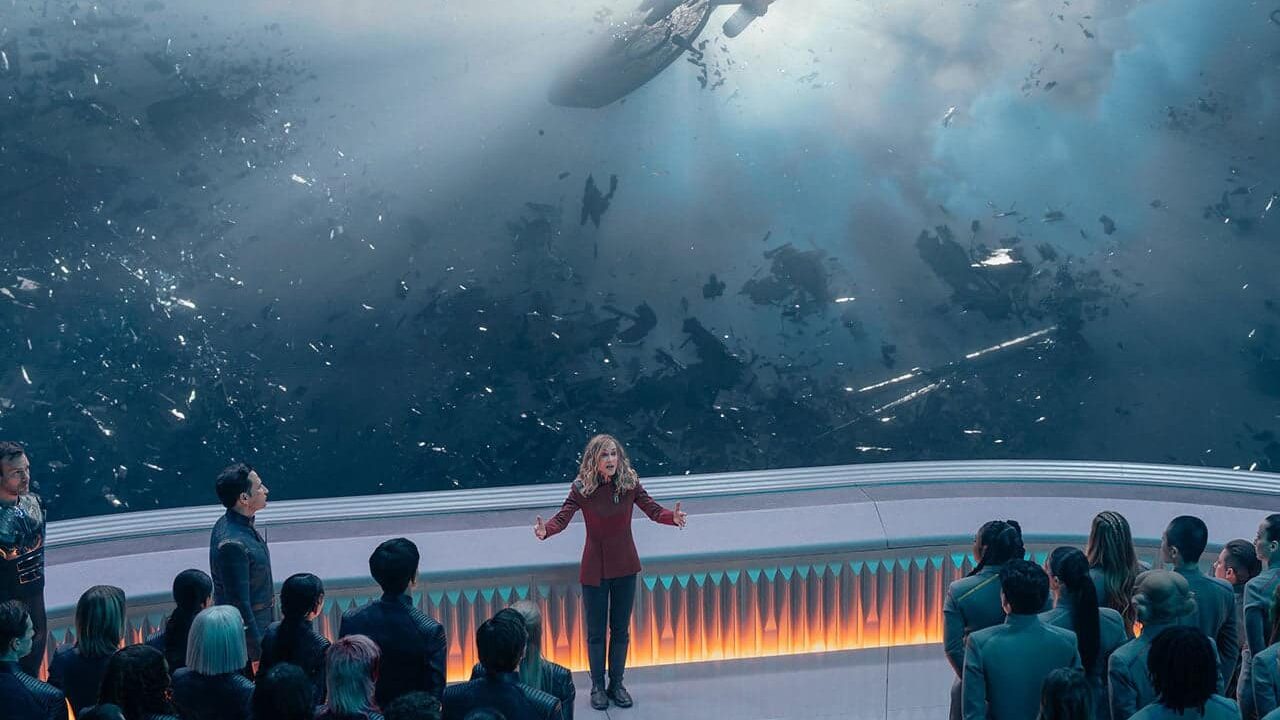
Austin: One episode after the “join a team and get a letter jacket” school trope, it’s time for the speech and debate nerds to shine! Turns out Caleb is pretty good at debate (this tracks) and that Jay-Den is terrible at it, in part because he hates speaking in front of people. But it also turns out he has an even more complicated relationship with his identity as a Klingon than we thought (just based on his initial “I’m a Klingon who wants to be a doctor” introduction), something that gets pushed to the fore when a refugee ship full of Klingons — including possibly his parents — is destroyed in an accident. With that, we finally learn the state of the Klingon Empire in the post-Burn galaxy and it’s…not great for them.
Mark: Yes, the groundwork laid in Star Trek VI: The Undiscovered Country finally plays out in full. We know from that movie that with the destruction of Qo’noS’ moon, Praxis, due to over-mining, would eventually lead to an environmental disaster without Federation intervention, which, frankly, rubs the Klingons the wrong way. We learn from this episode that during The Burn, Qo’noS itself became uninhabitable due to the sheer number of dilithium reactors on the planet (a clear environmental allusion to our use of fossil and nuclear fuels). When all active dilithium reactors blew up, it basically made the whole planet go ka-blooey. And much like in The Undiscovered Country, the Federation wants to help, but the Klingons do. Not. Want that.
Austin: I am on record for generally not loving “Klingon stuff” – with a few exceptions (mostly DS9-related); whenever a Klingon ep rolls around, my eyes kind of glaze over amidst all the talk of honor and warrior culture and swords that curve the wrong way. But this episode captivated me. Both the notion of transforming the Klingons from a foundational Star Trek political player to a refugee species scattered across the galaxy, the tension born of putting the proudest race into a position where they need the most help, and the way this episode played with the idea of myth-as-history. Fascinating stuff, all grounded in some strong character work for Jay-Den that went light years beyond “he’s a member of the warrior race who wants to heal, get it?!?”
Also, maybe this is just because I was a speech kid in high school, but this is the first episode where I…kinda liked Caleb?
Mark: Oh, I was also absolutely a speech (not so much with the debate!) kid. I went to Canadian nationals and placed sixth, just missing out on getting a spot on the worlds team. Aaaaanyway. I think part of what you’re reacting to with Caleb is that a) this episode doesn’t really focus on him and b) he’s presented here as a well-meaning but ultimately dismissive villain. Not necessarily evil or anything, but he’s the antagonist in this plot. He takes the kind of teenage position that anyone might take without any consideration for nuance. There are a couple of things about the debate that I would nitpick about, such as seeming to imply that the debaters are free to choose which side of the debate they’re on and have to genuinely believe the positions they’re taking. That’s not really what competitive debate is about. My main issue is this: The Doctor seems like he’s actually a terrible debate coach. Why is he allowing them to, effectively decide if the species of one of his students should be allowed to go extinct? Yes, there’s a hand-wavy, “it’s all anyone can think/talk about,” but it’s really extraordinarily bad practice in an educational setting.
Austin: I was also principally a Speech-only kid, but there was enough crossover there amongst my teammates on the Speech team to be screaming at my screen, “that’s not how debate works!” numerous times throughout the episode. Presumably, the idea is that this is the “Aaron Satie” format of debate (taking its name from a notable jurist, like our Lincoln-Douglass debate style), but if so, it seems a poorly constructed one. I also have no idea how the format of “two people debate, whomever the Doctor decides won stays, the other one leaves” is meant to work. If an accomplished debater like Caleb just knocks down the entire opposing side in one go, what are the rest of the students who are on his side of the debate meant to do. Also, the way the debate stage is lit, with the speakers essentially in spotlights but from behind them, seems like a bad way to light speakers (yes, I was in theater in high school too)?

Mark: Speaking of Satie, I love that there was a bit of a trick question in this episode, where The Doctor quotes the TNG episode “The Drumhead” and then asks the students if they know who the quote comes from. TNG watchers might jump up and shout “Picard!” but of course, Picard was quoting Satie in that episode. Delightfully devilish!
We also get views of the various different ways to be Klingon in this episode. There are the Krios Prime-bound Klingons, reduced to effectively being hunter-gatherers in Jay-Den’s family, there’s Jay-Den himself, there’s the half-Klingon Lura Thok, whose Klingon heritage has been seemingly assimilated into Jem’Hadar society, and there’s David Keeley’s Obel Wochak, who seems to be all that remains of any semblance of a Klingon ruling class.
Austin: We see it even within the context of Jay-Den’s family unit, his traditional parents trying to hang onto the past as best they can, his brother who both adheres to the parental traditions but is fully supportive of Jay-Den’s desire to chart his own path, and Jay-Den the iconoclastic rebel. That’s one of the things that made me really appreciate the Klingons here – all throughout, they are depicted less as the usual “monolithic warrior culture, and Worf” and more as a collective group that are broadly similar but each unique in how they approach their culture.
And of course, that’s key to the whole episode, which is all about “what makes a Klingon a Klingon.” Can a Klingon be a doctor? Can Klingons be Klingons if they’re refugees? Are you a Klingon if you accept help from others? That’s hardly a new exploration — plenty of TNG and DS9 episodes did the same thing, with Worf at the center, but here, while Jay-Den is the focus, there’s both a wider swath of supporting characters exploring the same question, and a wider swath of “typical” Klingon behavior to use as a benchmark, to make it all more interesting.
Mark: What I love most about this episode is that the answer to those questions comes from Klingons thinking in fundamentally different terms than the member species of the Federation. Jay-Den’s father didn’t cast him out, he gave him permission to go to Starfleet Academy by freeing him from an obligation to his family to become a warrior. The remnants of the Klingon
Empire would never accept a new homeworld as a gift, even from a close friend and ally, but they will “conquer” such a planet in a perfunctory battle. The Klingons know they’re in bad shape, they know that they need a new homeworld, but perhaps because just about every person in Starfleet grew up after The Burn, they’ve lost the knowledge of how to deal with Klingons.
Klingons are most assuredly the most explored alien species in Trek (Vulcans don’t even come close), but what this episode does so well is to make them alien again. Yeah, we all know about Honor and Duty and Blood Wine and Rituals and Targ Hearts etc. This episode is most fundamentally tied to “The Vulcan Hello,” the oft-criticized pilot to Discovery. The thing that these both get right about the Klingons is that the violence they expect is a matter of custom for them. It’s a show of respect. I’ve seen some reads on this episode that somehow Starfleet tricks the Klingons into thinking that they’ve won a great battle, and that is just fundamentally wrong. This is just the closest thing they have to accepting a gift while saving face.
Austin: It is very clear that both the participants in the brief Klingon-Federation war over Faan Alpha are aware of the terms; have we ever heard someone provide a damage report of “shields at 95%” before? To assume the Klingons believe they won a great actual battle is to think they’re idiots; everyone involved knows they are engaging in an act of theater, but it’s an important act of theater (also, how cool was it when, as the two sides lined up for the “war”, the Klingon leitmotif from The Motion Picture piped in?). But taking the idea that Klingons treat myth as history — a consistent reading of past stories — and then deciding to just speed run through the process of legend becoming accepted fact? That’s clever (and fun).
Mark: Yeah, the TMP Klingon music is great! Not to mention hearing Jay-Den’s family singing The Warrior’s Anthem around a campfire. Fun fact: that song, which was used so amazingly in DS9’s “Soldiers of the Empire” comes from the game/CD-ROM experience Star Trek: Klingon!
Austin: All in all, it makes for the strongest episode of the season…yet.

Emissaries
Mark: So, from the earliest promos of this series, I was excited to see where this was going. Back in July of last year, we got our first teaser, which features a shot of SAM looking at the screen reading, “Confronting the Unexplainable: The Fate of Benjamin Sisko Emissary of the Prophets.” It seemed to be a tacit promise that we would get some kind of, I don’t want to say closure, but at least some followup on the ending of Deep Space Nine, a subject that I don’t think anyone expected we’d ever get, as Avery Brooks has more or less retired from acting and has expressed no interest in returning to Star Trek. But that’s getting a little ahead of ourselves. This episode feels to me like a juxtaposition of tones that don’t quite gel together. It’s genuinely moving in certain scenes, and unpersuasively goofy in others.
Austin: While not limited to it, a lot of that comes from the largely pointless and almost-innane B-plot involving more Ake/Kelric (plus the Doctor and Tig Notaro) shenanigans, which just completely derails the episode every time it cuts away to it. If I’m being charitable, there’s some loose thematic parallels in Ake helping Kelric be a better emissary of sorts to a visiting dignitary just as SAM is polishing up her emissary bonafides in the A-plot, but mostly it just seemed like an excuse to let the adult cast make fart noises and whatnot. Which, they’re all unsurprisingly good at, but it still felt tonally jarring.
But I’m jumping ahead. At any rate, “Series Acclimation Mil” is the SAM spotlight episode. We learn more about her presence at the Academy, the idea that she’s an emissary from the holographic people of Kasq to, not only the Federation, but the concept of physical beings, whom long ago created the people of Kasq as a slave race, making the now-liberated people of Kasq extremely nervous about interacting with organics again. Under pressure to move the whole process along, she tries to join a class about knowing the unknowable taught by a Cardassian named Illa (played by Newsome), and is drawn to the mystery of Benjamin Sisko, last seen entering the fire caves of Bajor (in the Deep Space Nine finale). Somehow, it’s already mid-term, so SAM can’t join up, but Illa tells her if she can solve the mystery of Sisko, she can teach the class. And that forms the narrative spine of the episode.
Mark: Let me just take a moment to note that there is a huge racial undertone to this episode. Avery Brooks as Sisko was obviously not the first African American Star Trek ensemble member, but he was the first to be a series lead. Tawny Newsome, who co-wrote this episode, has spoken many times about how, when she was growing up, Deep Space Nine was appointment television for her family, as Ben and Jake’s relationship was one of the only real positive portrayals of Black family and specifically of Black fatherhood on TV. Now, fast-forward many years, and she’s already been a Black co-lead of a Star Trek series, and here she is welcoming, both onscreen and off-, a young Black actress into the Star Trek family. Yes, SAM is technically a photonic alien from a distant planet, but even in that backstory, where her race were originally enslaved, makes it such that I must at least acknowledge that this reading is fundamental to this episode, and also that I’m probably not the person who should be writing about this. But I don’t think it’s possible to write about this episode without at the very least mentioning it.
Austin: Agreed on both counts. It’s also worth noting that Newsome co-wrote the episode (alongside Star Trek vet Kirsten Beyer), which makes SAM’s closing monologue read like Newsome is speaking directly to Brooks (“It’s sort of like you completely changed me. My whole life. And I can never really tell you how much you mean to me. But I honor you, wherever you are, and hope this message finds you well. Thank you for sharing your life with this universe”).
“Series Acclimation Mil” also grapples with some of the more…problematic elements DS9 saddled the character with. Somewhat famously, Brooks objected to Sisko’s ending, which rendered Sisko as another Black absentee father in a medium already replete with the same. And there’s the late-series retcon that Sisko is the product of rape, his mother Sarah having been possessed by the Prophets and made to procreate with Joseph Sisko. In the latter case, this episode quietly retcons Sarah into being not a human possessed by the prophets but both “human and prophet,” seemingly suggesting the character at least had her own agency in her actions to some extent.
Tackling the absentee father portion comes in the form of Jake Sisko, played as ever by Cirroc Lofton. He appears a couple times in the episode, via a holographic recording and later, as a vision/dream/hallucination before SAM, where he tries to restore some agency to Sisko’s choice to ignore the Prophets, marry Kasidy Yates, and enter the Celestial Temple, and also assure SAM (and us) that while Sisko was gone, he was still present in Jake and Kasidy and Sarah’s lives even if he wasn’t physically present. How did all this work for you?
Mark: It worked great for me! I have to say that I kind of loved the choice that the Bajorans now object to visually depicting The Sisko (mirroring similar prohibitions in Islam). Is it because they don’t have permission to use Brooks’ likeness onscreen? I know that the whole episode was done with Brooks’ blessing (and, at the very end, collaboration), but it doesn’t necessarily mean he was going to let them use his face.
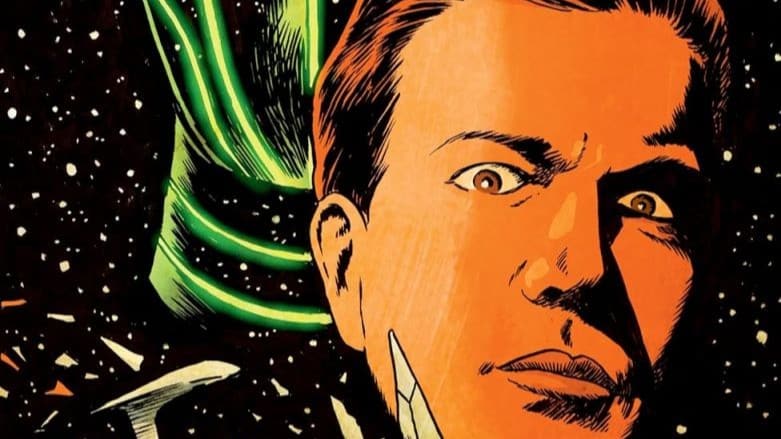
As for Jake, I’ve discussed this in the recent Star Trek comics series that also tackled Sisko’s ending (and was, for a brief time, as much as we could ever hope to get of an official follow-up to his story), but the real question in bringing Jake back is that we have seen a version of his future in the standout episode “The Visitor.” In it, we see an aged Jake, played by the great Tony Todd, having lived a rather sad life because his father had disappeared. Well, at the end of DS9, Sisko does disappear, so what’s keeping Jake from living out this form of the future? Having him return, having come to peace with the disappearance of his father, is the confirmation that he didn’t grow into the broken man we saw in “The Visitor.” It also hints at, I think, some part of Sisko’s Prophet heritage coming through in Jake. It’s how I interpret his appearance to SAM toward the end of the episode. She’s not humanoid, she doesn’t hallucinate (well, the less said about AI hallucinations, the better). I can only conclude that some part of Jake exists outside of time and space, like the Prophets.

Austin: Or that Sisko (who appears very faintly in the clouds over the Academy at the end of the episode) orchestrated it somehow. Whatever the way, I don’t *want* to know the mechanics of Jake’s appearance. Just as he said he knew his dad was with him even if he can’t prove it, it doesn’t matter how Jake is there, just that he is.
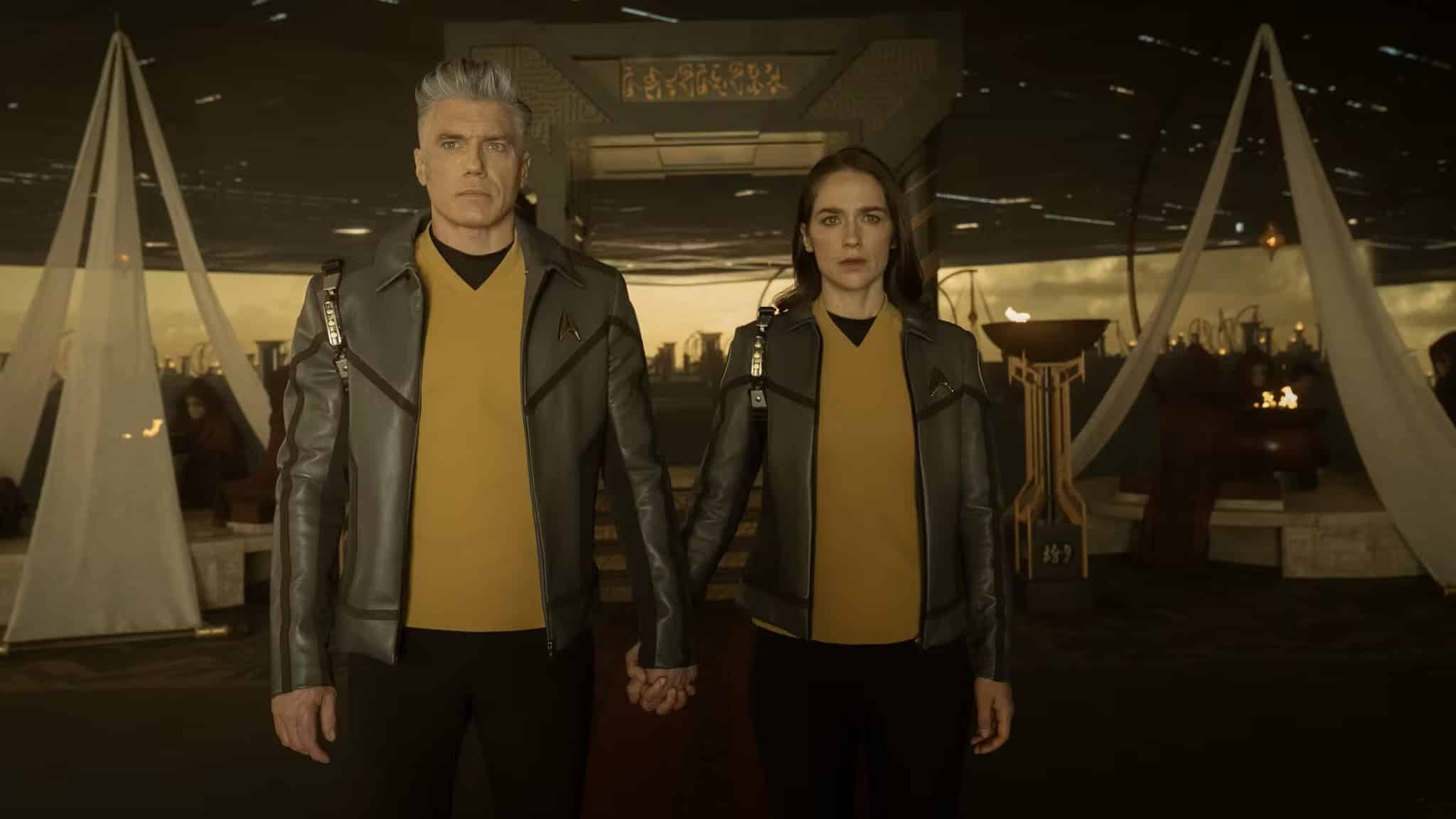
But Jake isn’t the only legacy character on hand, because it turns out that Professor Illa, the teacher who set SAM on the “figure out Sisko” task, is in fact Illa…Dax.
Dax!
I know this doesn’t quite jibe with Trill lifespans, but I don’t really care. It’s a fun twist, and one I didn’t see coming (I was expecting her to be a Sisko descendant or something), but then becomes very clear in hindsight. The way she refers to Sisko as “Benjamin”, the way she holds her hands behind her back, the whole tomato conversation was very Ezri; just great little details (and in case anyone thinks Newsome writing herself into playing Dax is a bit too self-indulgent, she apparently had to be convinced by the showrunners to take the role).
Mark: It was absolutely perfect, IMO. And not only is she Dax, she’s part Cardassian. Last we saw, the Federation president is part Cardassian, part human and part Bajoran, so we know that the Cardassians are, or at least were, members of the Federation. There’s something somewhat reconciliatory about the latest Dax host being part Cardassian, given that Jadzia Dax was murdered by Gul Dukat. Trill symbionts, as far as I know, don’t get a ton of say as to who becomes their hosts, but it feels like the Dax symbiont has made peace with Jadzia’s violent end, and in that way, the story also serves to tie a nice bow around that sticking point of DS9. But I’ve noticed we haven’t really spoken much about SAM, except how she relates to the Sisko subplot.
Austin: When the character was first introduced, I was intrigued but worried that they would end up being played too broadly. To everyone’s credit, that hasn’t really been the case, but this episode does a lot to really make SAM a well-rounded character and, most impressively, a teenager who feels like a teenager in ways beyond “snarky and anti-authority” (cough Caleb). The way she is both cowed by and ultimately pushes back against the Kasq, getting drunk and starting a bar fight, the way she earnestly but disrespectfully stomps all over the Bajoran prayer group, her desperation to figure Sisko out so she can stay with her friends, this is all relatable teenage stuff filtered through her unique experience.
The direction and production design underscores how this is SAM’s episode by having SAM speak directly to the audience (putting us in mind of Sisko via the similar technique used in “In the Pale Moonlight”), as well as little fourth wall-breaking details, like SAM writing on the screen, replacing “A CBS Studio Production” with “A Story About Me.” How did all this land for you?
Mark: This stuff fell pretty flat for me. The way it’s all presented as if it’s covered in TikTok filters, it just felt… a bit too contemporary. Now, there were some good jokes in it that I appreciated, but all in all I found it pulled me out of the story a bit too much. I did enjoy learning about her background, though, and her parental figure showing up as a kind of glowing light being really felt like Trelane’s parents from TOS, which I can really dig. I also love lines like, “He wanted to be a good dad and build sailboats and start riots.” That’s chef’s kiss for me. You can really hear Newsome’s voice coming through there.
Austin: Agreed. I liked the voiceover/direct to camera stuff. The little cutesy visual bits, the whole, “time out! Yep, that’s me. Now, let’s find out how I got into this situation!” beginning straight out of an 80s movie, didn’t work nearly as well.
Mark: And then there’s… the “we need to throw a fancy dinner for an important guest” subplot. On paper, that kind of sitcom plot can work. And we get something of a subversion of it here, where it’s not that the important dinner goes wrong, but rather the rehearsal for the important dinner goes wrong, but it feels like the sort of plot that might have worked on Lower Decks but just kind of fizzles out here, despite the cast’s best efforts. There really should be no problem with it: Notaro, Hunter, Picardo and Baneja as the stuffy straight man are all great at comedy, but… yeah. It lands with all the grace of a blobfish on my TV plate.
Austin: I get it, you’ve got Holly Hunter, you want her doing stuff on the regular. But her scene with SAM, where she tells her that unlike the other students, she’s not living out her dream, but the dream of her entire race, but she still needs to know who she is to do that, was pretty fantastic, and is meaty enough. Leave the blobfish on the cutting room floor.
Class Notes
- As someone who liberally applies nicknames to my kids and pets, I appreciate all the varied ways SAM’s classmates address her; Ocam’s long-winded Queen Sam Samallina of Samonita is the best.
- The Kasq are voiced by actor Chiwetel Ejifor.
- Tig Notaro (the actress) and Jett Reno (the character) are both great Star Trek names.
- As referenced in the review, we have it on good authority that Sisko did, in fact, have a number of notable adventures after the DS9 finale.
- Among the artifacts in the Sisko museum is a typewriter, presumably a reference to Benny and the episode “Far Beyond the Stars” (still one of my favorite episodes of TV ever).
- Bajoran orbs just don’t look as good with modern CGI.
- “Vox in Excelso” translates as “a voice on high.” This could either be a reference to the message Jay-Den receives from Starfleet, inviting one and all to the academy, or a reference to the Federation deigning to proclaim where Klingons can choose to live.
- Boy, Jay-Den and Darem sure came close to kissing during that “battle breathing” section, didn’t they?
- We officially have a “chancellor’s address” instead of a “captain’s log.” We also saw some lovely space porn during it, as well as seeing Ake delivering it directly to camera for portions of it. I like the (presumably) non-diegetic presentation of it.
- Jake’s book, Anselm, is the same book he published in the alternate timeline of “The Visitor”, though based on the excerpts SAM reads it sounds more like a journal/memoir than a novel.
- The server offering the cadets in the bar is played by drag queen Jackie Cox.
- Here’s that shot of Sisko in the clouds.


Mark Turetsky is an audiobook narrator and voice actor who sometimes writes about comic books. Originally from Montreal, Canada, he now lives in Northern Louisiana. Follow him @markturetsky.com on Bluesky.

Austin Gorton also reviews older issues of X-Men at the Real Gentlemen of Leisure website, co-hosts the A Very Special episode podcast, and likes Star Wars. He lives outside Minneapolis, where sometimes, it is not cold. Follow him @austingorton.bsky.social.