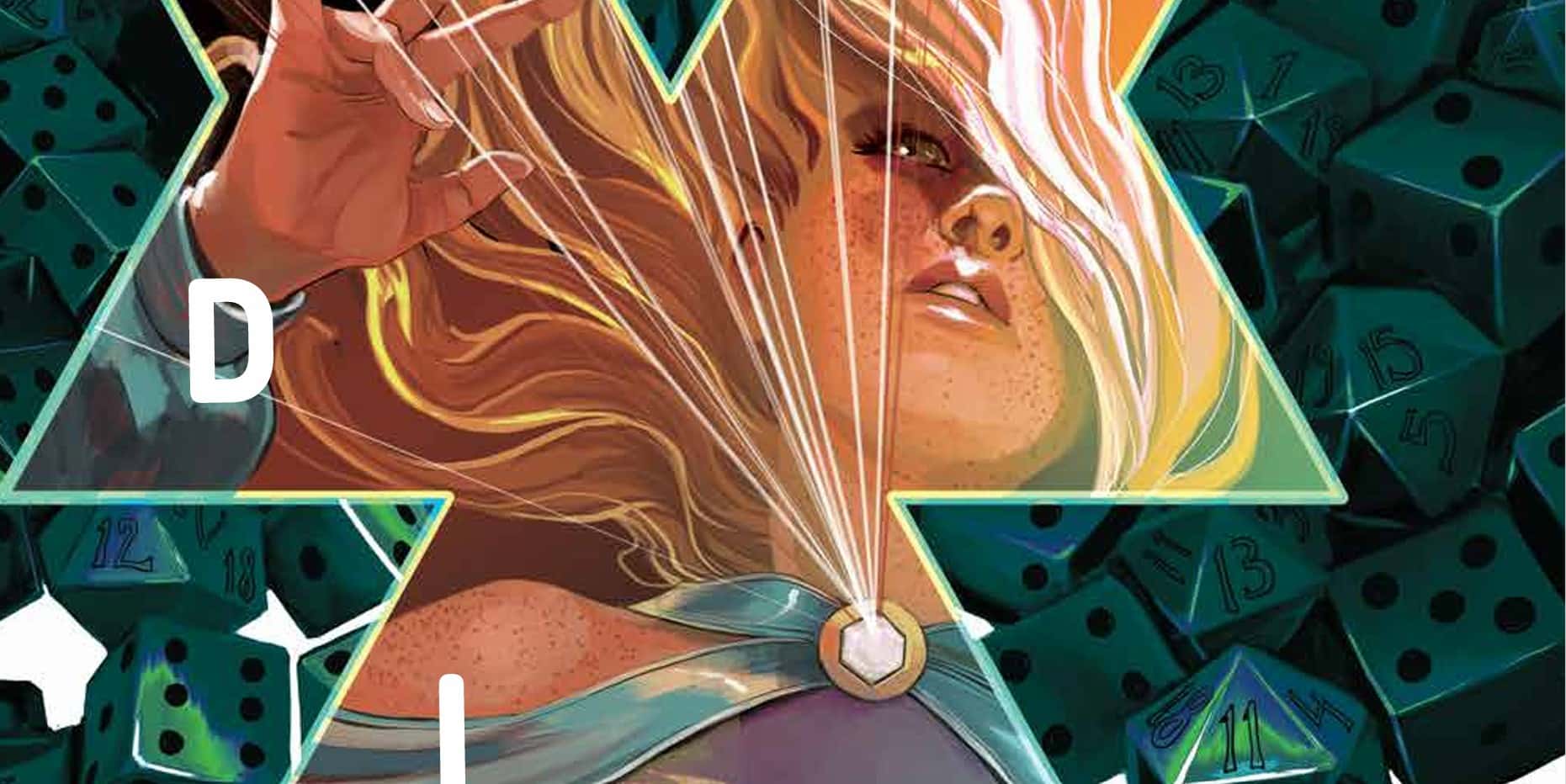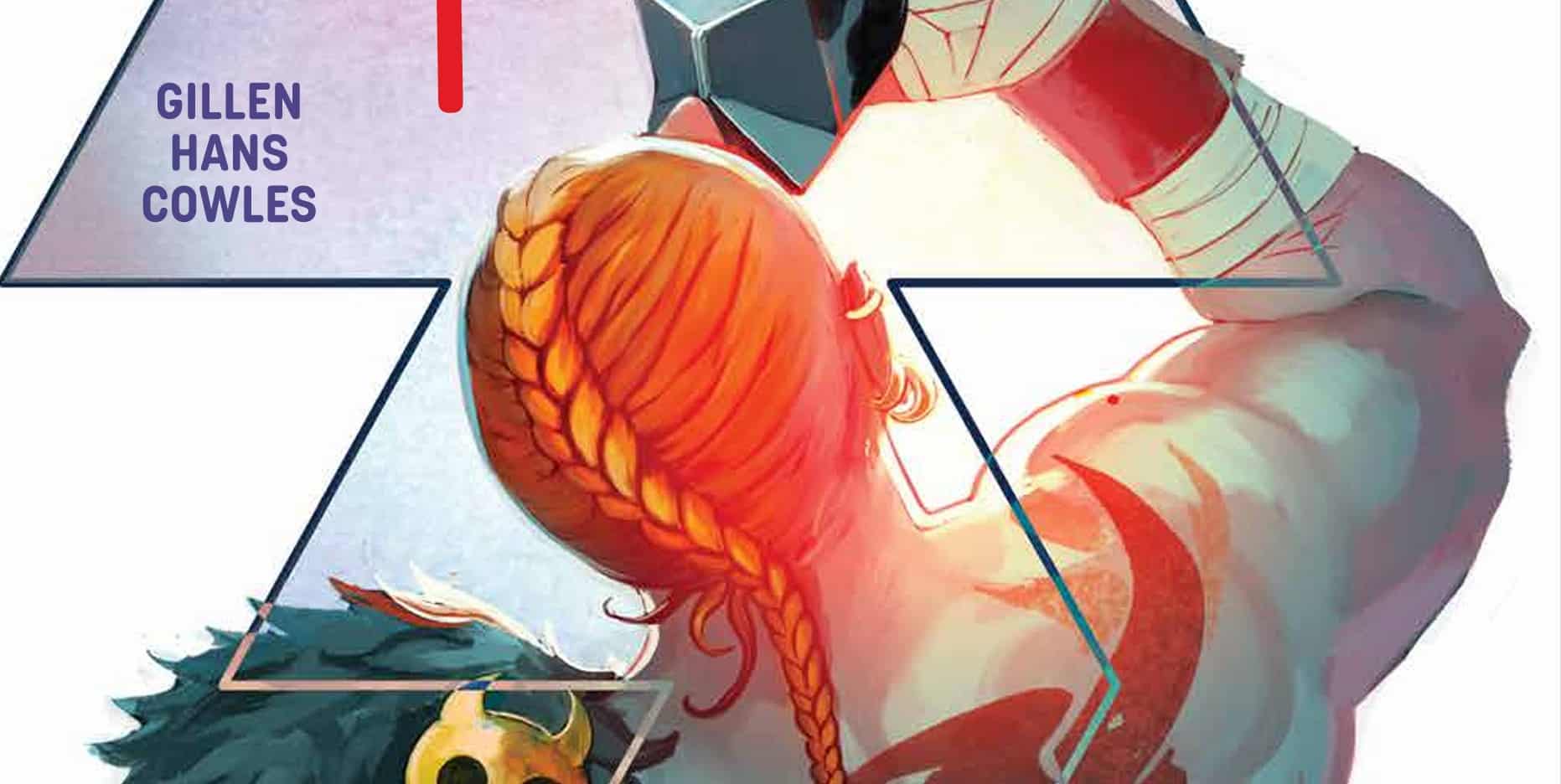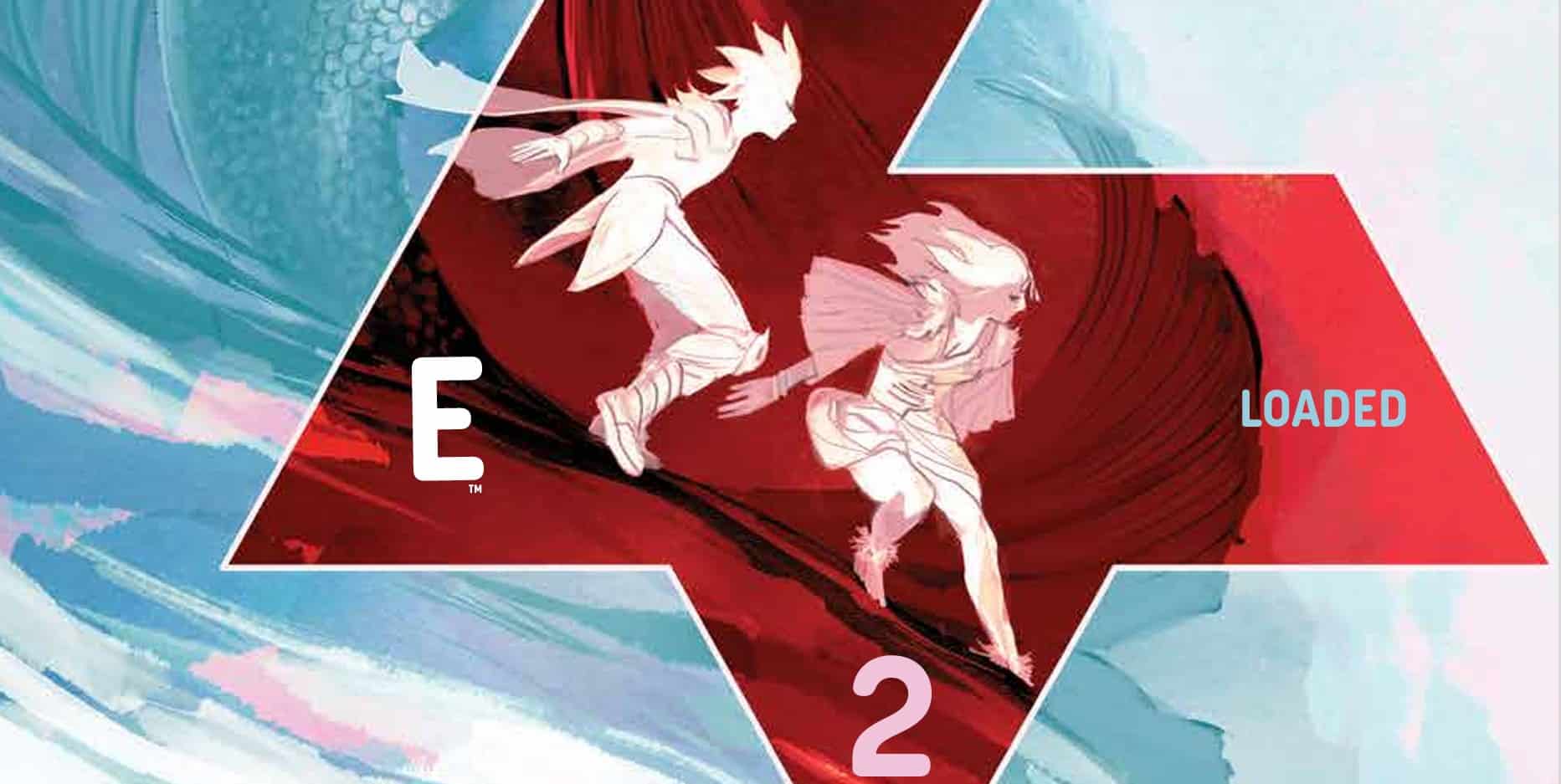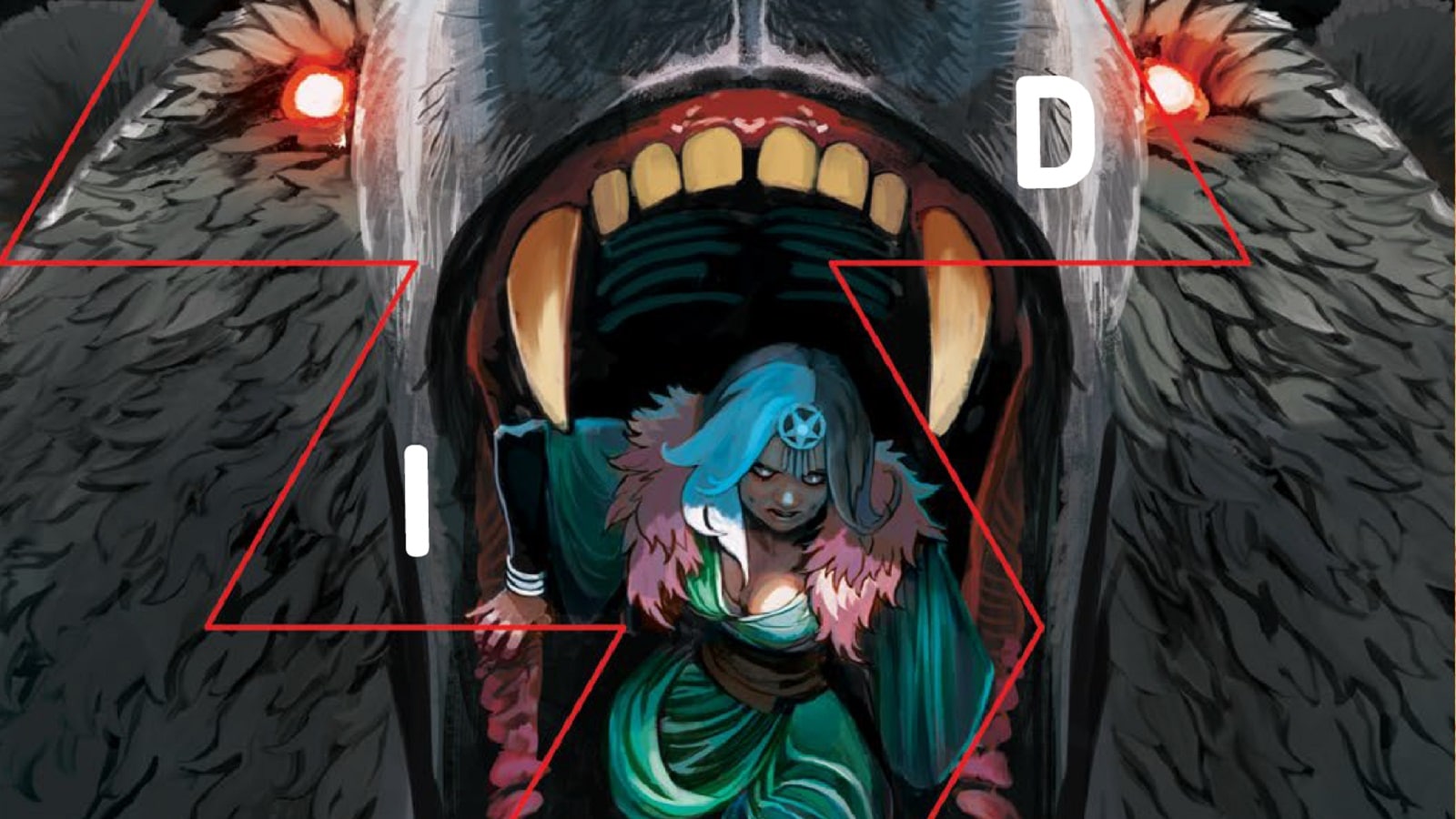
Six children fell into a role-playing game, experienced the true horror of having your fantasies become real – and went through it all again as adults. Now, they’re dealing with what they’ve learned about the true nature of DIE, including the most dangerous truth of all: everyone in the world is still at risk of being sucked inside that 20-sided realm. DIE: Loaded #1 returns to the world of DIE – the question is, will you? Written by Kieron Gillen, drawn by Stephanie Hans and lettered by Clayton Cowles for Image Comics.
Kieron Gillen loves a good pun. He loves a bad pun (though there are many who will ask, “What’s the difference?”). He loves cramming extra meanings into a thing, and it shows in his work. The very title of the series is a bad pun – the singular for dice, and the threat that an amoral, parasitic role-playing game poses to its players.
Adding weight to things through multiple meanings happens a lot in a Gillen comic. It can be profound, it can be dumb, it can be frustrating, it can be a thing that makes your brain click in satisfying ways, and like a pun, it can be all these things at once. It’s the mix of things that make it special – that can give a word, a phrase, a story beat or a panel heightened significance.
The problem is that Gillen has a lot of interests – and studies them all deeply. His work will often contain off-hand references that are placed just so – if you don’t know what is being referenced, it’s a hollow pun. You can feel like you’re missing out, like there is significance in the story you’re missing out on, if you knew just a little bit more. Sometimes, that feeling is intentional – it’s meant to hook you in, to keep your interest, so that when a reveal happens your mind connects, retroactively making you appreciate a moment that much more.
Sometimes it’s just cleverness for the sake of cleverness that breaks the immersive flow of the story. Every pun is a part of a magical ritual meant to heighten the experience of what you’re reading, and when parts of the ritual don’t connect, the magic falls apart.
So how does DIE: Loaded #1 hold up in terms of keeping the magic intact?

It helps to have Stephanie Hans on board. DIE is not DIE without Hans, and with her, the magic is strong. Hans’ art draws you in like a dream. It’s soft, it’s shiny – and at select moments, it’s visceral, a feeling that hits you right in the gut. Light shines off of everything, making the colors of the page glow. The mood of each page lingers in the mind – even the more mundane scenes are hypnotic, lulling you into a sense of comfort that makes the more fantastic visuals hit you with pure awe.
Clayton Cowles elevates this – there’s a lot of dialogue in this first issue, and a lot of narrative captions. It’s not easy to cram in that many words and make it look good, while still giving key phrases and words their narrative weight. Without spoiling anything, in this issue Cowles is given a chance to really spread his lettering wings in a way that’s as visually delightful as the artwork accompanying it.
As for the story, the writing – I’ve had the advanced copy for well over a week now, and every time I reread it, I discover new meanings, new significances, new weight to add to key moments and phrases that only add to the overall experience – and make you excited for what comes next.

DIE: Loaded opens with an extended epilogue, of sorts, fleshing out in a little more detail what happened with our favorite characters once they escaped from RPG hell. The focus is on Ash – stressed with the weight of all they’re holding inside. The nightmare of the world they were dragged to, getting through a pandemic, the son that was born while they were away, and their so-called “gender bullshit” that has me defaulting to a more gender-neutral pronoun until something on the page is a little more definitive. All undealt with, all still held inside – and all very much at the forefront of their mind as they attend the funeral of one of the few people in existence who knows what Ash has been through.
What DIE: Loaded presents as is the first episode of a show’s second season – where the target audience has been hooked in, where all storytellers involved have figured out how to tell this particular kind of story just the way they want to. It’s a book that has a handle on the rhythms it wants to play out, playing them just right so that the page turns, twists and reveals hit as powerfully as they mean to.

A popular RPG principle, from the game Dungeon World, is the concept of “Draw Maps, Leave Blanks.” It’s the idea of creating a structure, a world to present your players, while leaving enough blank spaces to leave room for exploration – so you know where to go when you want to discover something new. DIE left a number of blank spaces, and DIE: Loaded’s aim is clearly to dive right into them, deepening the world we came to know, in a storytelling style we’ve come to love.
The magic holds – and with each issue, promises to only grow stronger still.
Buy DIE: Loaded #1 here. (Disclaimer: As an Amazon Associate, ComicsXF may earn from qualifying purchases.)

Armaan is obsessed with the way stories are told. From video games to theater, TTRPGs to comics, he has written for, and about, them all. He will not stop, actually; believe us, we've tried.