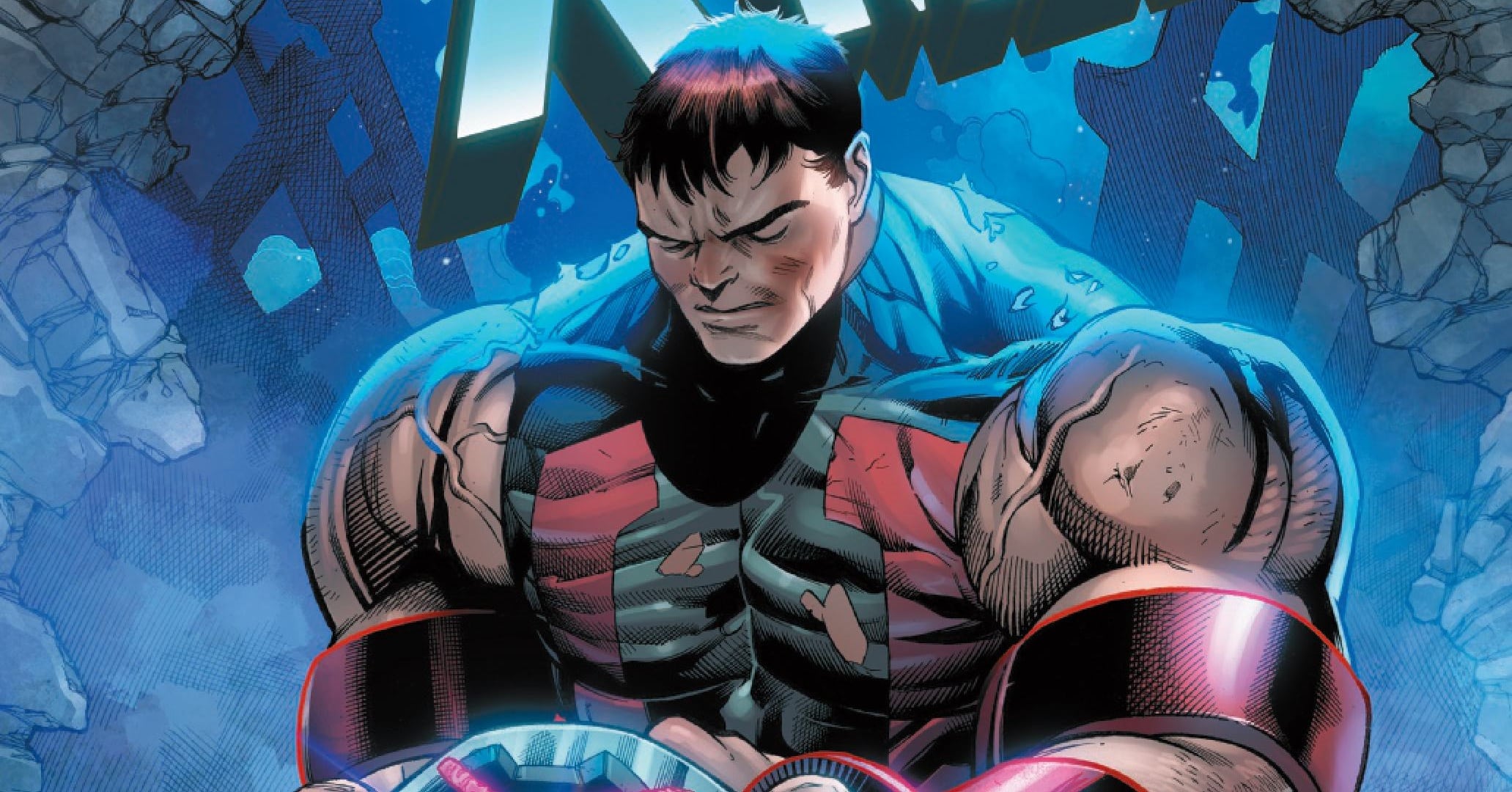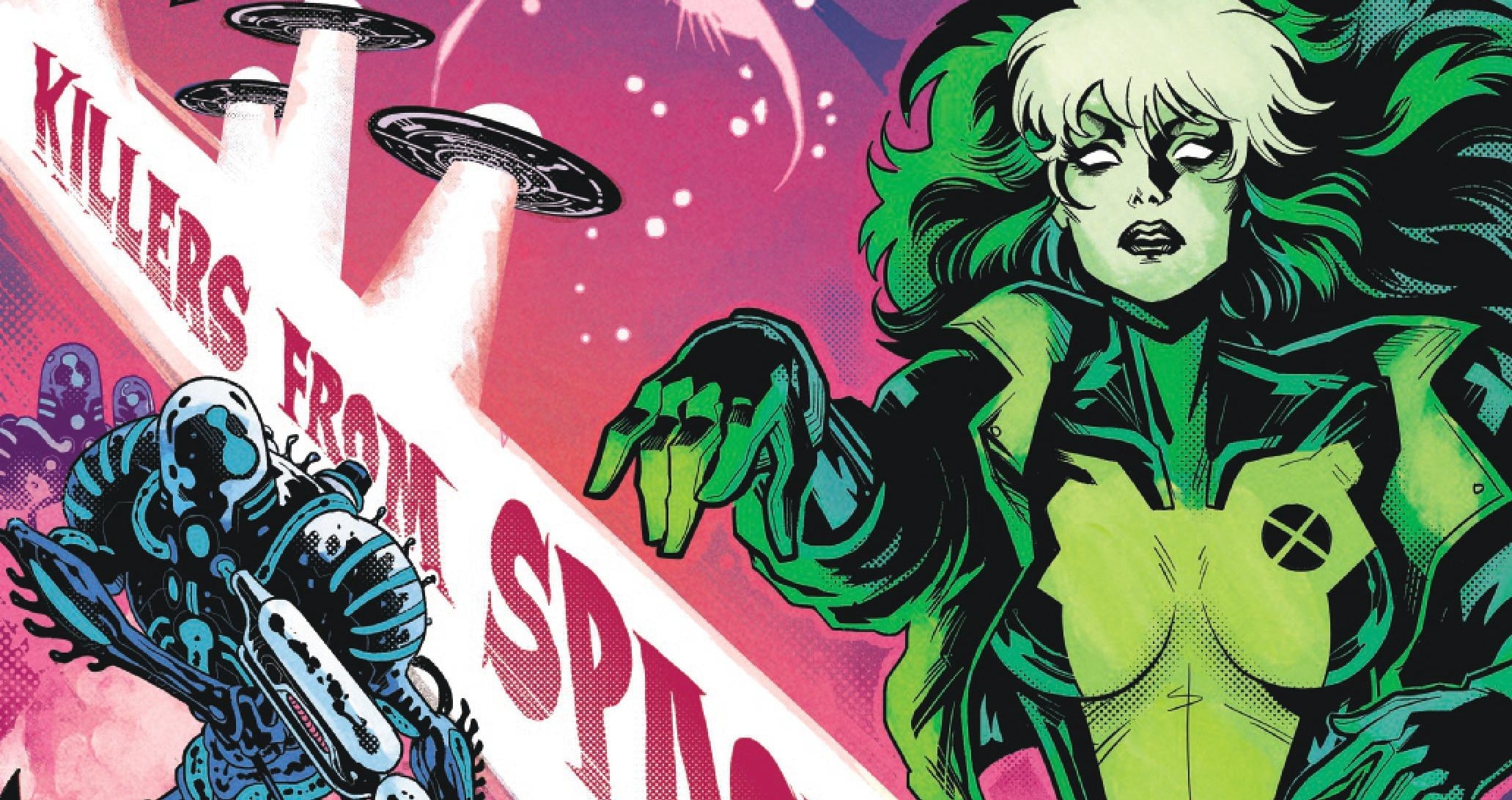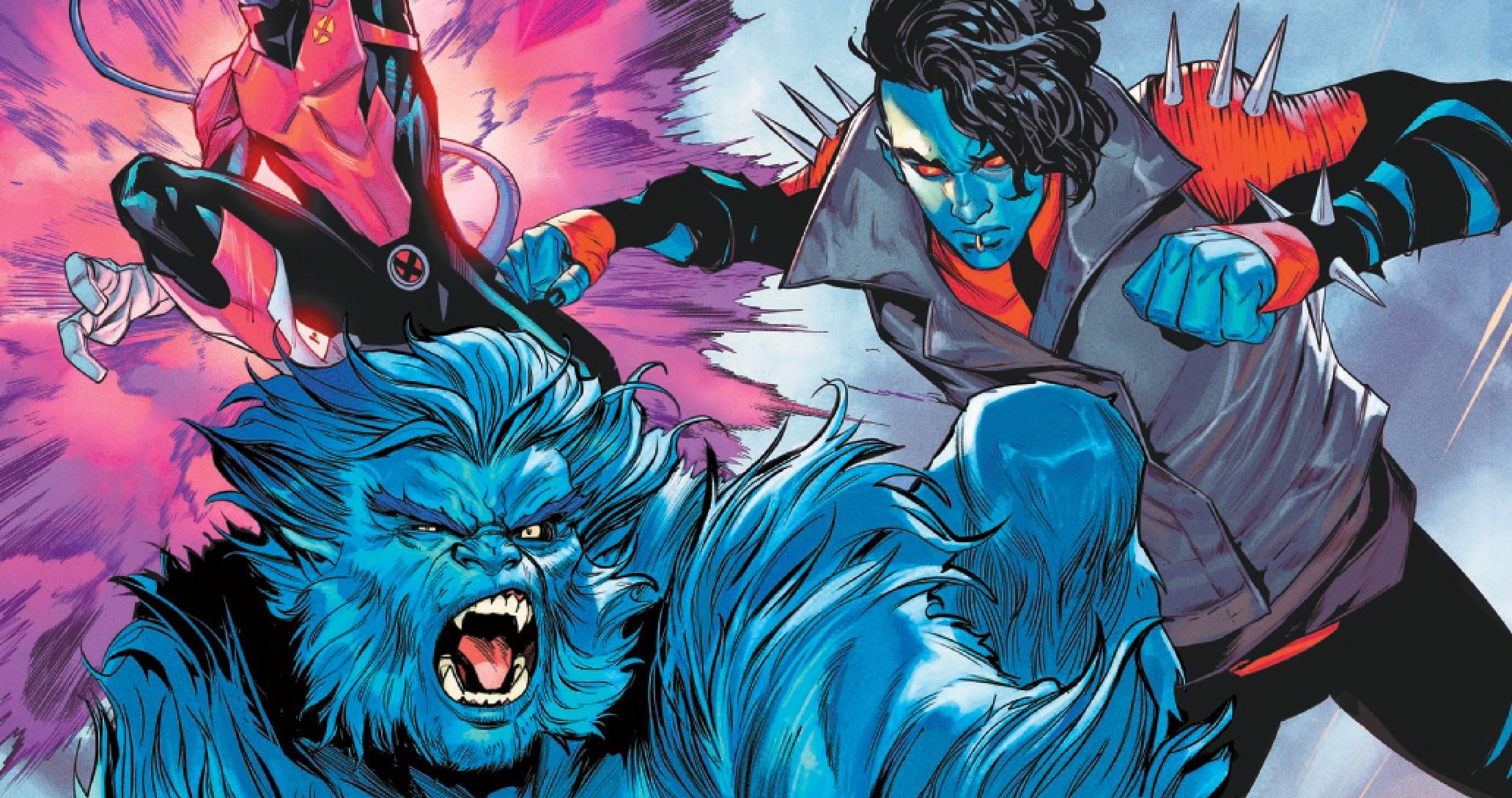
One team of mutants just got back from a warped and dangerous psychic fantasy world. Another’s still trapped in an underworld. Back at the school (in another psychic dimension), a student team has gone to seek help. Can anyone get this big band back together? X-Men United #6 is written by Eve Ewing and Evan Narcisse, penciled by Tiago Palma and Eduardo Pansica, inked by Palma and Oren Junior, colored by Brian Reber and lettered by Joe Sabino.
Twice a month I run a game of Dungeons and Dragons, in person, at our generous local nerd store. It’s the good parts of teaching (a shared creative enterprise, lore to acquire, each player caught up in one character’s story) without the bad parts (no grading, no pecuniary motives and nobody’s parents are making them go). When we’ve got five to seven regular players, plus one or two new faces, the night can shine (as long as I get a few cans of coffee). But we can’t run a game with 13.
Last year, Eve Ewing gave us the best mutant comic since the fall of Krakoa: Kitty Pryde and Emma Frost opened a de facto after school program for three, and then four, Chicago-based teen mutants, helping them unmask villains, resist rapacious capitalists, control their powers and grow into their best selves. That was then. Now, Ewing — joined, this issue, by the established critic, journalist and comics-script guy Evan Narcisse — has built a school in the telepathically maintained somewhere-and-nowhere space called Graymatter Lane; all mutants anywhere can show up at the school, and a lot of them do, from new teens to A-list adults.
The current arc started two issues ago with some of the adults, plus Ben Liu and Deathdream, trapped in a Dungeons and Dragons-like fantasy world. Maybe the problem lay with the Shadow King? All of the other adults at Graymatter Lane disappeared, perhaps sucked into some other magic dimension. The rest of the kids convened an all-hands meeting, then decided to send two recon teams to the on-Earth X-bases in Alaska and Louisiana. Meanwhile the Shadow King (definitely him this time) made overtures to the newest Graymatter Lane kid, Mal Chance.
In other words, as the current issue opens, we’re watching a magic-based psychomachia involving malevolent duplicates, multiple dreamt or constructed dimensions, potentially five locations (though I think no one gets to Alaska), a team split at least three ways and a multigenerational cast whose catering needs, once they all end up in the same place again, would rival those of the Legion of Super-Heroes. I’d love to see this story as a yearlong crossover event: a modern age “Inferno.” (Not that one. Not that one. This one.)


This issue feels more like I’m watching a DnD session with 13 players. It does not work. No single cape comic book (not even a Legion of Super-Heroes comic book) can handle this many moving parts. It’s a mess, both in-universe (where the characters mostly don’t know what’s going on) and as a reading experience (because we can’t stay for more than a few pages in any point of view). But it’s also the kind of mess where I trust both writers (Ewing and Narcisse), to the point where the pacing feels like someone else’s fault, as if they had come up with a great list of cool plot points, then had to stuff it all into one suitcase (or one title) where it couldn’t fit.
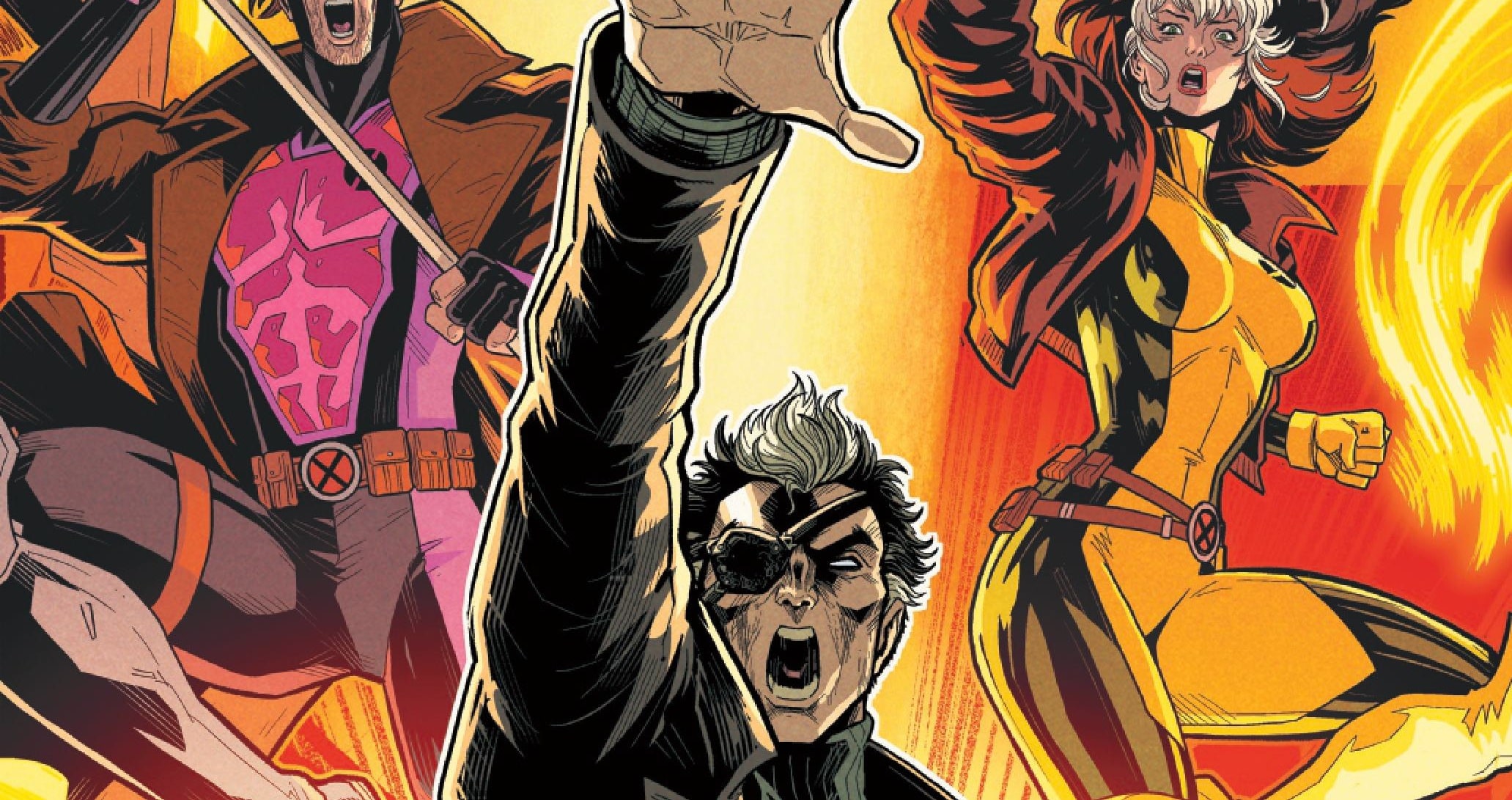
Let’s unpack. We open with Logan, struggling to his feet in a superbly evocative, thorny, bone-filled dim realm. “What infernal abyss is this?” Hank asks. Kurt, who’s literally been to several Hells and back, says it’s not one of those. Magneto says he’s got no clue. All three, plus Kitty, Gambit and Psylocke, get attacked by demonic, stretchy duplicates, and — as in every such fight — they switch opponents and win, because you need your friends’ help to defeat your worst self. Reber’s colors bring out the scary low-light environment without making the fights look murky: I’d bring this art team with me to any underworld they chose.
Then, in Louisiana, a young recon team encounters Chelsea St. Juniors, who traps them in a force bubble, then releases them, then chats with Shuvahrak, who will make sense to you if and only if you’ve also been reading the current run of Uncanny X-Men. We’ve got you covered, if not, though a Bronze Age editor would absolutely have tossed in some kind of explainer text box (perhaps signed “anti-amnesiac Annie”). Palma and Pansica hit the troubled-kid vibe, for Chelsea, with a stark beauty, showing where the light gets in: When Chelsea leaves Haven House to go outdoors, at (I think) sunset, her round glasses become the still point of her turning world.
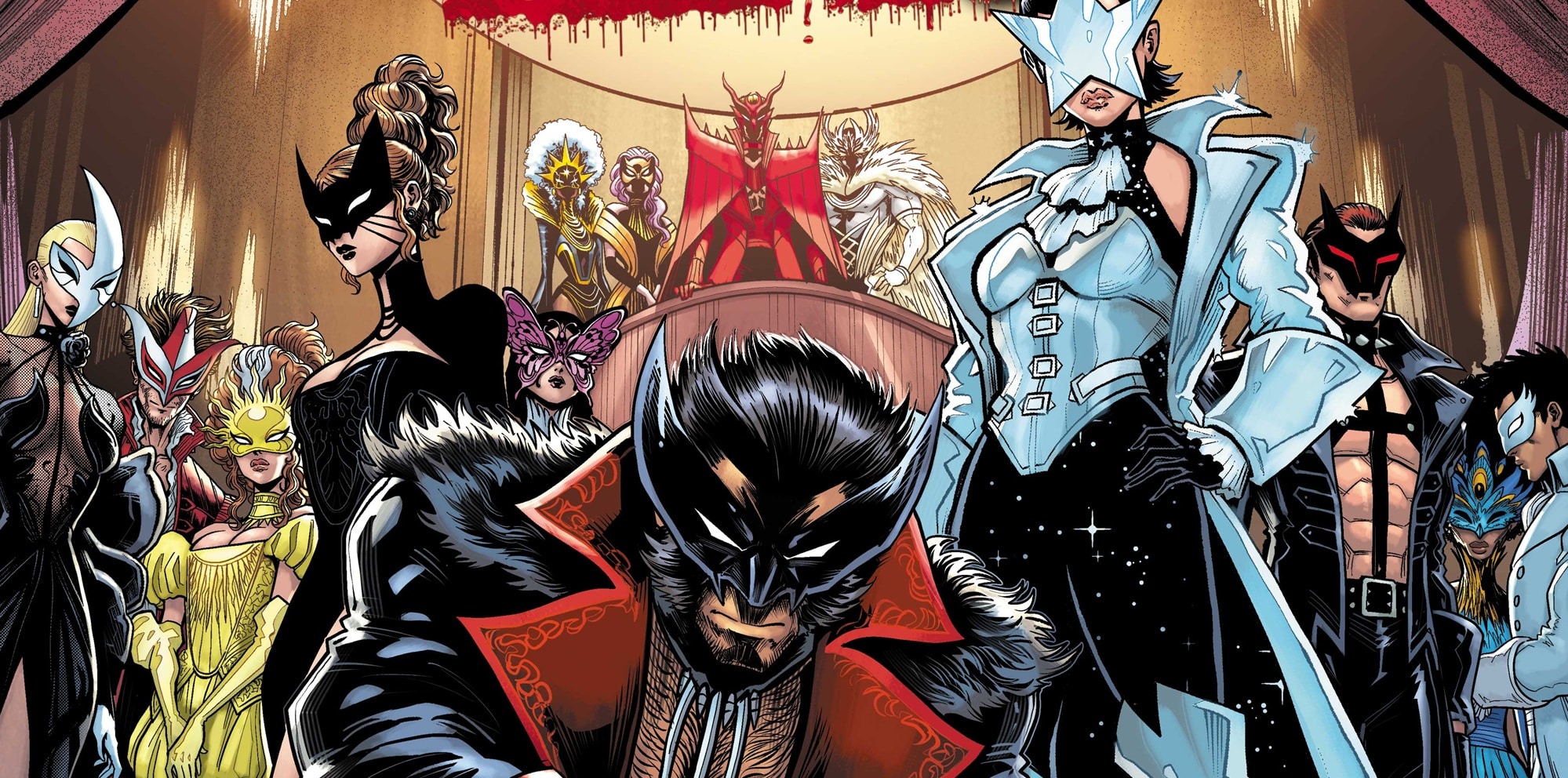
Then we’re back in the Penumbra, or some subdivision thereof (again, if you haven’t been reading Uncanny, we have. Here, Logan and company stand accused of betraying mutants, as in the circle of the OG Inferno reserved for traitors (it’s a bad one). Some accusations seem obvious. Logan’s killed people. Hank’s perpetrated time-science. Gambit took part in the Mutant Massacre. Speaking as Kitty (as usual), I’m fascinated by the charge against her: “mercurial abandonment,” conveyed (like all the charges) in rough, sketchy panels, one per character, like scuffed Polaroids. It’s not wrong: it’s what gonna make her the most guilt. I’d read an entire miniseries about it. There’s even a great song about it. But the charges go nowhere, because Calico charges in on a literal horse and rescues everybody, leading them back to…
Graymatter Lane, where everyone assembles in the kind of pastoral crowd scene last seen on Krakoa, lounging on grass or leaning on trees. Emma, being Emma, shouts about protecting the kids, and then leads a meeting to figure out what went wrong. In a callback that I’ve been awaiting for years, Gabby Kinney remembers her own heroic resistance to the Shadow King, who killed her (she got, controversially, reborn). She’s sure he’s the Big Bad (so am I). Emma does not want to have this conversation in front of the kiddos, and Illyana gets almost a whole page in which to tell them to get back to class. Not in character, honestly, but beautiful: Palma, Pansica and the rest understand her authoritative, defiant stance, and the now-inevitable gleam of her improbably broad Soulsword. Usually multiple pencilers and inkers signal a rush job in a cape comic, but here the art teams make it work, despite the 20-pounds-of-plot-in-a-10-pound-bag plot.
Then the word balloons descend. If the kids talk, they’ll freak out. If the adults can’t talk, everyone’s gonna freak out. Lourdes Chantal, Sebastian Shaw’s ex from the Hellfire Club, has been making propositions (not that kind, alas) to Emma. Scott, who knows a thing or two about keeping secrets, reminds everybody that “the more we doubt each other, the more we leave space” for enemies to get in. Prodigy says “Everybody is hungry for something. Our students are hungry for understanding and belonging.” He’s right, too (and, in character, he keeps one eye on his tech-pad, or iPad, or portable techno-screen).
“We’ve all been so fractious since Krakoa,” Scott tells Emma, calling himself out (and reminding us that the two used to date). “I know I’ve been part of sowing those doubts” (right again). Maybe this enormous group of teachers along with their students can make it right! But not yet, because Wither (Kevin Ford) shows up, along with (wait for it) Blade. Side quest, anyone?
If you run Dungeons and Dragons, you probably know what to do when too many people want to play: If you can, you should schedule multiple sessions, making “what happened last episode” clear each time, but limiting each evening to however many PCs (five or seven or eight) you think you can handle, so that every player character gets a chance to shine. That’s what we did at the store. I’m not sure that X-Men United, which will apparently end after issue #10, can do likewise. But this team of artists and writers deserves the space and time, somewhere, to do it soon.
After school specials
- Emma Frost goes through psychic costume changes, from teacher with shoulder pads to grande dame with a fur cape. Sophie Cuckoo still dresses like Emma Junior. Nightmare-doppelganger Emma, the polymorphing queen of Penumbra, resembles a three-way cross between the real Emma, Illyana and Captain Marvel. All these Frost-ish outfits (and with Emma’s color scheme, too: white-on-white) create a real workout for the five-person art team. And they make it work. Worth second, and third, and fourth looks.
- Page construction for the Haven House sequence includes narrow panels stacked horizontally, as if we got to look each wary character in the eye, and then a set of mildly disorienting, off-true scenes where characters confront one another, so that when Chelsea finally goes outside, even though she’s communicating with a sketchy supernatural entity, the visual balance (“up” for the character finally looks like “up” for the reader) shows us that she’s where she needs to be. This art team’s really doing all they can do with the hand the plot has dealt.
- Evan Narcisse has an A+ track record of writing (and writing about) Afro-diasporic characters and their backgrounds. If I had to pick a side quest for Ewing and Narcisse to co-write while we wait for this overall dodgy X-era to end, I too might ask for Blade.
Buy X-Men United #6 here. (Disclaimer: As an Amazon Associate, ComicsXF may earn from qualifying purchases.)

Stephanie Burt is Professor of English at Harvard. Her podcast about superhero role playing games is Team-Up Moves, with Fiona Hopkins; her latest book of poems is We Are Mermaids. Her nose still hurts from that thing with the gate.