Can a school work if the head teachers don’t get along? Bobby Drake doesn’t want to find out, so he’s asked them to play a game. Then things get all too real in X-Men United #4, written by Eve Ewing, drawn by Tiago Palma, colored by Brian Reber and lettered by Joe Sabino.
Pretend you’re a white-collar manager with three tiers of employees you supervise; some supervise the others. The supervisors used to date; they don’t want to work together, and disagree mightily as to whether your company does any good, or if it should even exist. And yet they won’t quit: They’re good at the rest of their jobs, and you don’t want to fire them. You can sit them down at a table and watch them fight. Or you can cook up a corporate retreat, set up a teambuilding exercise in the wilderness (or at the conference center), and hope it helps.
Imagine that you’re really into Dungeons & Dragons, or a similar tabletop roleplaying game. You’ve played it long enough that you prefer to run games, rather than portraying a character. People who want to play the game, or think they should learn how to play, have asked you to run it. So you try to teach them the game — too fast, with so many rules they can’t quite follow — and then just begin. Because you’re afraid they’ll quarrel, you set up a combat encounter, fast. You don’t want your friends to rage-quit. But you feel stuck. You can’t leave. But they might — within the game — die.
Say you’re one of the world’s finest writers currently at work in mainstream comics. You’ve made your reputation, correctly, on books with small casts, and teenagers, and slow-burn coming-of-age tales, and you’re an X-Men writer, which means your part of the Marvel shop includes a school book. But the school book’s not the kind you’ve already written so well. It’s set at a school, to be sure, but it’s supposed to include a rotating cast with three-odd generations of mutants, most of whom you’ve never written before. It’s not the lead book in the series; half its adventures take place in a psychic realm only uneasily tied to other Marvel adventures. But it’s supposed to bring new figures in with each arc. Whether or not they’re your (so to speak) characters; whether or not you understand them well.
All three of those descriptions fit this installment of X-Men United, a book not remotely bad enough to make me stop reading but not remotely good enough to make me recommend it (the way I did with Eve Ewing’s Exceptional X-Men) to friends who haven’t looked at X-comics for years, or who walked away after Krakoa fell. The book has potential, for sure. But a lot of things have potential. You could get some energy out of them all, if you added the right reactants, or just decided to roll them downhill.
Does Bobby Drake play Dungeons & Dragons, or anything like it? Till this issue I’d say it seemed unlikely. As far as I know he’s never played before. He’s been a more conventional, humor-oriented prankster and party boy, both before and after he came out, and none of his closest relationships — with Kitty (who absolutely plays D&D), with Romeo from the Inhumans, with Pyro and others — have involved voluntary play in imaginary worlds. He’s become ultra-powerful, able to reshape the Earth, or stuck in weird fantasy universes, more than once, but every one of those plots ended up with him possessed, or afflicted with megalomania, or surviving something like a psychotic break. (I recommend this one. Marjorie Liu FTW.)
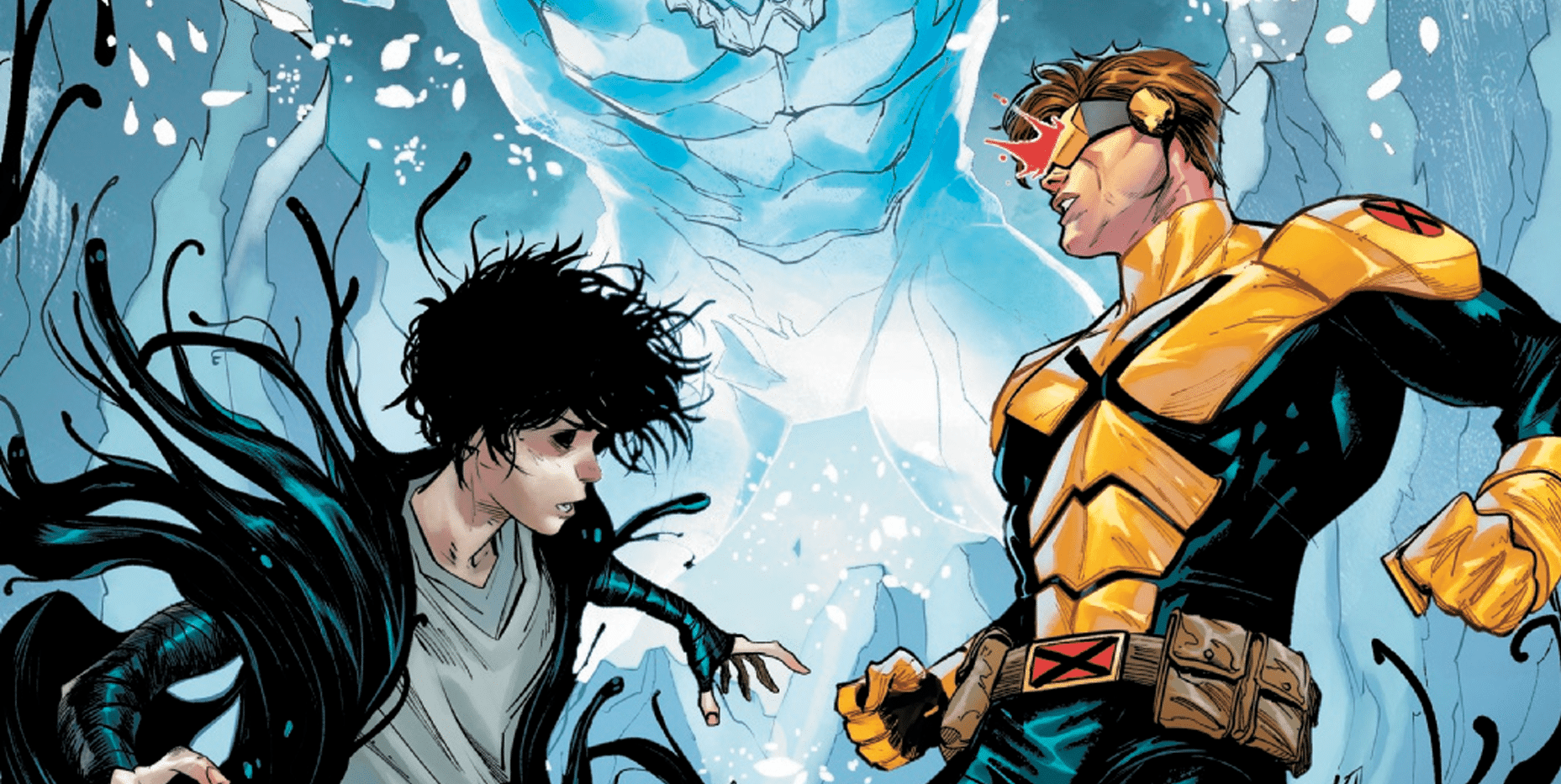
Bobby doesn’t seem like the kind of adult who’s memorized a list of cleric spells or draws maps of made-up places for fun. And yet, this issue, that’s who he is: He’s running the teambuilding D&D-style exercise, out of a game called Ancient Orc Oaken Arclight, for a handful of Graymatter Lane kids and teachers. Two of those teachers are Emma Frost and Scott Summers, who used to date, don’t get along and must get along (because, for reasons unknown, Scott can’t just quit the school).
It’s not a corporate retreat, so to speak, if you can’t bring your actual body. There’s no way Scott, Emma, Rogue and Deathdream would sit down, chat and roll polyhedral dice together for four hours, especially not for what Rogue calls “this ridiculous little game that Bobby invented” (though she’s willing to play it anyway). No wonder Bobby has turned the D&D module he has (improbably, and enthusiastically) constructed into an immersive Holodeck-style adventure, with help from Ben Liu, the reality-warper or hologram-generator from Scott’s Alaskan team.
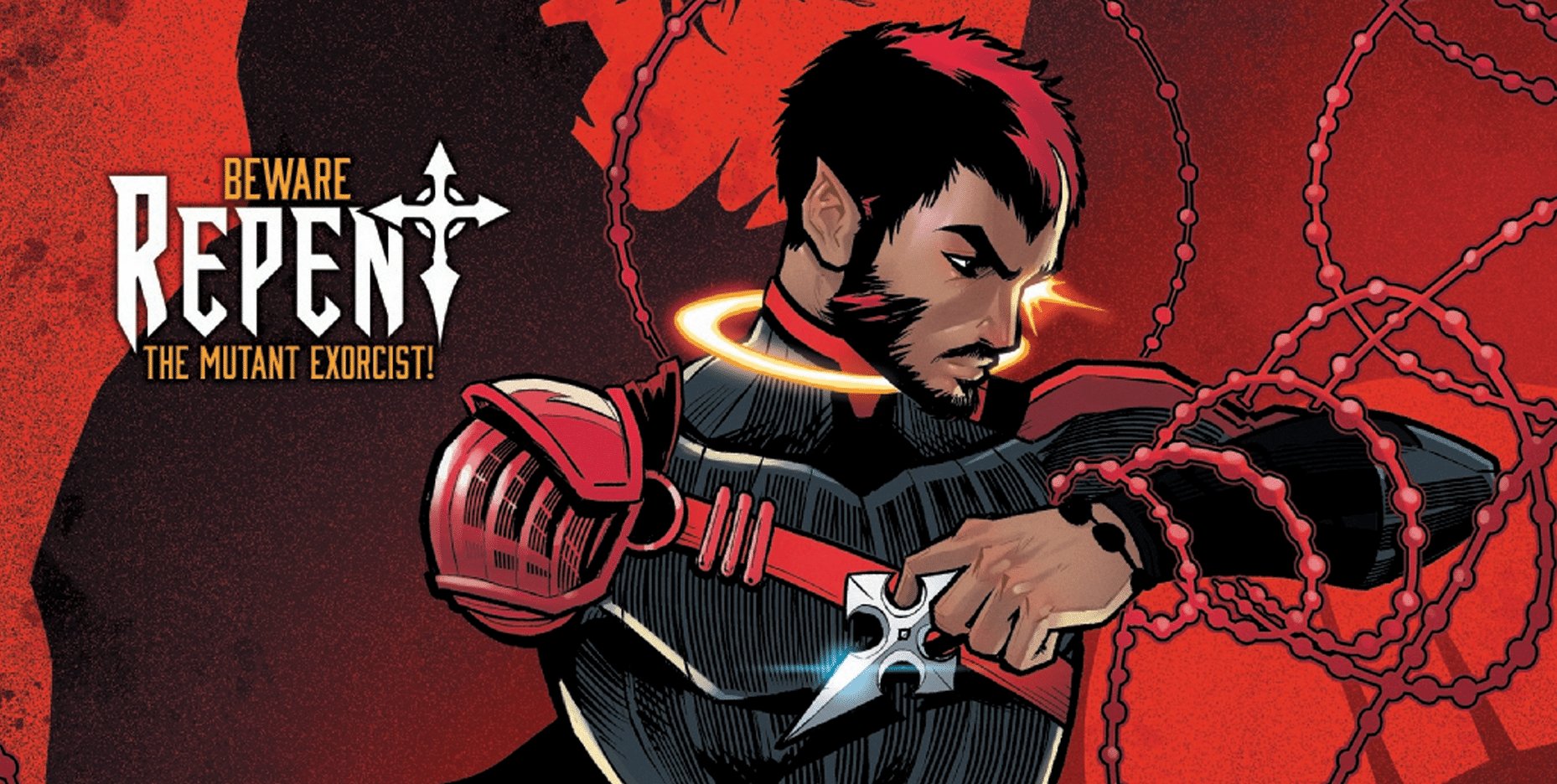
And so they’re off, into the unknown: a high-fantasy setting that gives Rogue a big ax and a green bikini, Deathdream the billowing cloak he’s always wanted to wear, and Emma a white hat with a jaunty feather and an improbably wide brim. Gnomes could live on that hat. You could set a Discworld skit on it. Tiago Palma and colorist Brian Reder give this fantasy world the right mix of cozy and menacing, the mutant guests an effective mix of bewilderment and fascination. I’d love to have them draw my own D&D campaigns, and I’m amused (though Scott’s not) by the way he just does what needs to be done, firing his longbow at the monsters with a resigned efficiency. I wonder if his character gets a dexterity bonus from the punch dimension.
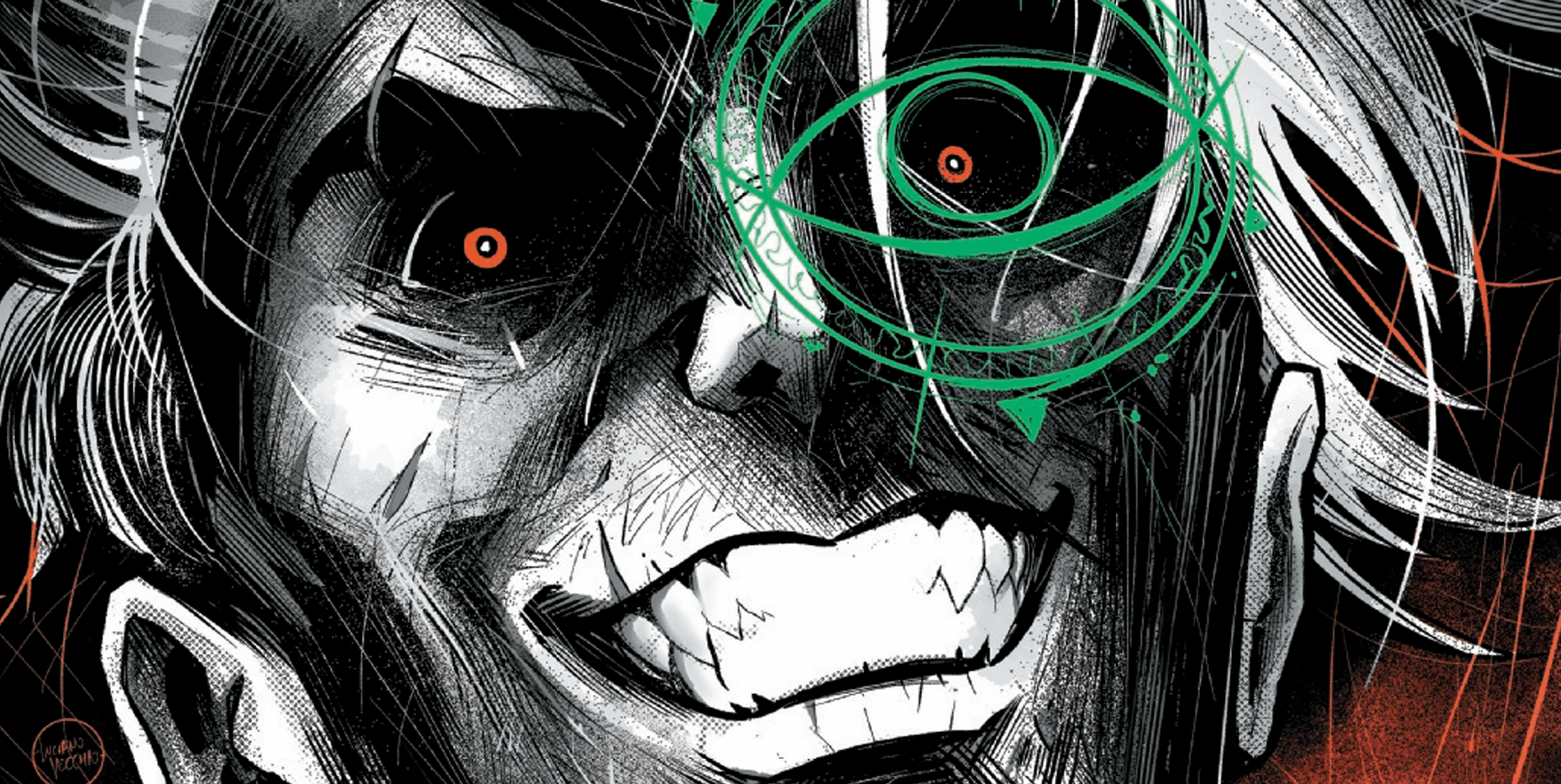
Why does Palma make Bobby look more like mean evil alternate universe Bobby than normal Bobby? Dunno. Maybe he’s possessed? Barbarian Rogue looks great, though. Actual Play binge-watchers can probably compare these scenes to moments from Dimension 20 or The Adventure Zone or Critical Role. I kept thinking instead of that moment when you try to introduce your friend group to D&D and some of them are really, really into it and at least one’s just there because that’s what the friend group chose to do that day. (That one being Scott. It’s in character.)
You’ll never guess what comes next. Nope, you’ll totally guess. Our Heroes Have Been Sucked Into a D&D Adventure and Now They Can’t Get Out! They’ve Lost Control of the Simulation. Rogue almost dies, but Deathdream can risk his life to save his teammate: “I’ll go into the spirit world and get her.” None more goth. I like Deathdream. I want to read more about his spirit-world adventures. I also want to read the just-released sequels to Kieron Gillen and Stephanie Hans’ wonderful indie comic (later a role-playing game) DIE, the absolute gold standard for this hoary setup.
You might hope, if you’re anything like me, that Scott and Emma get their working relationship back. Breaking them up in the first place still looks to me like one of the Utopia era’s few obvious mistakes. You might want Eve Ewing to go back to work with the characters where she excels: Emma (who also gets a slow-burn subplot involving blackmail and the Hellfire Club), Kitty, Bronze and Axo. You might want to keep reading (I will) to find out who’s really in charge of Ben, or the afterlife, or the storyline, or the cave-within-a-cave-within-an-invented-universe where the issue ends. Or you could just read DIE.
After-school specials
- The cave inside the cave inside the fantasy world inside the school that exists only on the psychic plane makes for a lot of nested realities, stories inside stories inside stories about involuntary transformations. Have today’s X-Men gone from overdetermined ova in ovoids to oven-fresh Ovid?
- Said cave also looks a lot like certain parts of the bad world in Stranger Things, whose tree-like restraints work the same way. How many readers, or viewers, will trace that bad world in turn to the Brood homeworld from the Claremont/Paul Smith era? (Yes, I know the Brood themselves come from the Alien franchise. Don’t @ me.)
- Our heroes don’t know who’s really in charge of Ben and Bobby’s Oaken Arclight dimension, but the cover reveal for the next issue shows it’s the Shadow King, fez and all. If Ewing picks up the threads from Vita Ayala and Rod Reis’ magnificent Shadow King story I will stop overthinking it and withdraw my overt objections.
Buy X-Men United #4 here. (Disclaimer: As an Amazon Associate, ComicsXF may earn from qualifying purchases.)

Stephanie Burt is Professor of English at Harvard. Her podcast about superhero role playing games is Team-Up Moves, with Fiona Hopkins; her latest book of poems is We Are Mermaids. Her nose still hurts from that thing with the gate.