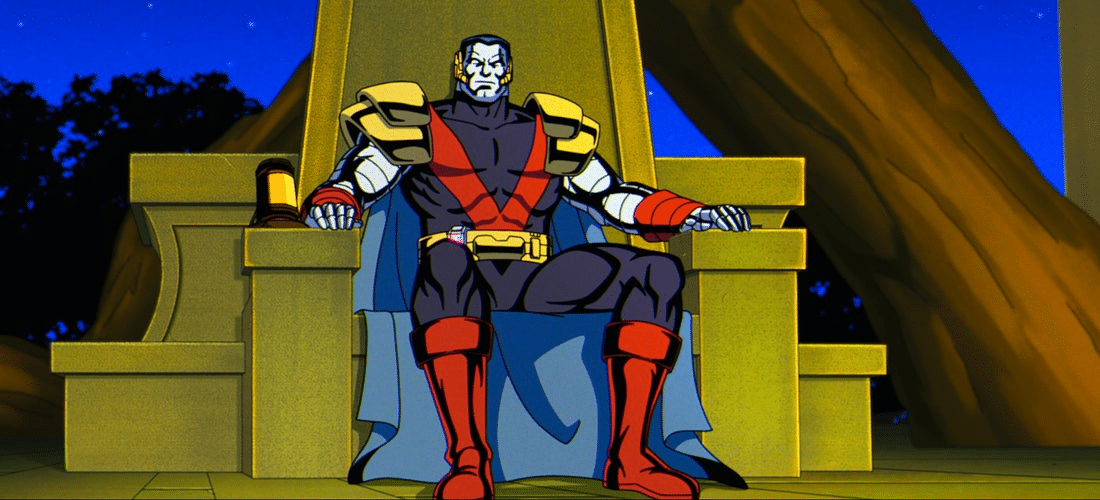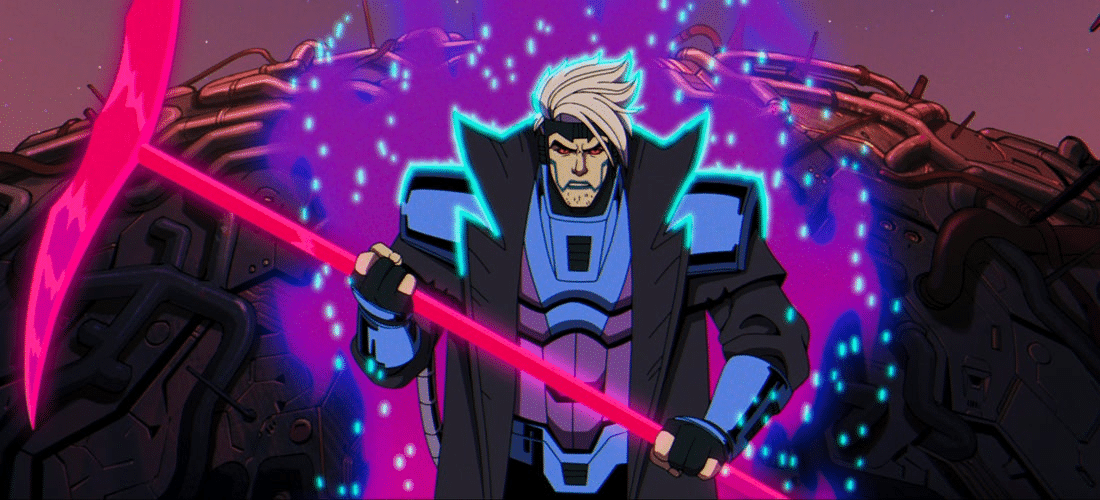
It all comes down to this: a poofy-haired Apocalypse in a trench coat. X-Men ’97 Season 2, Episode 9, “Survival of the Fittest,” written by Brian Ford Sullivan, JB Ballard and Anthony Sellitti, and directed by Chase Conley and Emmett Yonemura.
I didn’t review the penultimate episode of the season because I struggled to find much to say about it that wasn’t just a repeat of my criticisms about episode 7, that it had some decent ideas and character moments, but there simply isn’t enough room — in a given episode or the season — to explore them fully. The same is true of this episode as well, with “Survival of the Fittest” struggling not just to work as an episode in its own right, but also as the culmination of the all-too-short season’s various plotlines. In that, it’s perfectly emblematic of the series’ biggest problem: Its ambitions are bigger than its form will allow. But even beyond that, a lot of this episode simply doesn’t work.
While not an official “Part X of Y” two-parter, “Survival of the Fittest” nevertheless picks up directly where “The Dead Man’s Hand” left off, with X-Force and X-Factor coming together to take down Gambit – in whose form Apocalypse is currently trapped – no matter the cost. While a detachment of Rogue, Nightcrawler and Beast return to Ship in the hopes of finding a means of stopping Apocalypse without killing Gambit, the rest of the X-Men engage in siege warfare against the combined might of the two errant X-teams and mech Sentinels piloted by troops from the Office of National Emergency (O.N.E.). Cable succeeds in blasting his way to Gambit, but when he shoots him in the head, it simply releases Apocalypse, who takes a new form in Gambit’s body and promptly wipes the floor with everyone. But then Rogue arrives, having traded her life to the Celestial Eson in exchange for a literal glow-up that enables her to draw Apocalypse out of Gambit and trap him in a broach. With the villain defeated, Rogue expects to fade away with her new power, but she doesn’t. ‘Cuz it turns out Nightcrawler made a deal after hers and traded his life for hers.

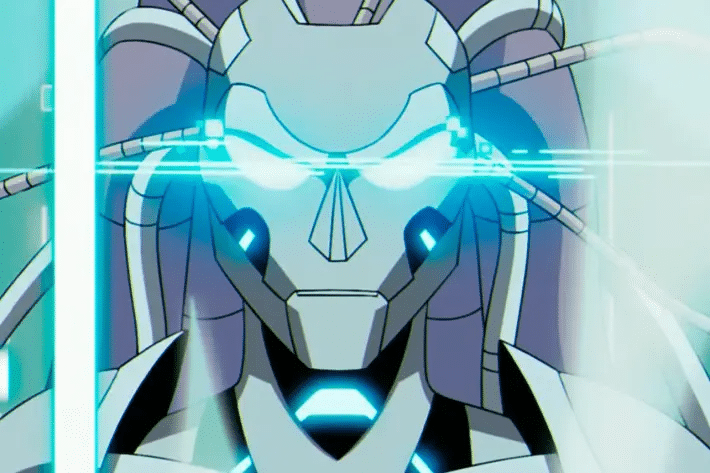
The strongest part of the episode is the middle third, in which the X-Men defend the besieged X-Corp tower. It channels, a bit, the energy of the Sentinel fight in “The Final Decision,” the first season finale of the original series (still the show’s best episode in my book). There’s some fun little action and character beats along the way. Jubilee gets another chance to show she’s not the green rookie on the team anymore. Cable has to fight his way past his mom and dad, in a deliberate echo/reversal of the season’s first episode. Morph and Wolverine team up against Archangel and Psylocke. Forge has a cool jetpack. It’s not deep, but it’s entertaining.
More problematic is everything surrounding it. The return of Apocalypse is clearly meant to serve as the capstone to the season’s central arc (which is basically, “Apocalypse exists and is bad, so let’s stop him), with the added knife twist that he’s revived their dead friend/lover and is using him, essentially, as a human shield. Apocalypse’s reintroduction in the season’s fourth episode is one of its highlights; his showdown with Xavier and Magneto effectively chilling. But the connective tissue between that moment and Apocalypse cosplaying as Gambit is nearly nonexistent. It’s never made clear what it is about Gambit that makes reviving and possessing him the trump card Apocalypse needs to stop the X-Men once and for all. If the idea is simply the human shield aspect, hurting them physically and emotionally, that is never made clear (and arguably would have worked better with Magneto, who would twist the knife for Xavier even more and lend Apocalypse more power in his new form than simply “touch stuff and make it blow up). When the script tries to create a full circle moment by having Gambocalypse echo his earlier words about Xavier (the teacher) finally learning the lesson that the people he cares for will be his undoing, it simply makes no sense. Gambocalypse has taken control of the X-Men and all the surrounding people, putting them in his red-eyed thrall and turning them on Xavier. What lesson is that teaching Xavier? Those people wouldn’t be a threat to him at all if Gambocalypse wasn’t there.

And then we come to the sacrifice. Obviously, I don’t think anyone was expecting Rogue to die in the end, and, theoretically, you can see the seeds for Nightcrawler offering himself up being sown throughout the season (his familial devotion to Rogue, his grace in the face of Graydon Creed’s hatred and willingness to turn himself over to the Acolytes to save him), but the logic used to justify the swap to Eson is bananas (it also doesn’t help that Eson/Apocalypse’s philosophy isn’t terribly clear). Nightcrawler basically says, “the world will be better without me” and the god-like Eson agrees. Then it turns out he’s right! We get a montage of the X-Men (which includes no grieving for Kurt) in which they seem happy and content in the absence of their furry blue friend. Someone saying, “the world is better off without me in it” and then being proven right is just a weird way to end a story.
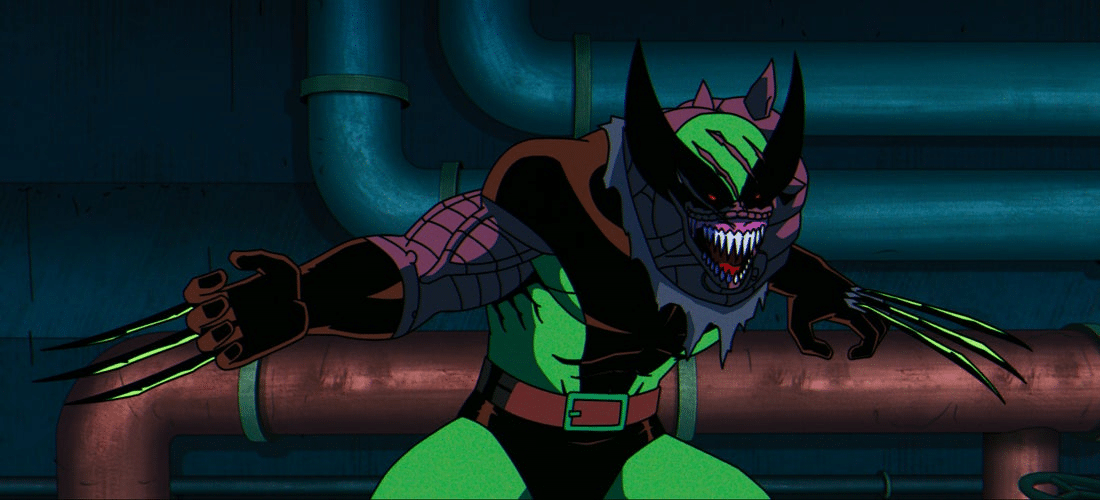
Which just speaks once again to the fundamental flaw of the show at this point: Ten (let alone nine this season) episodes ~25 minutes in length simply isn’t enough for the kinds of stories the creators want to tell. In the old days, you could do seasonlong arcs and pepper in character-focused one-offs. Now, that sort of thing (like this season’s Wolverine/Brood episode) feels like a waste of time that could have been better spent shoring up the main narratives, while each episode is left to cover a ton of narrative ground (like episode 7, which had to reintroduce the Acolytes, Graydon Creed, Colossus and his suddenly-a-teenager-with-powers sister, while servicing the immediate “trial” plot, a subplot involving Bishop and Polaris growing closer while taking out Mister Sinister’s old power-inhibiting gizmo, and the seasonlong Apocalypse arc) such that everything feels likes it’s getting a surface-level exploration before being put in the rear view.

This creative team certainly seems to have genuine affection for the characters and the mythos, and I’m never going to argue in favor of storytellers being less ambitious. Plus, the structural limitations (i.e. the number of episodes per season and the length of the episodes) are largely out of their hands. So there is no easy answer here. At the same time, the season being nine episodes long or 19 wouldn’t change the fact that presenting Nightcrawler’s death in this way is bizarre, and that culminating the seasonlong arc by putting Apocalypse in a Gambit-shaped trench coat isn’t the satisfying conclusion it’s meant to be.
X-Traneous Notes
- Jubilee and Sunspot are back in the credits, while X-Factor and Val Cooper have taken the place of Magneto and random bad guys in the “running toward each other” segment at the end.
- It would have been neat if all the support staff around Val was just Madrox dupes, like in Banshee’s X-Corps.
- Siryn has had a rough go of it lately: First she got thrown in prison and press-ganged into hunting mutants in the comics, then she got added to X-Factor in the cartoon with nary a line other than [SCREAM].
- Speaking of X-Factor, even putting aside their extreme government stooge-iness (which is way more than it ever was in the comics they’re aping), it would be nice if anyone besides Havok could get the barest hint of a personality, or if anyone besides Havok and Strong Guy could get a line.
- Psylocke and Archangel get the Cable musical sting when they enter.
- Morph turns into the ’90s Spider-Man cartoon version of Doctor Octopus. Later, he briefly adopts the form of Great Lakes Avenger Flatman.
- Gambit’s big “wake up and turn the tide against X-Factor” moment was undercut for me by the fact that he charges up Madrox dupes and I, a nerd, know that Gambit is unable to charge up organic matter.
- That’s especially annoying when, moments later, Polaris is unable to stop rocks being thrown at her because they’re not magnetic (which is literally the first time anything non-magnetic has been able to penetrate a magnetic force field in the history of both this show and the comics.
- Cable shooting Gambocalypse even after shooting Gambit is the thing that led to Gambocalypse forming in the first place is hilarious. When all you have is a hammer, etc.
- Trapping Apocalypse in a gem and then not immediately destroying that gem is a surefire way to ensure he can always come back again at some point down the road.
- Pretty sure I’d much rather have Nightcrawler on the team than Gambit going forward.

Austin Gorton also reviews older issues of X-Men at the Real Gentlemen of Leisure website, co-hosts the A Very Special episode podcast, and likes Star Wars. He lives outside Minneapolis, where sometimes, it is not cold. Follow him @austingorton.bsky.social.