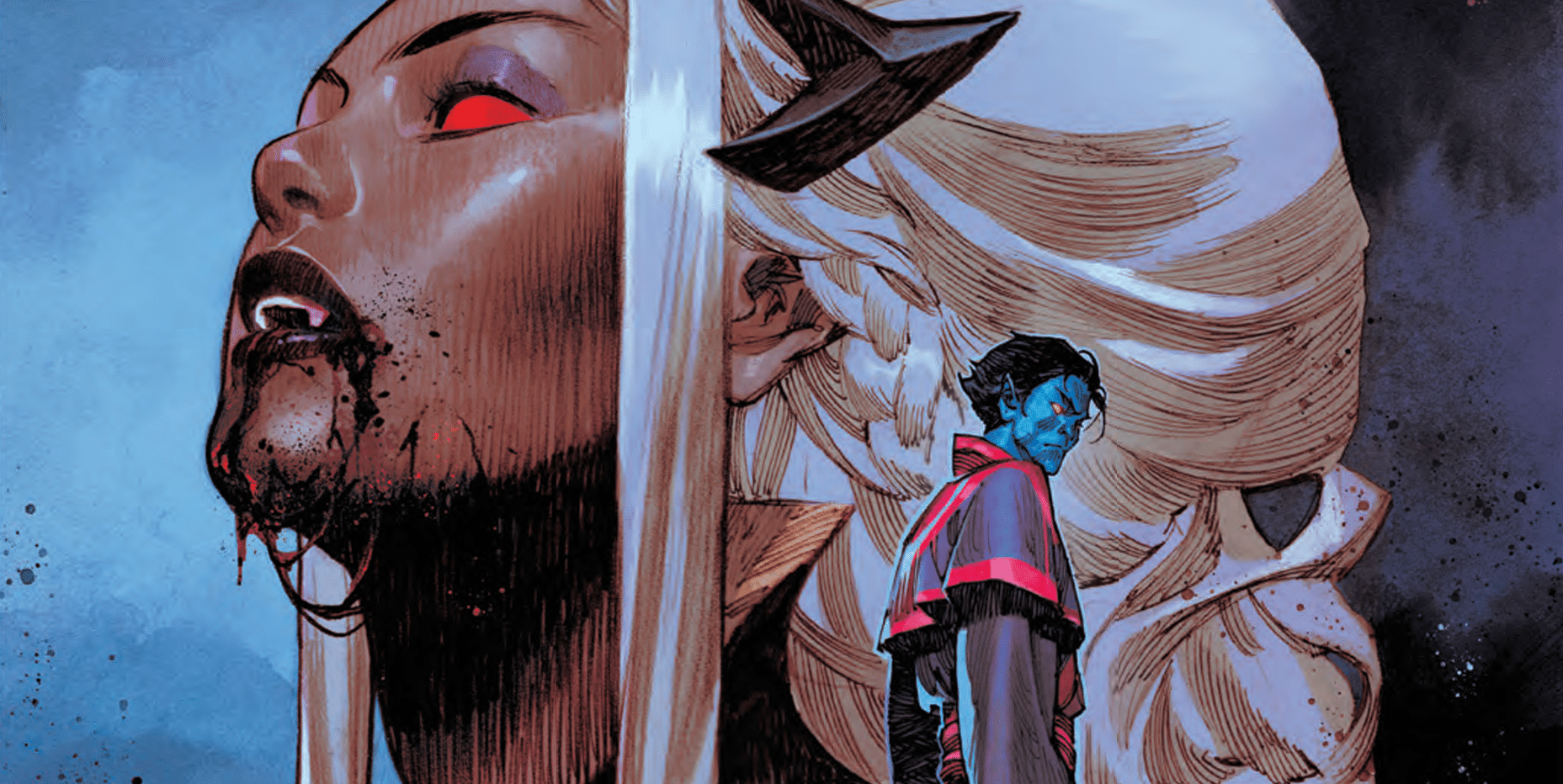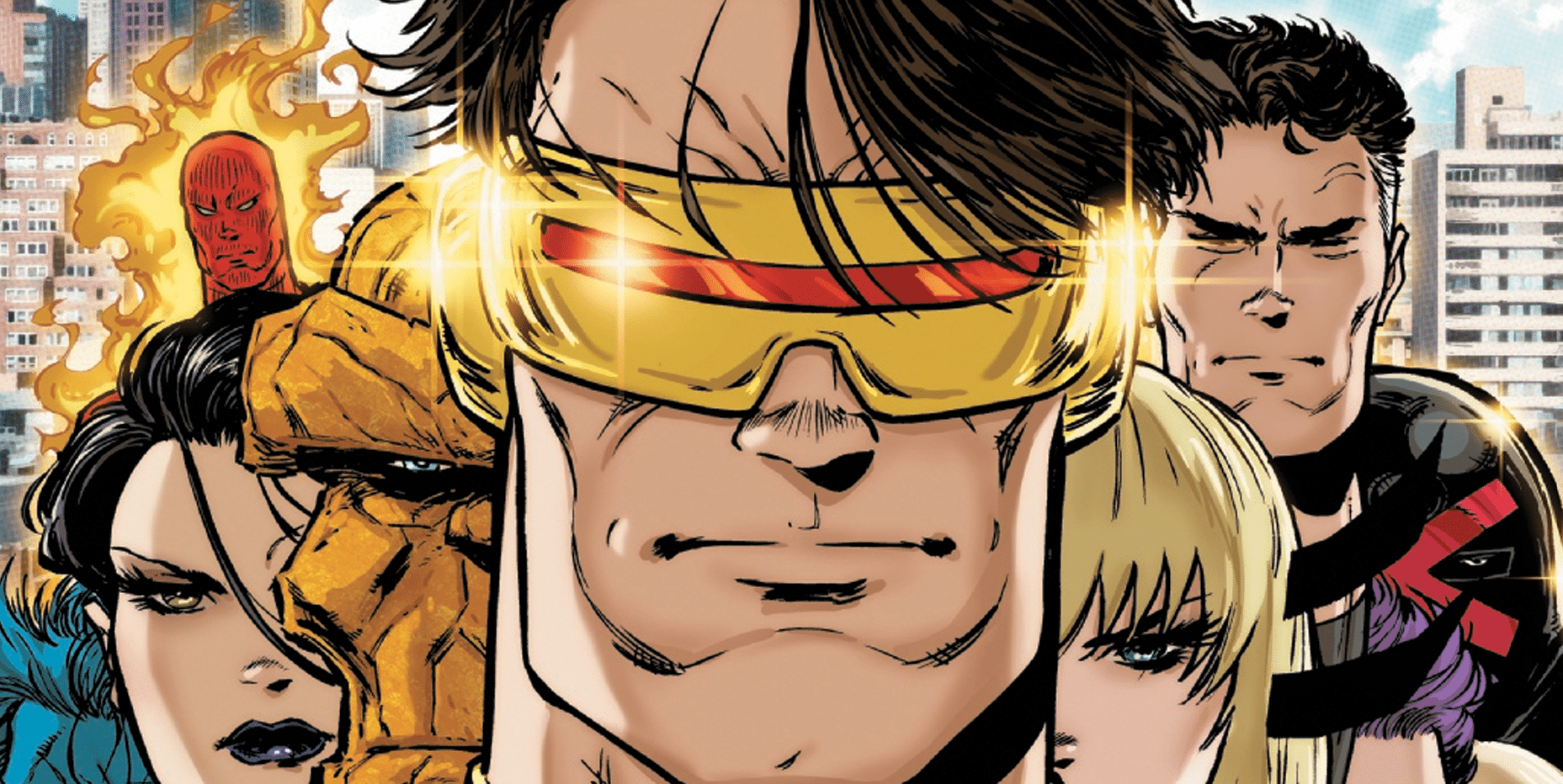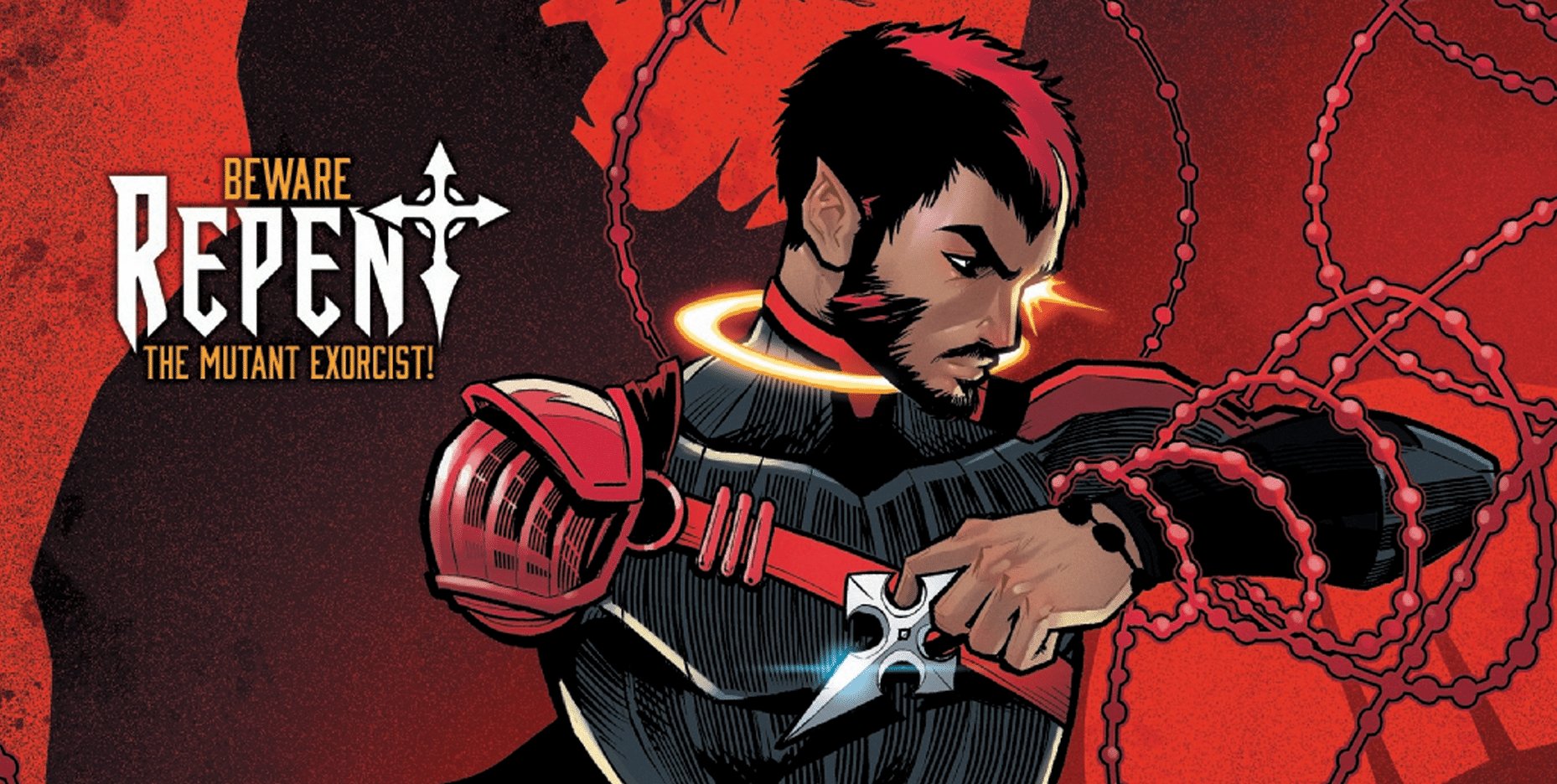
Two X-teens, and Laura Kinney, join Captain America as he tries to offer an apology to one more victim of government experiments. Can they get there in (so to speak) time? The history lesson concludes in X-Men United #3, written by Eve Ewing, drawn by Tiago Palma, colored by Brian Reber and lettered by Joe Sabino.
The X-line at its finest has usually included a book about teenagers at a school: New Mutants in all its editions, Generation X, Academy X and so on, leading up to last year’s Exceptional X-Men, in which Kitty Pryde and Emma Frost — the two A-listers with teaching vocations — took on three, then four, Chicagoland pupils (all survived the experience). X-Men United #1 — written, like Exceptional, by the great Eve Ewing — set up the school and promised big adventures central to current X-perience. I liked it. Adam didn’t. Then Ewing and her energetic, uneven artist Tiago Palma introduced Captain America (Steve Rogers) into a plot that didn’t make any sense. It seemed designed less to develop the current X-characters than to direct mutant fans to Truth: Red, White and Black, a superb series about the mistreated Black soldiers who could have been the first, or second, Captains America. At least one of those soldiers survived to Marvel’s present day (as of 2003), secluded and damaged by the U.S. government’s wildly terrible choices. Can Ewing, Palma and company pick up the pieces and make their school book work?


Um, sort of? We open on a dynamically drawn superhero fight. On one side, defending his own apartment against X-intruders who didn’t even knock first, we get (apparently) Maurice Canfield, a mutant survivor of the super-soldier experiments. On the other, we get Steve, who really, really wants to apologize, and the mutants Jitter, Laura and Melee, who have come along — at Emma’s behest — to help out. Except that, as a frazzled Hank McCoy explains, they’ve arrived in “the same place at different times,” “not temporally linked.” They’re all fighting Maurice, who would rather not deal with any of them, but they’re fighting him at different times. Shouldn’t the later Maurice remember the outcomes from earlier fights? If not, has Hank once again sparked diverging timelines? Forget it, Hank: It’s time-travel town.
In any case, Hank and Axo, using his empathy engine, arrange to get the unwelcome visitors and their angry elder in the same place, at the same time, after a pretty good joke about “Schrödinger’s Cap.” Then Jitter uses her hypno-powers (how do those work?) to calm Maurice down, and we learn that he’s not really Maurice: he’s Maurice’s adoptive brother Vernon, and his backstory folds in the honorable service of Black GIs in the First World War, Southern lynchings, the Great Migration, the super-serum experiments and the unpaid, perhaps unpayable debt that the U.S. still owes to people enslaved, rejected, murdered and abused, as well as to their descendants.
Ewing writes, and Palma draws, with help from colorist Brian Reber, a compact history in literal sepia tones. A story where mutants come unstuck in time and need to reorient themselves to understand a wounded Black man opens out onto that man’s backstory, because we, too, need to reorient ourselves in time: We, too, need to see the real past. It looks great. It’s stuff we should know. It echoes, distantly, the movie Sinners, which you should probably see, not because Ewing’s copying a film but because they both draw on the same IRL multigenerational stories.
And it feeds back into stories about mutants because Laura Kinney, too, grew up without autonomy, forced to do terrible things. She never likens her own experience as a clone or a mutant to being Black. Nor should she. But she can see why Vernon feels bitter, and guilty, and alone. And, of course, she offers him the refuge — not for the first time — of found family. It sounds right coming from her, especially since before she heard his story she seemed ready to claw him to death.
Speaking of claws, and death, Palma still excels with dynamic fight scenes: Laura’s lunges, and Vernon’s countermoves, practically pop off the page. I love it. I don’t, however, love Vernon’s mutant powers: He can apparently turn his fists, and his feet, into chalky, sharp, hard plaques. They look like strapped-on weapons, not like parts of his body. In fact, they look like the defensive arm-guards worn for practice fights in other fight-centered stories, except that if they hit you they can hurt you.
As for the people, they still look kinda blocky, with uncomfortably stylized shadows, like the people in video games. But they can fight. Palma’s also mastered body language, posture and gesture. “You don’t have to forgive Cap. Or those men,” Laura tells Vernon, touching him on the back, gingerly. “But you do have to forgive yourself.” Steve, correctly, just shuts the heck up, folds his arms and lets the mutants have the floor: We see him hold his nose and close his eyes to keep himself from crying. Good move, given how often Cap’s been on the wrong side in any conflict involving mutants. What do the Steve stans think?
Problem solved, Freedom School funded (and drawn in lovely realistic detail), we head out to lunch, at the kind of fancy seaside restaurant Emma might choose. She orders the lobster bisque; Cap gets a club sandwich. Kitty, distracted, forgets to order anything at all: I can relate. Axo absolutely refuses to even meet Steve (he “harbors an aversion to militarized authority”) and Ewing brings back a slow-burn plot from Exceptional: Kitty’s non-mutant maybe-girlfriend Nina. Also Emma’s potentially done with men (“Men, what a waste”), and a former Hellfire Club colleague wants something from her. At least she’s not named Shaw.
What does she want? Find out next time, when this book might acquire a better through-line, and a more compelling plot, to go with the promising setup. I’m not giving up.
After-school specials
- Check out the truck outside the Freedom School, marked E-wing Deliveries. Because Eve E-wing delivers.
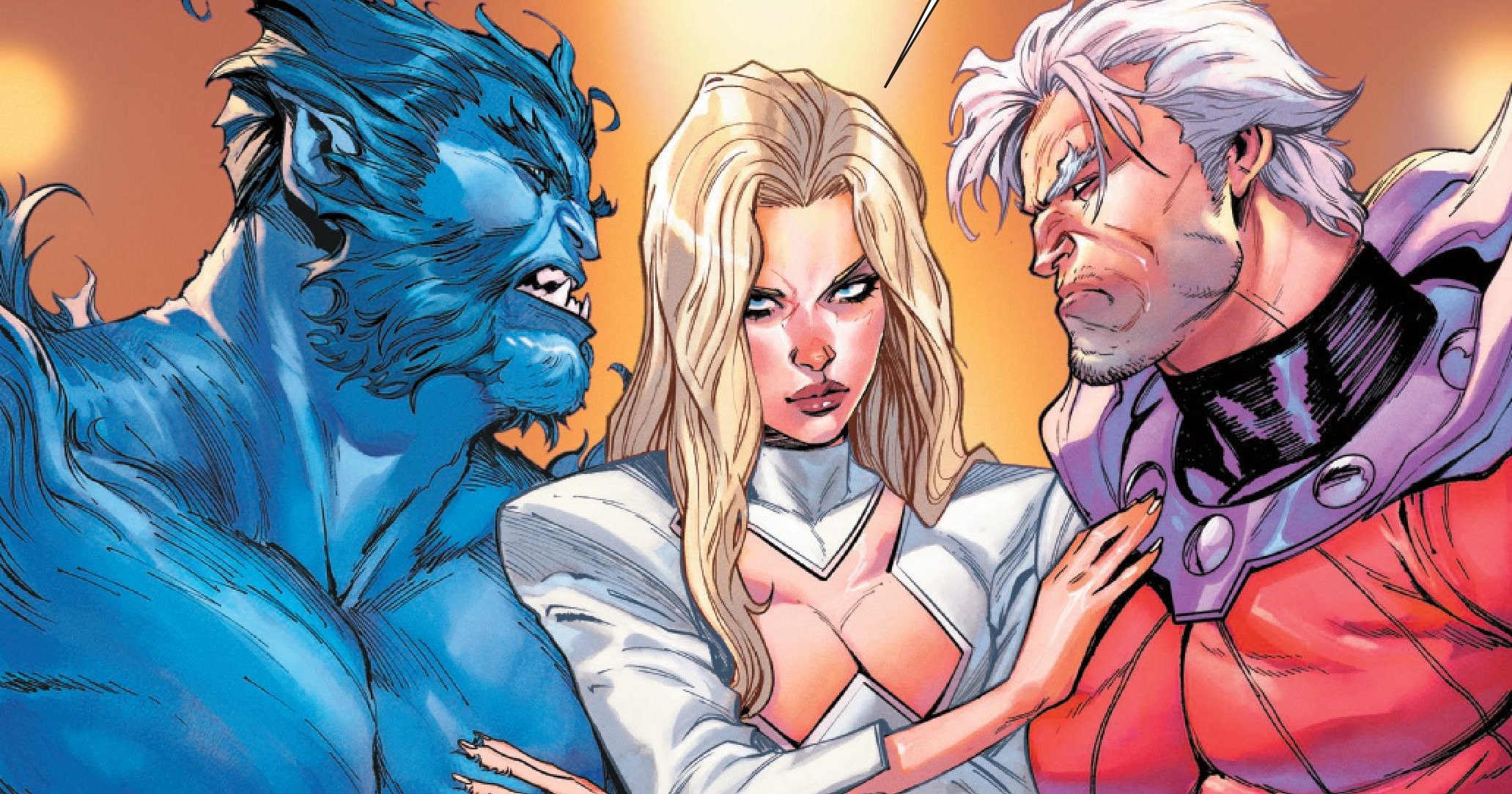
- Kitty, as always, supplies the voice of reason: “Emma, if you kill him, he can’t do anything,” He being Hank, who once again has to fix a problem that his reckless tech created. “Would that be the worst outcome?” Magneto asks. Another valid point?
- Vernon appears to have worked as a gravedigger at the same cemetery where Maurice Canfield, or some other Canfields, rest in peace. That’s why we see him shirtless, holding a shovel. What are the odds?
Buy X-Men United #3 here. (Disclaimer: As an Amazon Associate, ComicsXF may earn from qualifying purchases.)

Stephanie Burt is Professor of English at Harvard. Her podcast about superhero role playing games is Team-Up Moves, with Fiona Hopkins; her latest book of poems is We Are Mermaids. Her nose still hurts from that thing with the gate.